EOB: Official Site of the Eastern / Greek Orthodox Bible (Old and New Testament)

Genesis 1:2

EOB (Eastern / Greek Orthodox Bible):

The earth was formless and empty, darkness covered the deep, and the Spirit of God moved over the waters.

EOB Footnote:

The MT includes the phrase “and darkness was upon the face of the deep” using a word for “deep” (tehom) that may carry mythological resonances absent from the LXX’s more neutral “abyss.” The LXX renders the Hebrew word for “formless” with a term meaning “invisible” and “void” with “unformed” or “unfurnished,” whereas the MT pair suggests chaos and emptiness. The MT’s “Spirit of God” is rendered identically in the LXX, though some interpret the Hebrew as “wind from God” or “mighty wind”; the translation follows the LXX’s understanding of divine Spirit. The verb rendered “was hovering” or “was moving” in the MT appears in the LXX as “was being carried” or “was brooding,” a slight difference in imagery. No DSS manuscript preserves this verse.

Other Translations:

KJV (King James Version):

And the earth was without form, and void; and darkness was upon the face of the deep. And the Spirit of God moved upon the face of the waters.

WEB (World English Bible):

The earth was formless and empty. Darkness was on the surface of the deep and God’s Spirit was hovering over the surface of the waters.

Benton LXX (Vaticanus):

And the earth was unsightly and unfurnished, and darkness was over the deep, and the Spirit of God moved over the water.

Douai-Rheims (Vulgate):

And the earth was void and empty, and darkness was upon the face of the deep; and the spirit of God moved over the waters.

Apostoliki Diakonia (LXX):

If you offered correctly but did not divide correctly, have you not sinned? Be still. His turning is toward you, and you shall rule over him.

YLT (Young Literal Translation )(MT):

The earth had existed waste and void, and darkness was on the face of the deep, and the Spirit of God was fluttering on the face of the waters.

BBE (Bible in Basic English):

And the earth was waste and without form; and it was dark on the face of the deep: and the Spirit of God was moving on the face of the waters.

EOB COMMENTARY:

EOB Commentary:

Genesis 1:2

The Formless Void and the Spirit Upon the Waters

This verse stands as one of the most theologically rich passages in all of Scripture, bearing profound significance for Orthodox understanding of creation, the Holy Trinity, and the sacramental life of the Church.

The Hovering Spirit and Trinitarian Revelation: The phrase “the Spirit of God was hovering over the face of the waters” (ruach Elohim in Hebrew) provides the first scriptural glimpse of the Holy Spirit’s distinct personhood and creative activity. The Fathers consistently understood this as a revelation of the Third Person of the Trinity. Saint Basil the Great, in his Hexaemeron, explains that the Spirit was warming and vivifying the waters, much as a bird broods over her eggs, preparing creation to bring forth life. This image establishes the Spirit as the life-giver, the one who transforms chaos into ordered beauty.

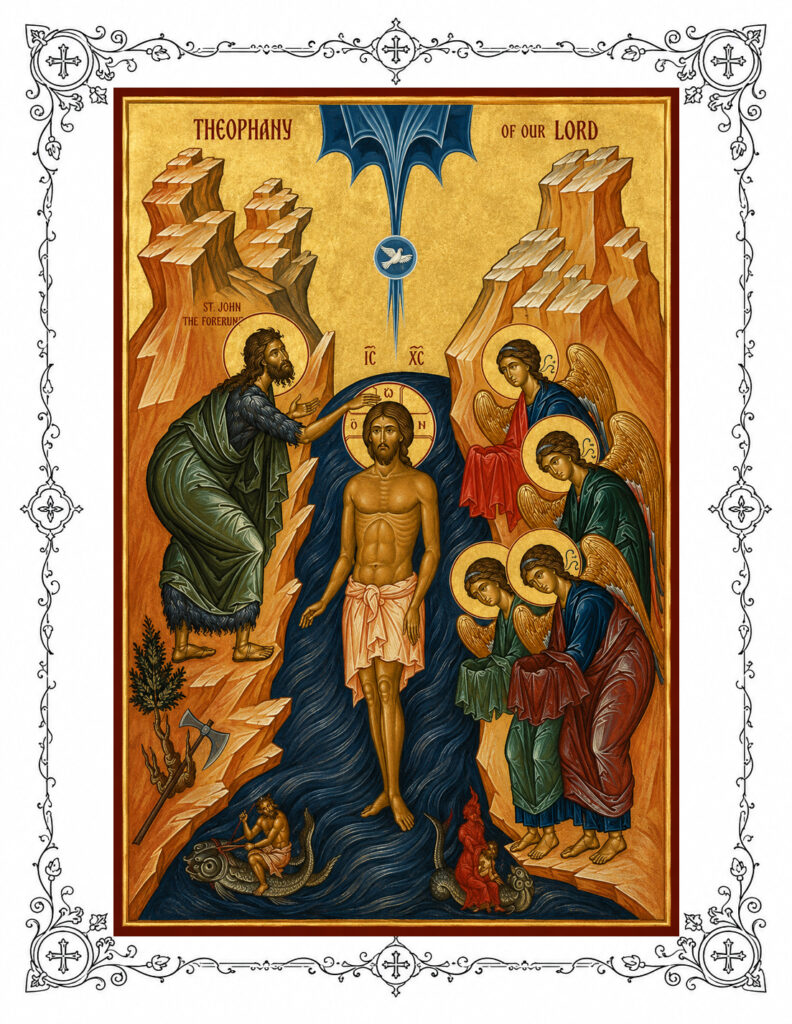
Baptismal Typology: The Orthodox Church sees in these primordial waters a prefiguration of the baptismal font. Just as the Spirit hovered over the waters at creation’s dawn, so the Spirit descends upon the baptismal waters to bring forth new creation in Christ. The prayers of the Great Blessing of Waters at Theophany explicitly invoke this connection, asking God to send His Spirit upon the waters as He did at the beginning. Saint Cyril of Jerusalem taught his catechumens that they descend into waters that, like those of Genesis, become life-giving through the Spirit’s presence.

Tohu va-Bohu and the Divine Response to Chaos: The Hebrew phrase tohu va-bohu, rendered as “without form and void” or “invisible and unfinished” in the Septuagint (aoratos kai akataskeuastos), describes a state of primordial chaos awaiting divine ordering. The darkness upon the deep (tehom) evokes the formless abyss. Yet Orthodox theology emphasizes that this chaos is not evil or opposed to God—it is simply unformed matter awaiting the Creator’s word. God does not battle chaos as in pagan mythology; He speaks, and chaos becomes cosmos.

Christological Dimensions: Reading this verse through the lens of John’s Prologue, the Fathers understood that the Word (Logos) who will speak creation into existence in the following verses is the eternal Son. Thus, all three Persons of the Trinity are present at creation’s foundation—the Father who creates, the Word through whom all things are made, and the Spirit who gives life.

Liturgical Presence: Beyond Theophany, this verse echoes throughout Orthodox worship. The Vesperal hymns of Pentecost connect the Spirit’s creative hovering with His descent upon the apostles. The faithful are reminded that the same Spirit who brought order from chaos continues to renew the face of the earth and transform human hearts into temples of the living God.

Introduction to the book of Leviticus

The Book of Leviticus receives its English title from the Latin Vulgate, which is derived from the Greek Septuagint (LXX) title Leuitikon (Λευιτικόν), meaning “Levitical” or “pertaining to the Levites.”

Read More »

Introduction to the book of Exodus

The Book of Exodus receives its English title from the Greek Septuagint (LXX), where it is called Exodos (Ἔξοδος), meaning “departure” or “exit.” This name was chosen because the central

Read More »