A Response to Fr. John Whiteford’s Review of the EOB New Testament
By Fr Laurent Cleenewerck, EOB Editor In 2021, Fr. John Whiteford published on his blog a substantial review of the EOB New Testament (Newrome Press portable edition). The review deserves a serious answer, first because it is serious criticism — specific, textual, and offered by a priest who plainly wants what the EOB itself wants, […]
The EOB New Testament as an Orthodox Edition: A note on its character, method, and intended use
By: Fr Laurent Cleenewerck, EOB Editor The question is sometimes asked in what sense the EOB New Testament (the Eastern / Greek Orthodox Bible) is properly an Orthodox edition and translation of the Scriptures, rather than simply another English version adopted or tolerated by Orthodox readers. The answer rests on four features of its origin, […]
Introduction to the book of Leviticus
The Book of Leviticus receives its English title from the Latin Vulgate, which is derived from the Greek Septuagint (LXX) title Leuitikon (Λευιτικόν), meaning “Levitical” or “pertaining to the Levites.” This name was chosen because the book is essentially a manual of priestly and Levitical instructions, rituals, and laws of holiness given through Moses to […]
Introduction to the book of Exodus

The Book of Exodus receives its English title from the Greek Septuagint (LXX), where it is called Exodos (Ἔξοδος), meaning “departure” or “exit.” This name was chosen because the central and defining event of the book is the miraculous departure of the children of Israel from slavery in Egypt—the great act of redemption that stands […]
Introduction to the book of Genesis
I. Date and Authorship Holy Tradition of the Orthodox Church, affirmed by the Fathers and the liturgical usage of the Church from the earliest centuries, attributes the Book of Genesis (along with the entire Pentateuch) to the “God-Seer and Prophet Moses.” Moses, inspired by the Holy Spirit, may have composed the book during the wilderness […]
Hebrews 11:35–38 and… 4 Maccabees
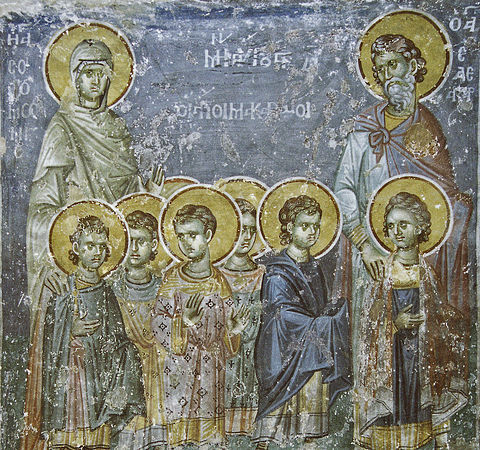
Does Hebrews 11 on the Maccabees Show Stronger Alignment with 4 Maccabees than 2 Maccabees? Hebrews 11 (the famous “Hall of Faith” chapter) does not explicitly mention the Maccabees by name, but many scholars and early Christian interpreters saw verses 35–38 as clear allusions to the martyrdom stories of the Maccabean era: “Women received back […]