Introduction to the book of Leviticus
The Book of Leviticus receives its English title from the Latin Vulgate, which is derived from the Greek Septuagint (LXX) title Leuitikon (Λευιτικόν), meaning “Levitical” or “pertaining to the Levites.”
EOB: Official Site of the Eastern / Greek Orthodox Bible (Old and New Testament)
EOB (Eastern / Greek Orthodox Bible):
EOB Footnote:
KJV (King James Version):
WEB (World English Bible):
Benton LXX (Vaticanus):
Douai-Rheims (Vulgate):
Apostoliki Diakonia (LXX):
YLT (Young Literal Translation )(MT):
BBE (Bible in Basic English):
EOB Commentary:
THE DIVINE WORD AND THE UNCREATED LIGHT
This verse stands as one of the most theologically significant statements in all of Scripture, serving as a foundation for understanding both the nature of God and His relationship to creation. The command “Let there be light” reveals God as the One who creates through His Word, establishing a pattern that finds its ultimate fulfillment in the Incarnation of the Logos.
Christological Significance: The Fathers consistently understood this primordial light in connection with Christ, the Light of the World. Saint Basil the Great, in his Hexaemeron, teaches that this light was not the sun (created on the fourth day) but a primordial, spiritual illumination that dispelled the darkness covering the abyss. Saint Gregory the Theologian and other Fathers saw in this creative command a prefiguration of the eternal generation of the Son from the Father—light from light, as the Nicene Creed proclaims. The Gospel of John deliberately echoes this passage: “In Him was life, and the life was the light of men. And the light shines in the darkness” (John 1:4-5).
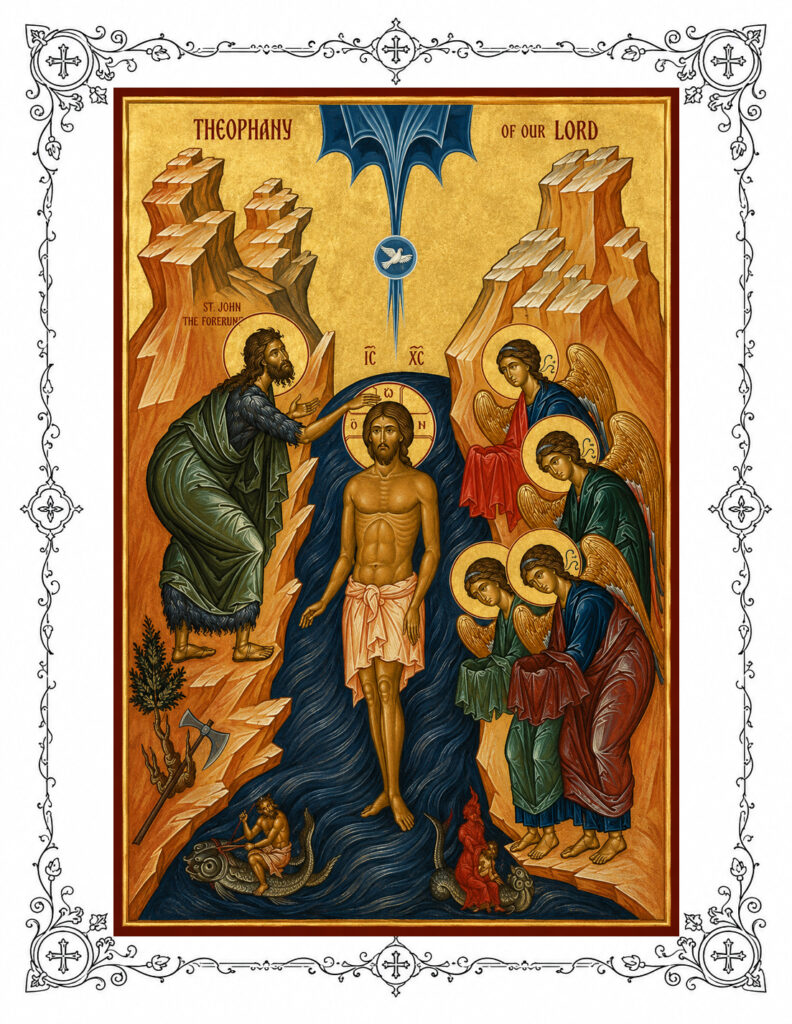
Liturgical Connections: The Orthodox Church celebrates this mystery throughout her liturgical life. The Paschal proclamation “Come, receive the light from the unwaning Light” directly connects the creation account to Christ’s Resurrection. The blessing of light at Vespers, when the priest intones “Light of Christ” while carrying the candle into the darkened church, reenacts this primordial moment while pointing to its eschatological fulfillment. The Feast of Theophany similarly employs light imagery, as Christ’s baptism reveals the Trinity and illumines all creation.
Patristic Teaching on Uncreated Light: Saint Gregory Palamas, defending the hesychast tradition, distinguished between God’s unknowable essence and His uncreated energies, often described as divine light. The light of Tabor, which the disciples witnessed at the Transfiguration, was understood as the same uncreated light that shone forth at creation—not a created phenomenon but God’s own self-manifestation. This teaching grounds Orthodox spirituality in the possibility of genuine theosis, as believers participate in the divine light through prayer and sacramental life.
Spiritual Application: For the Orthodox Christian, this verse speaks to the ongoing work of God in the human soul. Just as God commanded light to shine in the primordial darkness, so He illumines the darkness of the fallen heart. Saint Paul explicitly makes this connection: “For it is the God who commanded light to shine out of darkness, who has shone in our hearts to give the light of the knowledge of the glory of God in the face of Jesus Christ” (2 Corinthians 4:6). The spiritual life is thus understood as a progressive illumination, moving from the darkness of sin toward the uncreated light of God’s presence.
The Book of Leviticus receives its English title from the Latin Vulgate, which is derived from the Greek Septuagint (LXX) title Leuitikon (Λευιτικόν), meaning “Levitical” or “pertaining to the Levites.”

The Book of Exodus receives its English title from the Greek Septuagint (LXX), where it is called Exodos (Ἔξοδος), meaning “departure” or “exit.” This name was chosen because the central

I. Date and Authorship Holy Tradition of the Orthodox Church, affirmed by the Fathers and the liturgical usage of the Church from the earliest centuries, attributes the Book of Genesis

Does Hebrews 11 on the Maccabees Show Stronger Alignment with 4 Maccabees than 2 Maccabees? Hebrews 11 (the famous “Hall of Faith” chapter) does not explicitly mention the Maccabees by