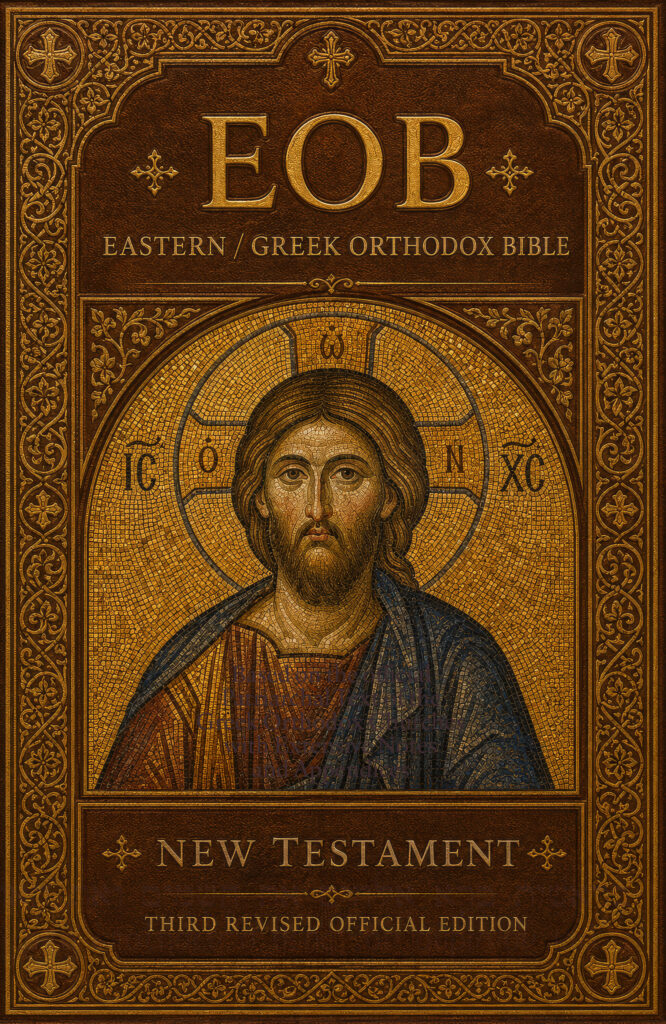
EOB: Official Site of the Eastern / Greek Orthodox Bible (Old and New Testament)

Genesis 1:6

EOB (Eastern / Greek Orthodox Bible):

God said, “Let there be a firmament in the midst of the water, and let it separate water from water.”

EOB Footnote:

The MT includes the phrase “and let it divide” or “and let it be dividing” (referring to the firmament separating waters from waters), which corresponds closely to the LXX rendering. No significant textual variants exist between the major LXX manuscripts (Alexandrinus, Vaticanus, Sinaiticus) for this verse. The DSS do not preserve Genesis 1:6.

Other Translations:

KJV (King James Version):

And God said, Let there be a firmament in the midst of the waters, and let it divide the waters from the waters.

WEB (World English Bible):

God said, “Let there be an expanse in the middle of the waters, and let it divide the waters from the waters.”

Benton LXX (Vaticanus):

And God said, Let there be a firmament in the midst of the water, and let it be a division between water and water.

Douai-Rheims (Vulgate):

And God said: Let there be a firmament made amidst the waters: and let it divide the waters from the waters.

Apostoliki Diakonia (LXX):

Let there be a firmament in the midst of the waters, and let it divide the waters from the waters.

YLT (Young Literal Translation )(MT):

And God said, “Let there be an expanse in the midst of the waters, and let it divide the waters from the waters.”

BBE (Bible in Basic English):

And God said, Let there be a solid arch stretching over the waters, parting the waters from the waters.

EOB COMMENTARY:

EOB Commentary:

Genesis 1:6 – Commentary

The Firmament and the Waters

This verse introduces the creation of the firmament (raqia in Hebrew, stereoma in the Septuagint), which God establishes to divide the waters above from the waters below. The Fathers understood this not merely as a cosmological statement but as revealing the ordered wisdom of God in creation.

Patristic Interpretation: St. Basil the Great, in his Hexaemeron, explains that the firmament serves as a boundary established by divine command, demonstrating God’s sovereign ordering of creation. He notes that the waters above the firmament serve a purpose in the divine economy, perhaps tempering the heat of the celestial fires. St. John Chrysostom similarly emphasizes that we should not inquire too curiously into the precise nature of these waters but rather marvel at God’s wisdom in establishing proper boundaries and order within creation.

St. Ambrose of Milan sees in this division a spiritual lesson: just as God separates waters from waters, so too does He distinguish between different spiritual realities, calling believers to discernment and right ordering of their interior lives.

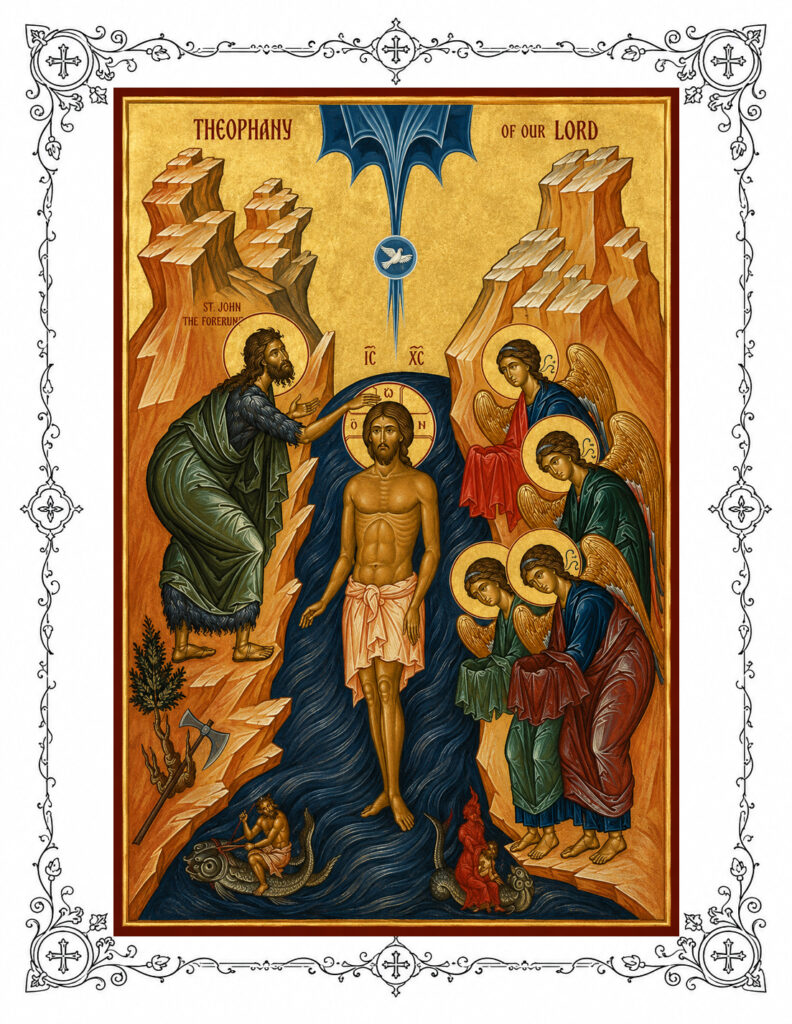
Christological and Baptismal Significance: The Church Fathers frequently connected the waters of creation with the waters of baptism. The firmament dividing the waters prefigures the separation that occurs in baptism between the old life and the new. Christ Himself descended into the waters of the Jordan, sanctifying all waters and revealing Himself as the One who brings order out of chaos and life out of death.

The firmament as a boundary also points to Christ as the mediator between heaven and earth, the One who bridges the separation between the divine realm and the created order. In Him, the waters above and below are reconciled.

Liturgical Connections: In the blessing of waters at Theophany, the Church recalls God’s creative work over the primordial waters. The prayers invoke the Spirit who moved over the waters and celebrate Christ’s sanctification of creation through His baptism. The cosmic dimension of this feast echoes the ordering of waters described in Genesis.

The hymns of Great Saturday similarly employ water imagery, connecting Christ’s descent into death and Hades with the primordial depths, from which He brings forth new creation.

Spiritual Application: For Orthodox spirituality, this verse teaches that God establishes proper boundaries and order. The spiritual life requires similar ordering—distinguishing between what is heavenly and what is earthly in our thoughts and desires, allowing God’s word to create structure and meaning in the chaos of fallen existence. The firmament reminds us that divine wisdom brings clarity and distinction where confusion once reigned.

Introduction to the book of Leviticus

The Book of Leviticus receives its English title from the Latin Vulgate, which is derived from the Greek Septuagint (LXX) title Leuitikon (Λευιτικόν), meaning “Levitical” or “pertaining to the Levites.”

Read More »

Introduction to the book of Exodus

The Book of Exodus receives its English title from the Greek Septuagint (LXX), where it is called Exodos (Ἔξοδος), meaning “departure” or “exit.” This name was chosen because the central

Read More »