Introduction to the book of Leviticus
The Book of Leviticus receives its English title from the Latin Vulgate, which is derived from the Greek Septuagint (LXX) title Leuitikon (Λευιτικόν), meaning “Levitical” or “pertaining to the Levites.”
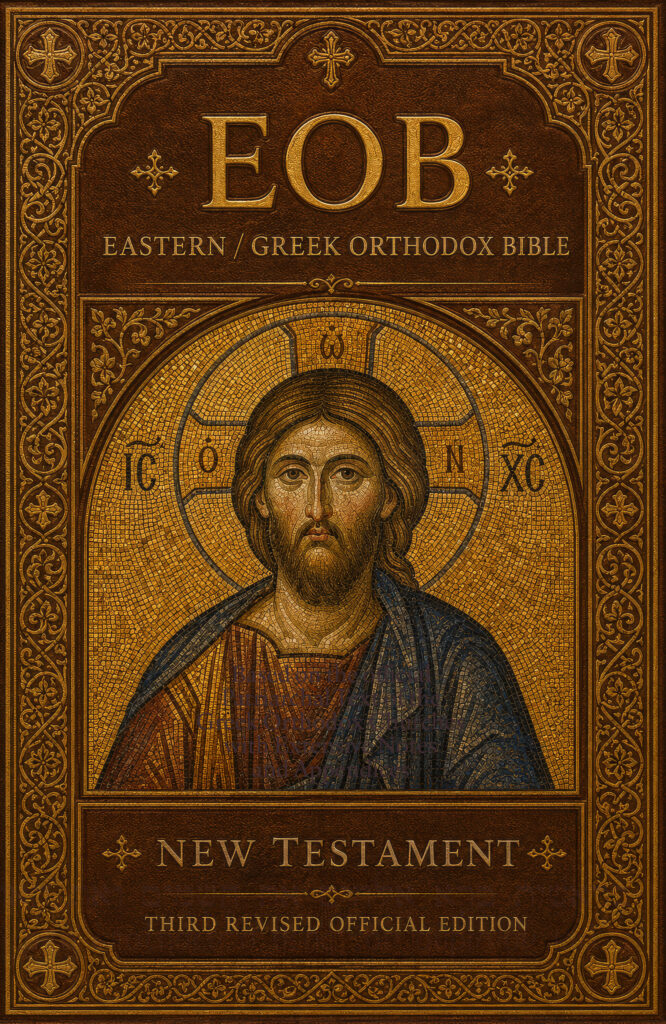
EOB: Official Site of the Eastern / Greek Orthodox Bible (Old and New Testament)
EOB (Eastern / Greek Orthodox Bible):
EOB Footnote:
KJV (King James Version):
WEB (World English Bible):
Benton LXX (Vaticanus):
Douai-Rheims (Vulgate):
Apostoliki Diakonia (LXX):
YLT (Young Literal Translation )(MT):
BBE (Bible in Basic English):
EOB Commentary:
Genesis 1:8
And God called the firmament Heaven.
The Naming of Heaven and the Second Day
The divine act of naming the firmament “Heaven” (shamayim in Hebrew, ouranos in Greek) carries profound theological significance that reverberates throughout Scripture and Orthodox tradition. This verse marks the completion of the second day’s creative work, establishing the visible expanse that separates the waters above from the waters below.
Patristic Interpretation: Saint Basil the Great, in his Hexaemeron, explains that this firmament serves as a boundary and mediator between the earthly and celestial realms. He emphasizes that the naming by God demonstrates His absolute sovereignty over creation—what God names, He possesses and orders according to His divine will. Saint John Chrysostom similarly notes that God condescends to use human language and concepts so that we might begin to comprehend the incomprehensible work of creation.
Saint Ambrose of Milan observes that the firmament represents stability and order emerging from the primordial chaos, a theme that prefigures the ordering work of Christ in the New Creation.
Christological and New Testament Connections: The Fathers consistently read this passage in light of Christ’s Ascension, when He passed through the heavens (Hebrews 4:14) and sat down at the right hand of the Father. The firmament that God establishes on the second day becomes the very realm through which our Lord ascends and from which He shall return in glory. Saint Paul’s reference to being caught up to the “third heaven” (2 Corinthians 12:2) presupposes this created heavenly structure.
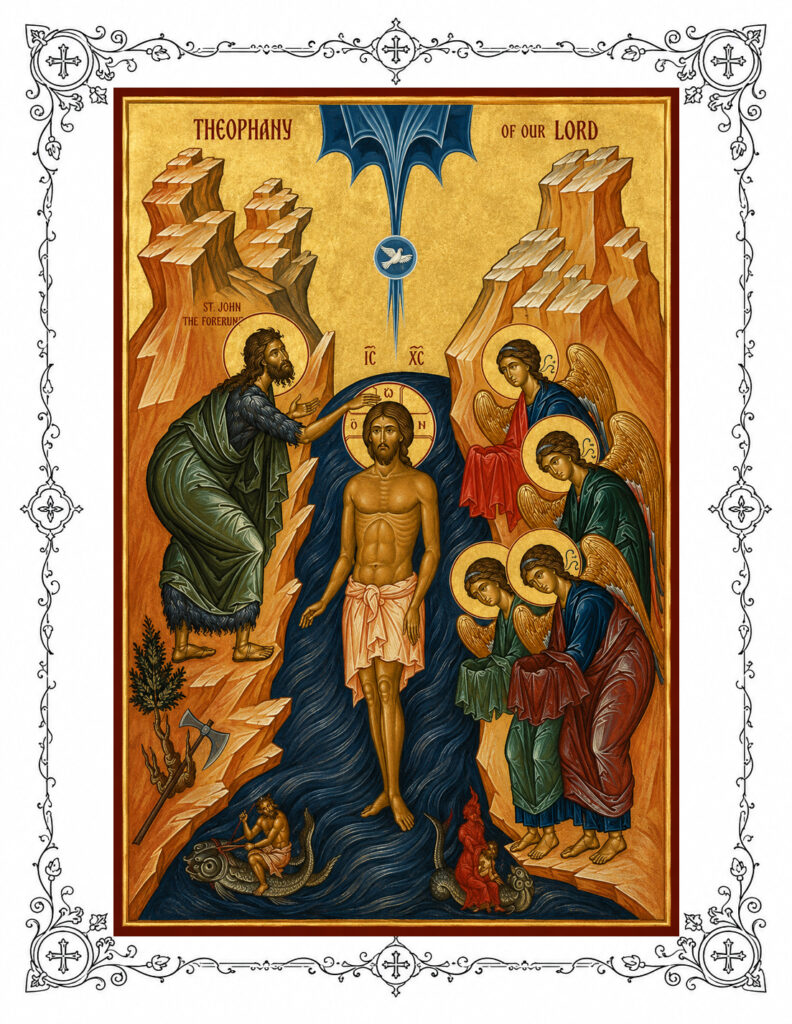
Furthermore, at Christ’s Baptism, the heavens were “opened” (Matthew 3:16), reversing in a sense the separation established at creation and restoring communion between God and humanity.
Liturgical Significance: In Orthodox hymnography, particularly during the feast of the Ascension, we sing of Christ ascending through the heavens, sanctifying the very firmament spoken into existence in Genesis. The Royal Doors of the iconostasis symbolically represent this boundary between heaven and earth, opened during the Divine Liturgy to signify the union of the two realms in the Eucharistic mystery.
Spiritual Application: For the Orthodox Christian, this verse reminds us that the visible heavens themselves bear witness to God’s creative word. When we gaze upward, we see not merely physical atmosphere but a realm named and claimed by God, awaiting its final transformation when there shall be “a new heaven and a new earth” (Revelation 21:1). The firmament thus serves as a constant invitation to lift our hearts and minds toward the Creator who spoke it into being.
The Book of Leviticus receives its English title from the Latin Vulgate, which is derived from the Greek Septuagint (LXX) title Leuitikon (Λευιτικόν), meaning “Levitical” or “pertaining to the Levites.”

The Book of Exodus receives its English title from the Greek Septuagint (LXX), where it is called Exodos (Ἔξοδος), meaning “departure” or “exit.” This name was chosen because the central

I. Date and Authorship Holy Tradition of the Orthodox Church, affirmed by the Fathers and the liturgical usage of the Church from the earliest centuries, attributes the Book of Genesis

Does Hebrews 11 on the Maccabees Show Stronger Alignment with 4 Maccabees than 2 Maccabees? Hebrews 11 (the famous “Hall of Faith” chapter) does not explicitly mention the Maccabees by