Introduction to the book of Leviticus
The Book of Leviticus receives its English title from the Latin Vulgate, which is derived from the Greek Septuagint (LXX) title Leuitikon (Λευιτικόν), meaning “Levitical” or “pertaining to the Levites.”
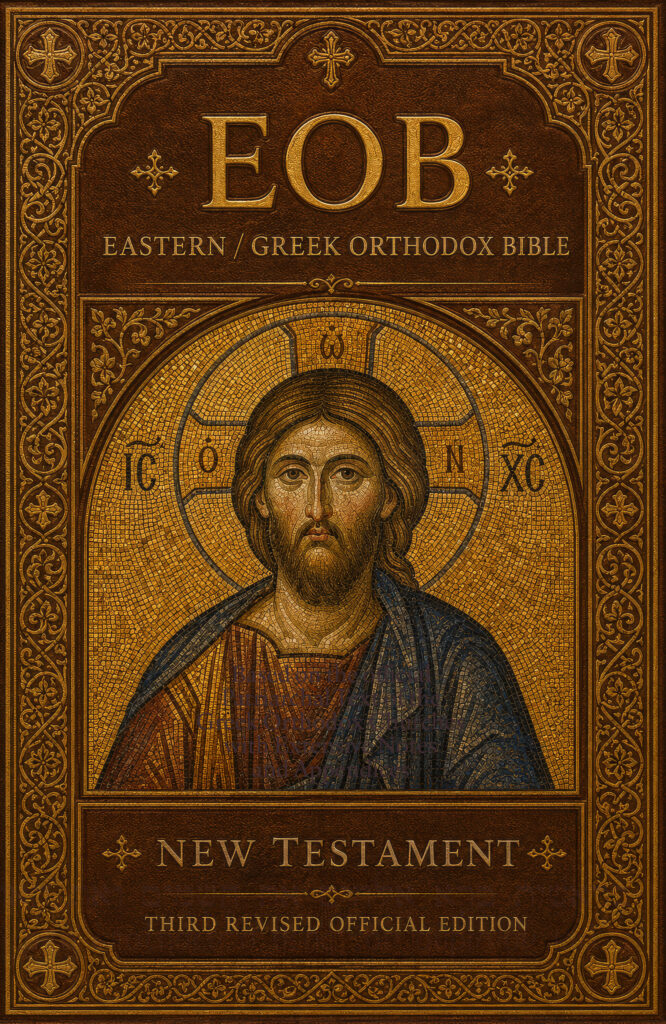
EOB: Official Site of the Eastern / Greek Orthodox Bible (Old and New Testament)
EOB (Eastern / Greek Orthodox Bible):
EOB Footnote:
KJV (King James Version):
WEB (World English Bible):
Benton LXX (Vaticanus):
Douai-Rheims (Vulgate):
Apostoliki Diakonia (LXX):
YLT (Young Literal Translation )(MT):
BBE (Bible in Basic English):
EOB Commentary:
Commentary on Genesis 1:9
The Gathering of Waters and the Appearance of Dry Land
This verse marks a pivotal moment in the creation narrative where God establishes order by separating the waters and revealing the dry land. The Fathers understood this not merely as a physical arrangement but as a profound theological statement about God’s sovereign power over chaos and His preparation of a dwelling place for humanity.
Patristic Interpretation:
Saint Basil the Great, in his Hexaemeron, contemplates how the waters, which previously covered everything, immediately obeyed the divine command and gathered into their appointed places. He marvels that the fluid and unstable nature of water was constrained by the word alone, demonstrating that creation responds to its Creator with perfect obedience. Saint Ambrose similarly notes that the earth, though hidden beneath the waters, was already present from the beginning, awaiting the moment of its manifestation according to God’s wise providence.
Typological Significance:
The emergence of dry land from the waters carries profound baptismal imagery that the Church has long recognized. Just as the earth arose from the waters to become fruitful and life-bearing, so too the Christian emerges from the baptismal waters as a new creation. The fonts of Orthodox baptisteries thus become places where this primordial act is mystically renewed. Saint Cyril of Jerusalem draws upon such creation imagery when instructing catechumens about the transformative power of the baptismal waters.
Christological Reading:
The dry land that appears may be understood as a type of the Church herself, which emerges from the nations as a stable foundation amid the turbulent seas of the world. Christ, the cornerstone, establishes this firm ground upon which the faithful may stand. The sea, often representing chaos and the gentile nations in prophetic literature, is bounded and limited by divine decree, prefiguring how Christ would calm the storms and demonstrate His authority over all creation.
Liturgical Connections:
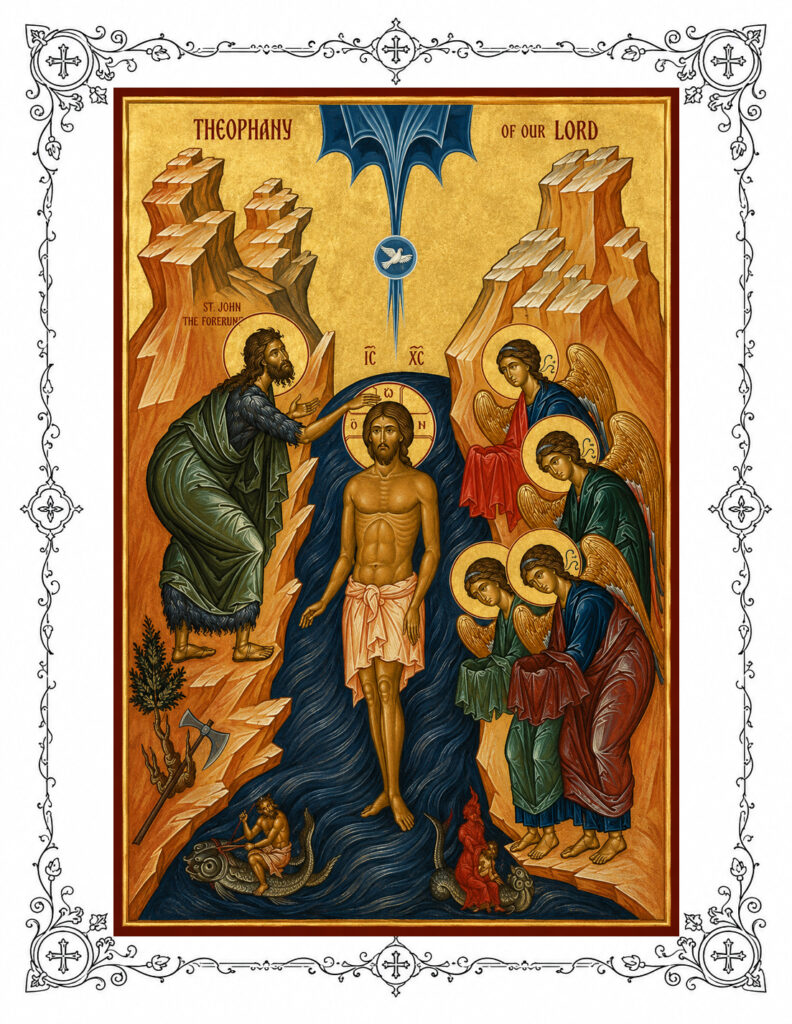
In the blessing of waters at Theophany, the Church recalls how God set boundaries for the seas and established the dry land. The prayers invoke the creative power that first ordered the waters, asking that same power to sanctify the waters for the healing and renewal of the faithful. The Great Blessing of Waters echoes the language of Genesis, connecting the primordial ordering of creation with the sanctification accomplished through Christ’s baptism in the Jordan.
The appearance of dry land also anticipates the eschatological vision of Revelation, where the sea is no more, and God’s people dwell securely in the new creation, free from the chaos that the waters symbolically represent.
The Book of Leviticus receives its English title from the Latin Vulgate, which is derived from the Greek Septuagint (LXX) title Leuitikon (Λευιτικόν), meaning “Levitical” or “pertaining to the Levites.”

The Book of Exodus receives its English title from the Greek Septuagint (LXX), where it is called Exodos (Ἔξοδος), meaning “departure” or “exit.” This name was chosen because the central

I. Date and Authorship Holy Tradition of the Orthodox Church, affirmed by the Fathers and the liturgical usage of the Church from the earliest centuries, attributes the Book of Genesis

Does Hebrews 11 on the Maccabees Show Stronger Alignment with 4 Maccabees than 2 Maccabees? Hebrews 11 (the famous “Hall of Faith” chapter) does not explicitly mention the Maccabees by