Introduction to the book of Leviticus
The Book of Leviticus receives its English title from the Latin Vulgate, which is derived from the Greek Septuagint (LXX) title Leuitikon (Λευιτικόν), meaning “Levitical” or “pertaining to the Levites.”
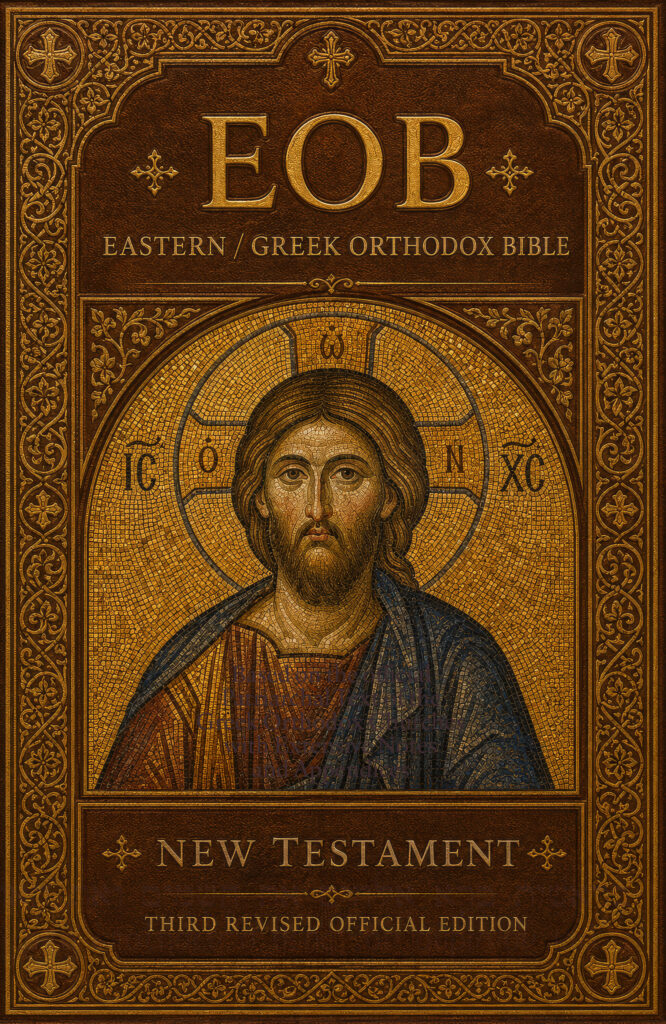
EOB: Official Site of the Eastern / Greek Orthodox Bible (Old and New Testament)
EOB (Eastern / Greek Orthodox Bible):
EOB Footnote:
KJV (King James Version):
WEB (World English Bible):
Benton LXX (Vaticanus):
Douai-Rheims (Vulgate):
Apostoliki Diakonia (LXX):
YLT (Young Literal Translation )(MT):
BBE (Bible in Basic English):
EOB Commentary:
GENESIS 1:22 – THE FIRST BLESSING
The Divine Blessing and Its Significance:
This verse records the first blessing (Hebrew: berakah) in all of Scripture, establishing a pattern of divine benediction that flows throughout salvation history. God’s blessing upon the creatures of sea and sky is not merely a wish but an effective word that imparts the power to fulfill the command to “be fruitful and multiply.” The blessing carries within itself the capacity for its own realization, demonstrating that God’s word accomplishes what it declares.
Patristic Interpretation:
Saint Basil the Great, in his Hexaemeron, notes that this blessing explains the perpetual fruitfulness of marine life and birds throughout all generations. The blessing given at creation continues to operate, sustaining the abundance of creatures even to the present day. Saint John Chrysostom similarly observes that God’s blessing contains generative power, enabling creatures to reproduce according to their kinds without requiring a new creative act for each generation.
Typological Reading:
The Church Fathers perceived in this first blessing a foreshadowing of the blessings that would come through Christ. Just as the waters brought forth abundant life through God’s word and blessing, so the waters of baptism bring forth spiritual children of God through the Word made flesh. The multiplication of fish particularly anticipates the miraculous multiplications performed by Christ, who blessed loaves and fishes to feed the multitudes. The fish (ichthys) became an early Christian symbol precisely because Christ demonstrated His lordship over creation by commanding its abundance.
Liturgical Connections:
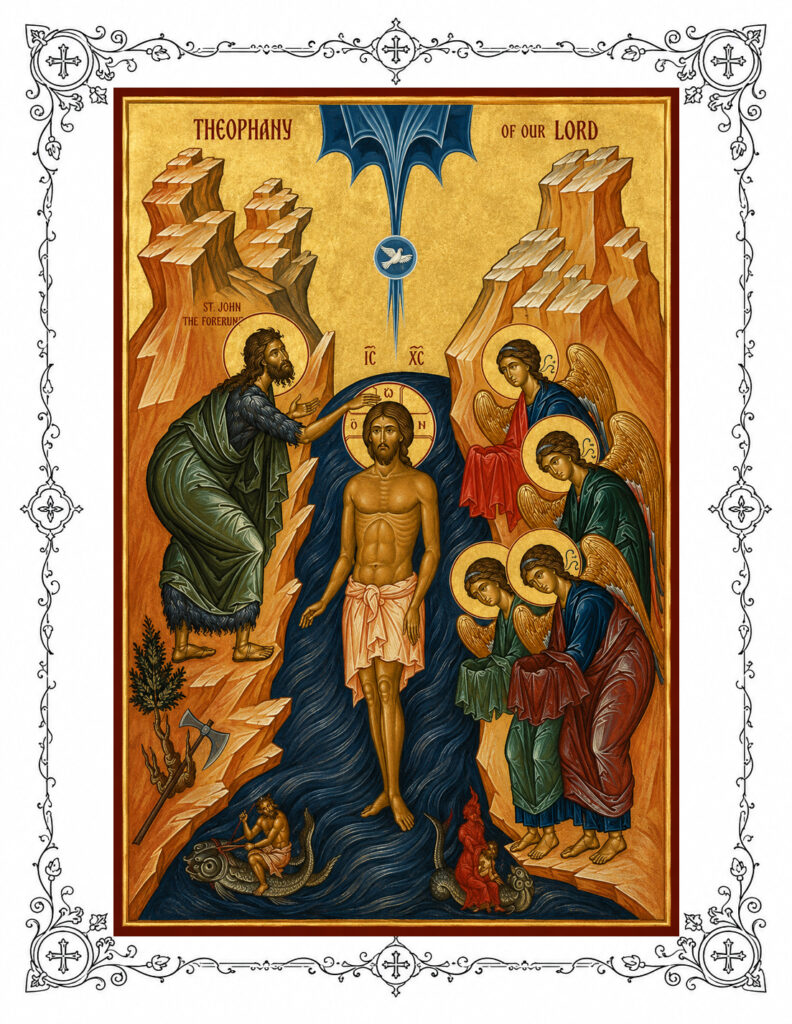
The blessing of waters at Theophany echoes this primordial blessing, as the Church prays for the sanctification of waters and all creation. The Great Blessing of Waters recalls how the Spirit moved over the waters at creation and now descends to renew all things. Similarly, the blessing of food, particularly the blessing of fish during festal meals, connects the faithful to this original divine benediction.
Spiritual Application:
Orthodox spirituality recognizes that humanity, created on the sixth day, receives an even greater blessing. Yet the blessing of the creatures teaches that fruitfulness comes not from autonomous effort but from divine gift. The spiritual life likewise depends upon God’s blessing for growth and multiplication. The Church, like the teeming waters, is called to be fruitful, bringing forth children of God through evangelism and spiritual generation. Saint Maximus the Confessor would note that this physical fruitfulness points toward the spiritual multiplication of virtues in the soul that receives God’s blessing and cooperates with divine grace.
The Book of Leviticus receives its English title from the Latin Vulgate, which is derived from the Greek Septuagint (LXX) title Leuitikon (Λευιτικόν), meaning “Levitical” or “pertaining to the Levites.”

The Book of Exodus receives its English title from the Greek Septuagint (LXX), where it is called Exodos (Ἔξοδος), meaning “departure” or “exit.” This name was chosen because the central

I. Date and Authorship Holy Tradition of the Orthodox Church, affirmed by the Fathers and the liturgical usage of the Church from the earliest centuries, attributes the Book of Genesis

Does Hebrews 11 on the Maccabees Show Stronger Alignment with 4 Maccabees than 2 Maccabees? Hebrews 11 (the famous “Hall of Faith” chapter) does not explicitly mention the Maccabees by