Commentary on Genesis 2:6
The Mist and Divine Watering
This verse presents a primordial image of the earth being watered not by rain from above but by a mist (or spring, depending on translation) rising from below. The Hebrew word “ed” has been variously understood as mist, vapor, stream, or underground spring. This detail, while seemingly minor, carries significant theological weight in the Orthodox tradition.
Typological Significance
The Fathers saw in this upward-rising moisture a type of the grace that would later descend from heaven. Before the Fall, the earth was sustained by waters emerging from within, suggesting an intimate, organic relationship between creation and its sustenance. Saint Ephrem the Syrian notes that this mist represents God’s gentle provision for creation before the more dramatic cycles of rain and storm became necessary. The earth, in its pristine state, was watered almost sacramentally, without violence or excess.
Christological Reading
Orthodox interpreters have connected this passage to Christ as the true source of living water. Just as the mist rose to water the face of the ground before any plant had sprung up, so Christ, the pre-eternal Word, sustained creation before His visible manifestation in the flesh. The Gospel of John’s imagery of living water springing up to eternal life finds a distant echo here. The ground awaiting cultivation prefigures humanity awaiting the coming of the Second Adam who would truly till and tend the human heart.
Liturgical and Spiritual Connections
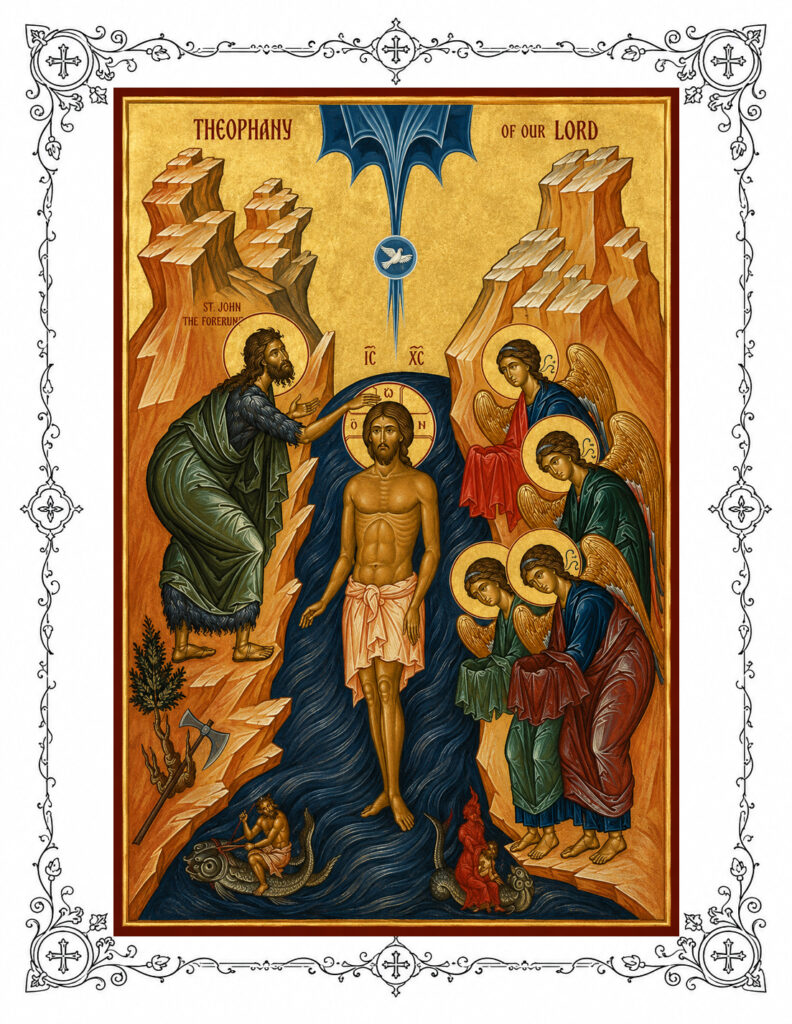
In Orthodox hymnography, particularly during Theophany, we encounter themes of water as both primordial element and vehicle of sanctification. The blessing of waters recalls how God has always used water as an instrument of life and blessing. The mist of Genesis 2:6 stands at the beginning of this sacred history of water, which culminates in the baptismal font where the new creation emerges.
The image also resonates with Orthodox understanding of theosis. The mist rising from below to meet divine intention from above suggests the synergy between human effort and divine grace. We are called to rise toward God even as His grace descends to meet us. Saint Maximus the Confessor’s theology of cosmic liturgy, where all creation participates in offering itself back to God, finds a seed in this primordial watering.
Patristic Witness
Saint Basil the Great, in his Hexaemeron, reflects on the ordered beauty of God’s provision for creation, noting how even before rain, God ensured the earth would not lack moisture. This demonstrates divine providence operating through natural means, a theme central to Orthodox cosmology that refuses to separate the natural from the supernatural.