Introduction to the book of Leviticus
The Book of Leviticus receives its English title from the Latin Vulgate, which is derived from the Greek Septuagint (LXX) title Leuitikon (Λευιτικόν), meaning “Levitical” or “pertaining to the Levites.”
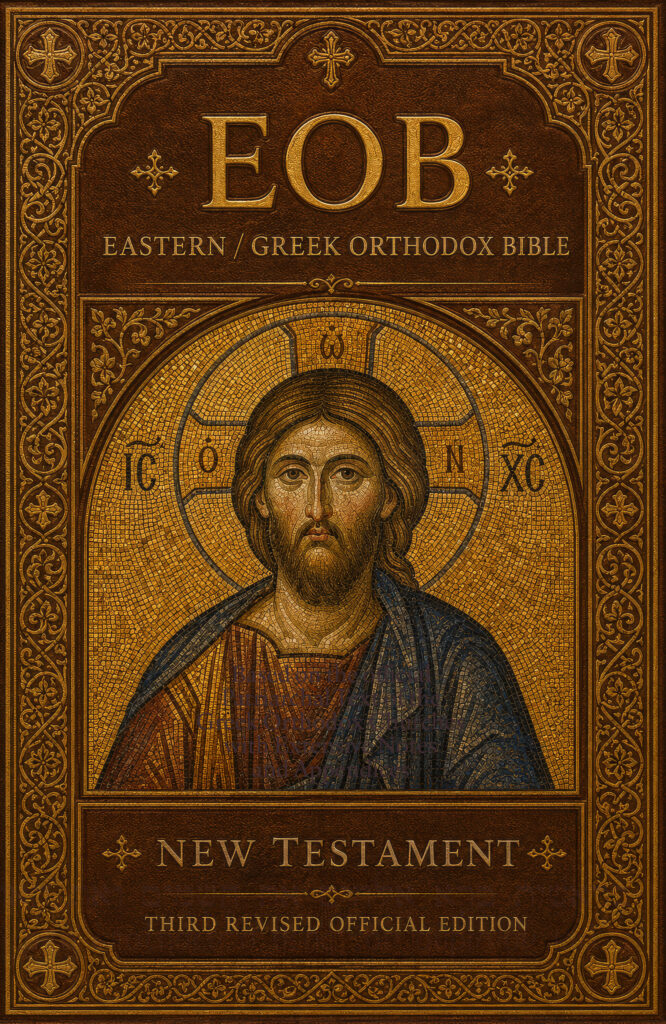
EOB: Official Site of the Eastern / Greek Orthodox Bible (Old and New Testament)
EOB (Eastern / Greek Orthodox Bible):
EOB Footnote:
KJV (King James Version):
WEB (World English Bible):
Benton LXX (Vaticanus):
Douai-Rheims (Vulgate):
Apostoliki Diakonia (LXX):
YLT (Young Literal Translation )(MT):
BBE (Bible in Basic English):
EOB Commentary:
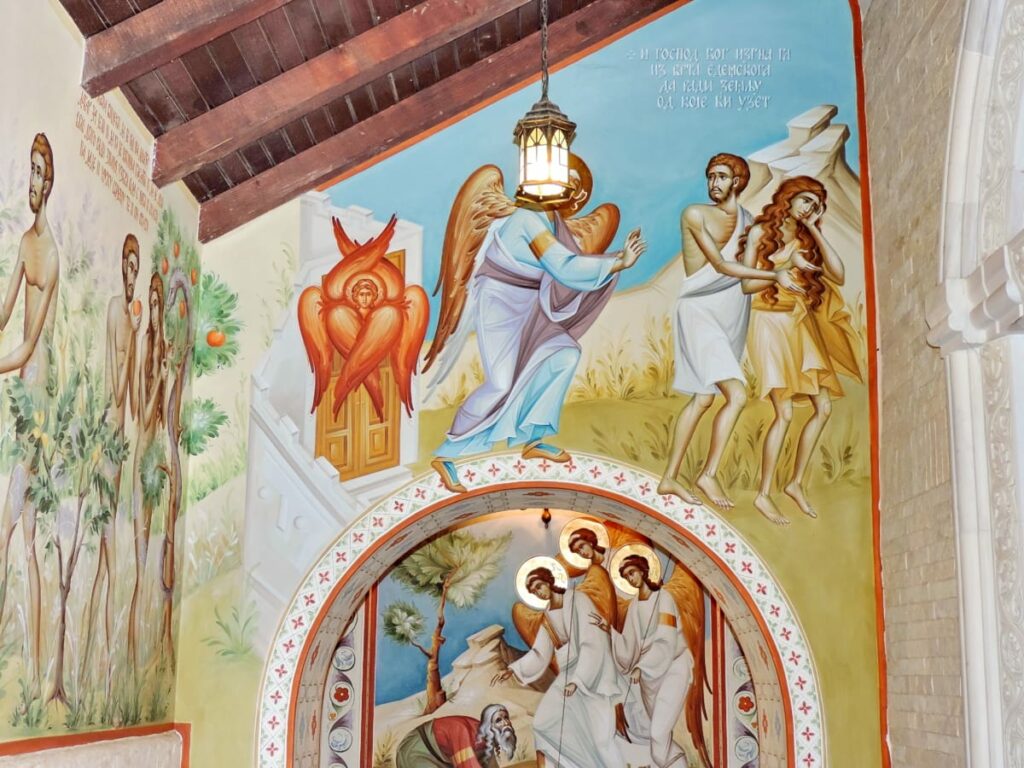
THE GARDEN AS SACRED VOCATION
Genesis 2:15 presents humanity’s original calling in two Hebrew terms: abad (to work, serve, till) and shamar (to keep, guard, protect). These words carry profound theological weight that extends far beyond agricultural labor, opening a window into humanity’s priestly vocation and its ultimate fulfillment in Christ.
Patristic Interpretation: The Church Fathers consistently understood this verse as describing more than physical gardening. Saint John Chrysostom notes that the work given to Adam was not burdensome toil but a joyful participation in God’s creative activity, a labor of love before the curse of Genesis 3:17-19 transformed work into sweat and struggle. Saint Ephrem the Syrian emphasizes that Adam was placed in Paradise not merely as a farmer but as a priest, with the garden serving as the first temple where humanity offered worship to God through faithful stewardship.
The Priestly Dimension: Remarkably, the same pairing of abad and shamar appears in Numbers 3:7-8 and 18:7 to describe the Levitical priests’ duties in the Tabernacle. This linguistic connection reveals that Adam’s role was fundamentally liturgical. He was to serve and guard the sacred space of Eden as priests would later serve and guard the sanctuary. The garden was thus the original holy place where heaven and earth intersected, and humanity stood as mediator between Creator and creation.
Christological Fulfillment: Christ, the New Adam, perfectly fulfills this original vocation. Where Adam failed to guard the garden from the serpent’s intrusion, Christ guards His flock as the Good Shepherd. Where Adam’s disobedience led to exile from Paradise, Christ’s obedience reopens its gates. The Gospel of John deliberately places the Resurrection in a garden, with Mary Magdalene mistaking the risen Lord for a gardener (John 20:15). This is no mere confusion but profound theological irony: Christ truly is the Gardener, the one who tends and keeps creation, restoring what Adam lost.
Liturgical Connections: Orthodox hymnography frequently draws upon Edenic imagery. The Paschal services proclaim Christ’s descent into Hades and His restoration of Adam to Paradise. The prayer before Holy Communion speaks of the communicant approaching the mystical supper as one returning to the Tree of Life, which Adam forfeited through negligence in his sacred duty.
Spiritual Application: For Orthodox spirituality, this verse establishes that human beings are called to active cooperation with God, what the tradition names synergeia. We are not passive recipients of grace but co-workers in the divine economy. The ascetic life, the cultivation of virtues, and the guarding of the heart from sinful thoughts all reflect this primordial calling to tend and protect the sacred garden of the soul, preparing it for the indwelling of the Holy Trinity.
The Book of Leviticus receives its English title from the Latin Vulgate, which is derived from the Greek Septuagint (LXX) title Leuitikon (Λευιτικόν), meaning “Levitical” or “pertaining to the Levites.”

The Book of Exodus receives its English title from the Greek Septuagint (LXX), where it is called Exodos (Ἔξοδος), meaning “departure” or “exit.” This name was chosen because the central

I. Date and Authorship Holy Tradition of the Orthodox Church, affirmed by the Fathers and the liturgical usage of the Church from the earliest centuries, attributes the Book of Genesis

Does Hebrews 11 on the Maccabees Show Stronger Alignment with 4 Maccabees than 2 Maccabees? Hebrews 11 (the famous “Hall of Faith” chapter) does not explicitly mention the Maccabees by