Genesis 3:5 Commentary
The Serpent’s False Promise
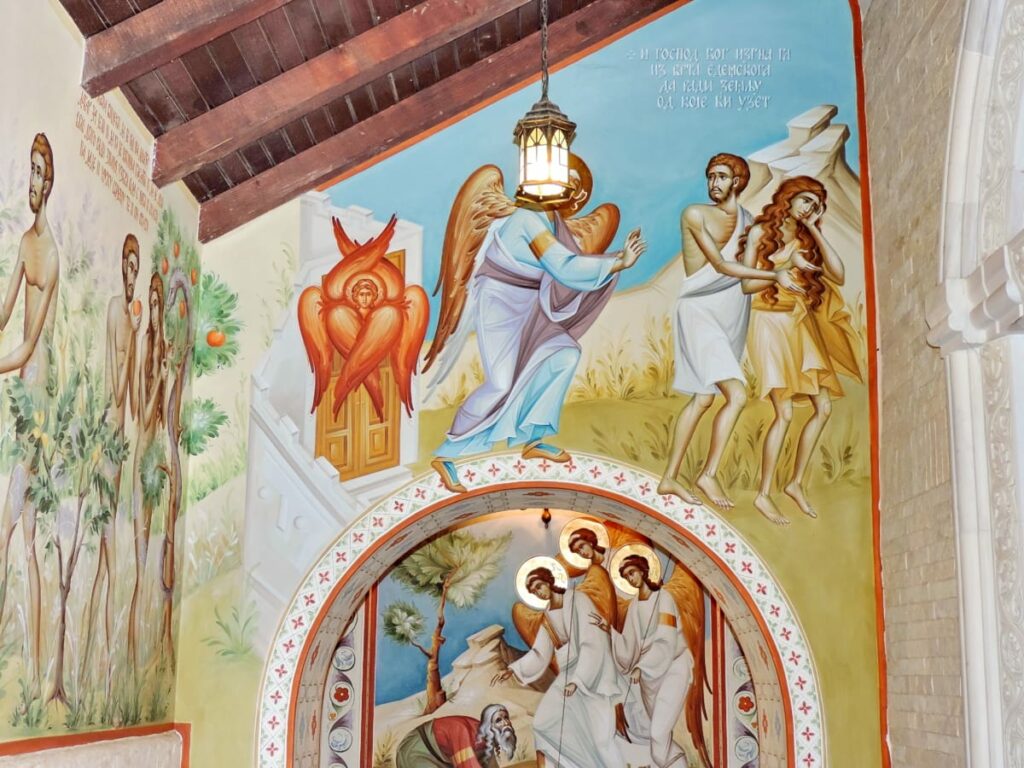
This verse stands at the heart of the primordial tragedy, containing the serpent’s deceptive promise that eating the forbidden fruit would make Adam and Eve “like God, knowing good and evil.” The phrase “you will be like gods” (esethe hos theoi) represents the fundamental distortion of humanity’s authentic calling. The irony is profound: humanity was already created in the image and likeness of God, destined for theosis through communion with the Creator. The serpent offers a counterfeit path to divinity—one achieved through autonomy and transgression rather than through loving obedience and participation in divine grace.
Patristic Interpretation
Saint Irenaeus of Lyon identifies this as the original lie that corrupted human nature. He emphasizes that the serpent promised divinity through knowledge apart from God, whereas true deification comes only through union with Christ. Saint Athanasius similarly notes that humanity grasped at equality with God in the wrong manner, seeking to become divine by their own power rather than receiving divinization as gift.
Saint John Chrysostom observes that the serpent’s words contain a mixture of truth and falsehood—the most dangerous form of deception. Their eyes were indeed opened, but to shame rather than glory. They gained knowledge, but it was the bitter knowledge of their own nakedness and separation from God.
Christological Significance
The New Testament presents Christ as the perfect reversal of this temptation. Saint Paul’s hymn in Philippians 2:6 declares that Christ, “being in the form of God, did not consider equality with God something to be grasped.” Where Adam and Eve seized at divinity through disobedience, the New Adam emptied Himself through obedience unto death. Christ demonstrates the authentic path to glorification: humble submission to the Father’s will.
The three temptations of Christ in the wilderness echo this original deception. Satan again offers shortcuts to glory and power apart from the Father’s plan, and Christ refuses each one, healing humanity’s ancient wound through His perfect obedience.
Liturgical and Spiritual Connections
The Lenten Triodion frequently references this verse, particularly during Forgiveness Sunday and the first week of Great Lent. The hymnography laments humanity’s fall through pride and false wisdom while celebrating Christ’s restoration of our true calling to theosis.
Orthodox spirituality identifies this grasping after autonomous self-deification as the root of all sin. The neptic fathers teach that every temptation contains this same essential structure: the promise of fulfillment apart from God, of becoming our own source of meaning and value. True spiritual warfare involves recognizing and rejecting this lie in its countless contemporary disguises, choosing instead the path of humble dependence upon divine grace.