Commentary on Genesis 3:17
The Curse Upon the Ground and Its Cosmic Significance
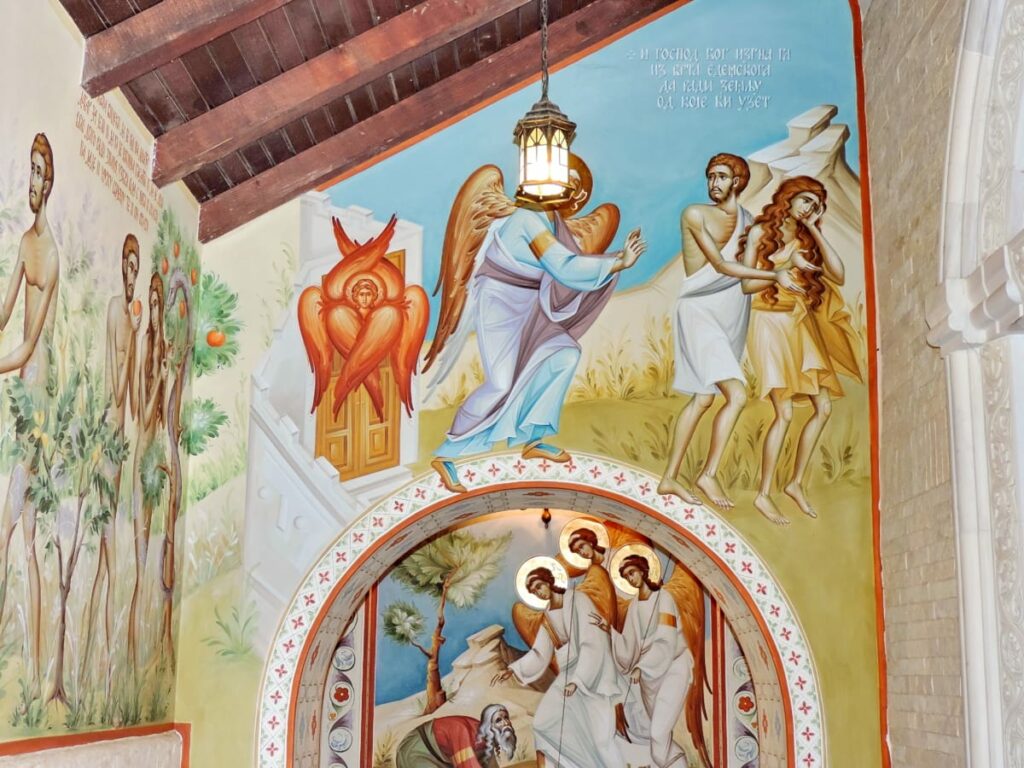
In this verse, God pronounces judgment not merely upon Adam but upon the very earth itself, establishing a profound connection between human sin and cosmic disorder. The ground (adamah) from which Adam (adam) was formed now becomes cursed on his account, revealing the intimate bond between humanity and creation that Orthodox theology consistently affirms.
Patristic Interpretation: Saint John Chrysostom teaches that the cursing of the ground was an act of divine mercy rather than mere punishment. By making labor toilsome and the earth resistant, God prevented humanity from becoming entirely absorbed in earthly pleasures and forgetting their heavenly calling. The thorns and thistles serve as constant reminders of the Fall and the need for repentance. Saint Ephrem the Syrian similarly notes that the earth, which had freely yielded its abundance, now withholds its gifts, teaching humanity dependence upon God.
Christological Fulfillment: The Orthodox Church sees this curse as directly addressed in Christ’s redemptive work. When our Lord was crowned with thorns before His crucifixion, He literally wore upon His sacred head the very curse pronounced in Eden. The thorns that sprang from cursed ground became His crown, transforming the symbol of the curse into an instrument of salvation. Christ, the New Adam, takes upon Himself the consequences of the first Adam’s transgression.
Liturgical Connections: During Great Lent, the Church emphasizes the theme of return to Paradise, and this verse provides the backdrop for understanding what was lost. The Paschal celebration proclaims that through Christ’s Resurrection, creation itself begins its liberation from bondage. The blessing of fields and crops in Orthodox practice acknowledges both the continuing effects of the curse and God’s mercy in providing sustenance despite it.
Ascetical Theology: The toil mentioned in this verse becomes, in Orthodox spirituality, a means of sanctification. The monastic tradition particularly embraces manual labor as both penance and prayer. What was given as consequence of sin becomes, through grace, an opportunity for theosis. The sweat of one’s brow, offered to God, participates in the redemptive suffering of Christ.
Cosmic Redemption: Saint Paul’s teaching in Romans 8 that creation groans awaiting liberation finds its origin here. Orthodox eschatology anticipates not merely individual salvation but the transfiguration of all creation, the healing of this primordial wound. The new heavens and new earth represent the final reversal of this curse, when thorns shall give way to the Tree of Life and toilsome labor to eternal sabbath rest in God.