Genesis 3:21 – Commentary
The Divine Provision of Garments
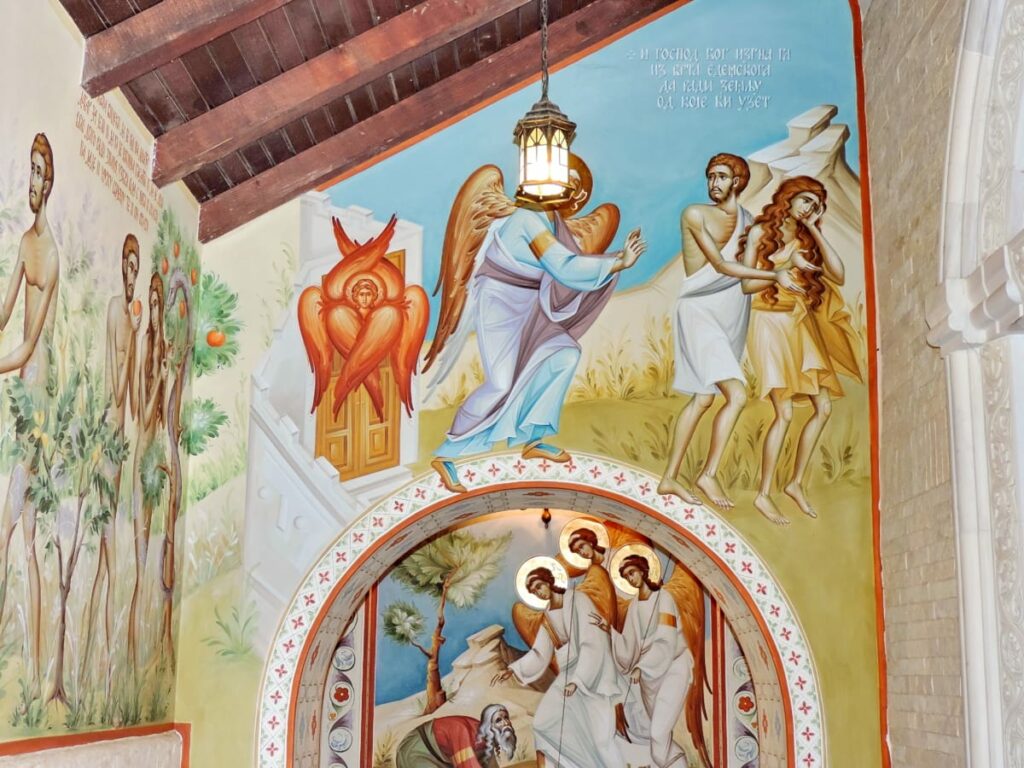
This brief verse carries profound theological weight in Orthodox understanding, revealing God’s merciful response to human sin even in the midst of pronouncing judgment. After Adam and Eve attempted to cover their nakedness with fig leaves—a symbol of their own inadequate efforts at self-justification—God Himself provides garments of skin, demonstrating that true covering for sin must come from above.
Patristic Interpretation: The Church Fathers consistently saw in this verse a prefiguration of salvation through sacrifice. Saint Gregory the Theologian and other Fathers noted that the “garments of skin” (dermatinous chitonas) required the death of an animal, thus introducing the principle that the covering of sin necessitates the shedding of blood. This becomes the foundation for understanding all subsequent sacrifice in Scripture, culminating in Christ the Lamb of God.
Saint Methodius of Olympus interpreted these garments as representing mortality itself—the corruptible flesh that humanity now wears as a consequence of the Fall. Yet even this mortality becomes, paradoxically, a gift, for it prevents humanity from living eternally in a fallen state and opens the path toward resurrection.
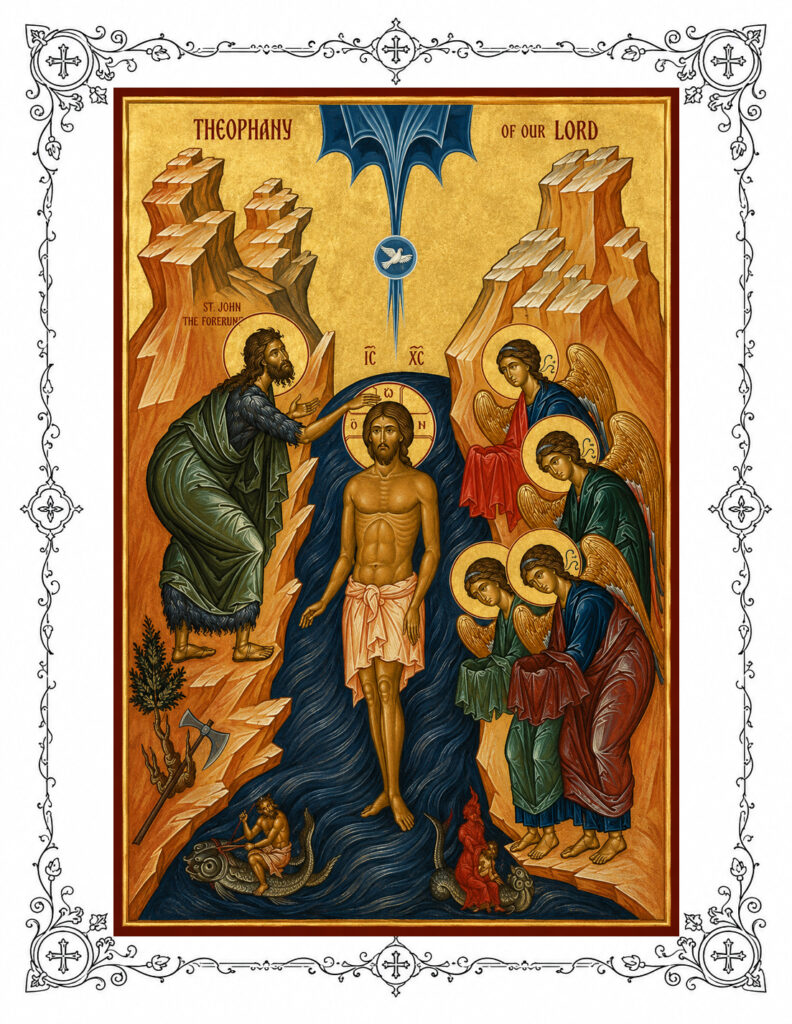
Christological Significance: Orthodox theology sees here a type of baptismal clothing. Just as God clothed the naked Adam, so in baptism the newly illumined are clothed in white garments, symbolizing Christ Himself. The Apostle Paul’s declaration “as many as have been baptized into Christ have put on Christ” (Galatians 3:27) finds its Old Testament foundation in this primordial vesting by God.
The garments also prefigure the Incarnation itself. The eternal Logos “clothed Himself” in human flesh, taking on our mortality that we might be clothed in His immortality. Saint Cyril of Alexandria emphasized this exchange: Christ wore our garments of skin that we might wear garments of glory.
Liturgical Connections: In the Orthodox baptismal service, immediately after chrismation, the newly baptized is clothed in a white garment while the choir sings “Grant unto me the robe of light, O Most Merciful Christ our God.” This directly echoes Genesis 3:21, transforming the garments of mortality into garments of transfiguration.
During Great Lent, the Church reads Genesis extensively, and this verse reminds the faithful that even in judgment, God’s mercy prevails. The same God who clothes Adam will ultimately clothe humanity in incorruption through the Resurrection.
Spiritual Application: This verse teaches that human attempts at self-salvation—represented by the fig leaves—are insufficient. Only God can adequately cover human shame and sin, and He does so through sacrifice, ultimately through the sacrifice of His own Son.