Introduction to the book of Leviticus
The Book of Leviticus receives its English title from the Latin Vulgate, which is derived from the Greek Septuagint (LXX) title Leuitikon (Λευιτικόν), meaning “Levitical” or “pertaining to the Levites.”
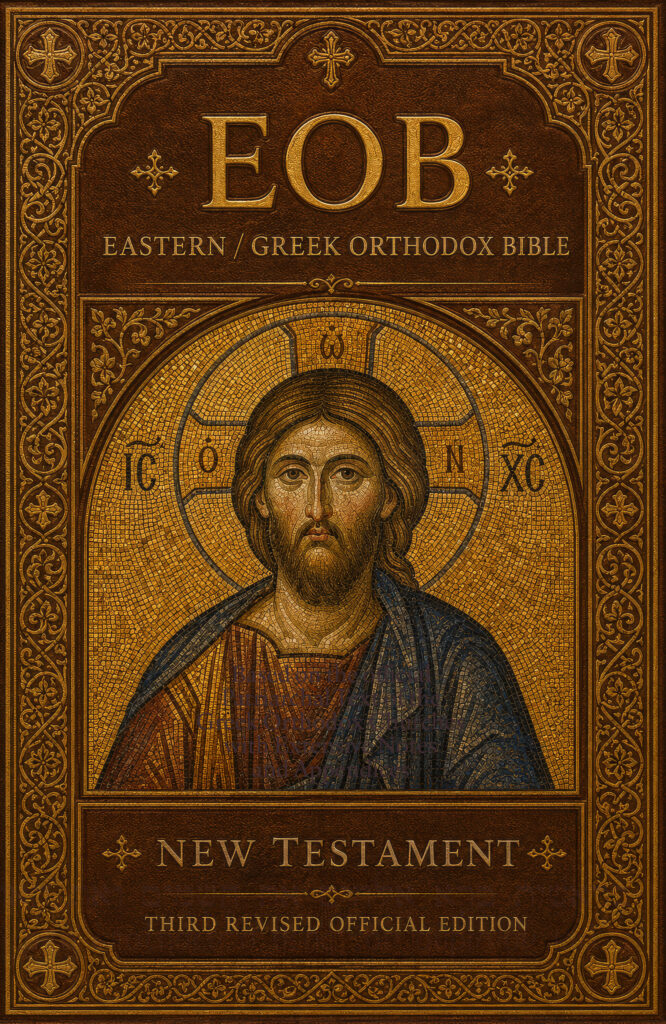
EOB: Official Site of the Eastern / Greek Orthodox Bible (Old and New Testament)
EOB (Eastern / Greek Orthodox Bible):
EOB Footnote:
KJV (King James Version):
WEB (World English Bible):
Benton LXX (Vaticanus):
Douai-Rheims (Vulgate):
Apostoliki Diakonia (LXX):
YLT (Young Literal Translation )(MT):
BBE (Bible in Basic English):
EOB Commentary:
GENESIS 4:6 – COMMENTARY
The Divine Inquiry and the Call to Repentance
In this verse, the Lord addresses Cain directly following his offering’s rejection, asking “Why are you angry? And why has your countenance fallen?” This divine questioning reveals several profound theological truths central to Orthodox understanding of God’s relationship with humanity.
The Pastoral Nature of God: The Lord does not immediately condemn Cain but approaches him with questions designed to provoke self-examination. This mirrors the pattern established in Genesis 3:9 when God called to Adam, “Where are you?” Saint John Chrysostom observes that God asks not because He lacks knowledge, but because He desires to lead the sinner toward recognition of his own spiritual state. This pastoral approach demonstrates that God consistently offers the possibility of repentance before judgment.
Christological Significance: The Orthodox Fathers see in this divine condescension a foreshadowing of Christ’s own ministry. Just as the Lord sought out Cain before his sin was fully consummated, so Christ came to seek and save the lost. The question posed to Cain echoes throughout Scripture, finding its fulfillment in Christ’s gentle interrogations of those caught in sin—the woman at the well, Peter after his denial, and others whom He called to self-awareness rather than immediate condemnation.
The Passions and Spiritual Warfare: Orthodox ascetical theology finds in this verse a crucial teaching about the nature of the passions. Cain’s anger and fallen countenance represent the visible manifestation of internal spiritual disorder. The Philokalia tradition emphasizes that such movements of passion, when recognized early, can still be resisted. God’s intervention at this precise moment illustrates the patristic teaching that grace is offered to help us combat sinful impulses before they bear fruit in action.
Liturgical Connections: During Great Lent, the Church repeatedly calls the faithful to examine their hearts, echoing this divine inquiry. The penitential prayers of Saint Ephrem the Syrian ask God to grant us awareness of our own sins, precisely the self-knowledge that God sought to awaken in Cain. The Pre-Lenten reading of this narrative in some traditions serves as preparation for the intense self-examination of the Lenten season.
The Unforced Nature of Salvation: Significantly, God questions but does not compel. This preserves human freedom—a cornerstone of Orthodox anthropology. Cain remains free to heed or ignore the divine warning. Saint Basil the Great notes that God’s grace always cooperates with human will rather than overriding it. The tragedy that follows demonstrates not divine failure but human refusal of offered mercy.
The Book of Leviticus receives its English title from the Latin Vulgate, which is derived from the Greek Septuagint (LXX) title Leuitikon (Λευιτικόν), meaning “Levitical” or “pertaining to the Levites.”

The Book of Exodus receives its English title from the Greek Septuagint (LXX), where it is called Exodos (Ἔξοδος), meaning “departure” or “exit.” This name was chosen because the central

I. Date and Authorship Holy Tradition of the Orthodox Church, affirmed by the Fathers and the liturgical usage of the Church from the earliest centuries, attributes the Book of Genesis

Does Hebrews 11 on the Maccabees Show Stronger Alignment with 4 Maccabees than 2 Maccabees? Hebrews 11 (the famous “Hall of Faith” chapter) does not explicitly mention the Maccabees by