GENESIS 4:9
The Divine Question and Human Accountability
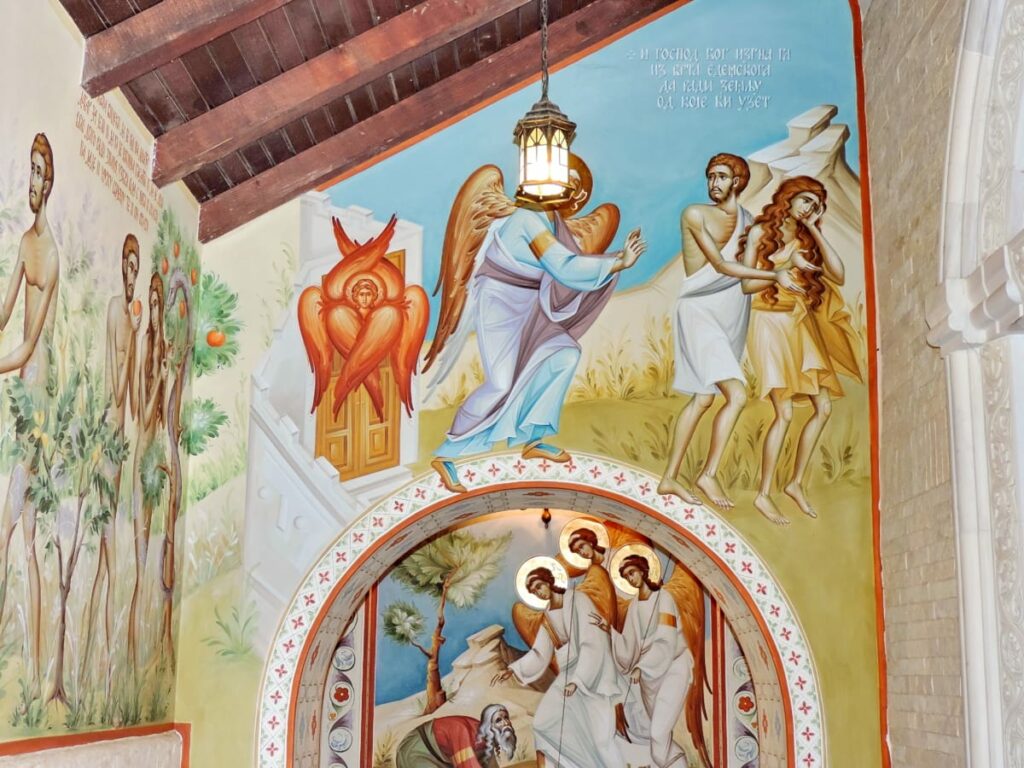
This verse presents the second great interrogation of fallen humanity, echoing the earlier question posed to Adam: “Where are you?” (Genesis 3:9). Here God asks Cain, “Where is Abel your brother?” Both questions demonstrate that God, though omniscient, calls humanity to confession and self-examination rather than simply pronouncing judgment. The Fathers consistently note that these questions are pedagogical rather than informational—God seeks Cain’s repentance, not information.
Cain’s Response and the Rejection of Brotherhood
Cain’s infamous reply, “I do not know; am I my brother’s keeper?” represents a threefold sin: the lie itself, the denial of fraternal responsibility, and the implicit accusation against God for imposing such responsibility. Saint John Chrysostom observes that Cain compounds murder with falsehood, showing how one sin begets another when the soul refuses repentance. The question “Am I my brother’s keeper?” has echoed through human history as the perpetual excuse of those who abandon love of neighbor.
Typological Significance
The Orthodox tradition reads Abel as a type of Christ, the innocent victim slain by envious brothers. Just as Cain killed Abel, so the leaders of Israel delivered Christ to death through envy (Matthew 27:18). The Epistle to the Hebrews explicitly develops this typology, noting that Christ’s blood “speaks better things than that of Abel” (Hebrews 12:24). Abel’s blood cried out for justice; Christ’s blood cries out for mercy and reconciliation.
Liturgical Resonance
In the hymnography of Great and Holy Saturday, the Church draws upon this imagery, presenting Christ as the new Abel whose innocent blood redeems rather than condemns. The Paschal mystery transforms the cry of Abel’s blood from accusation to intercession.
Spiritual Application
For Orthodox spirituality, this passage establishes the fundamental truth that we are indeed our brother’s keeper. The denial of this responsibility constitutes a rejection of our very humanity, created in the image of the Trinitarian God who exists in eternal communion. Saint Basil the Great, in his homilies on social justice, returns frequently to this theme: the goods we possess beyond our needs belong to those who lack necessities, and to withhold them makes us participants in Cain’s denial.
The question God poses to Cain is posed to every Christian at each Divine Liturgy, where we pray “for the peace of the whole world” and offer intercession for all humanity. We cannot approach the Chalice while denying responsibility for our brothers and sisters, for as Saint John the Theologian writes, “Whoever does not love his brother whom he has seen cannot love God whom he has not seen” (1 John 4:20).