GENESIS 4:16
The Departure from the Divine Presence
Cain’s departure to the land of Nod, east of Eden, represents one of the most spiritually significant geographical movements in Scripture. The Hebrew word “Nod” derives from the root meaning “wandering” or “restlessness,” indicating that Cain’s exile was not merely physical but existential. Having rejected repentance when God offered him the opportunity, Cain now experiences the full weight of spiritual alienation.
Patristic Interpretation
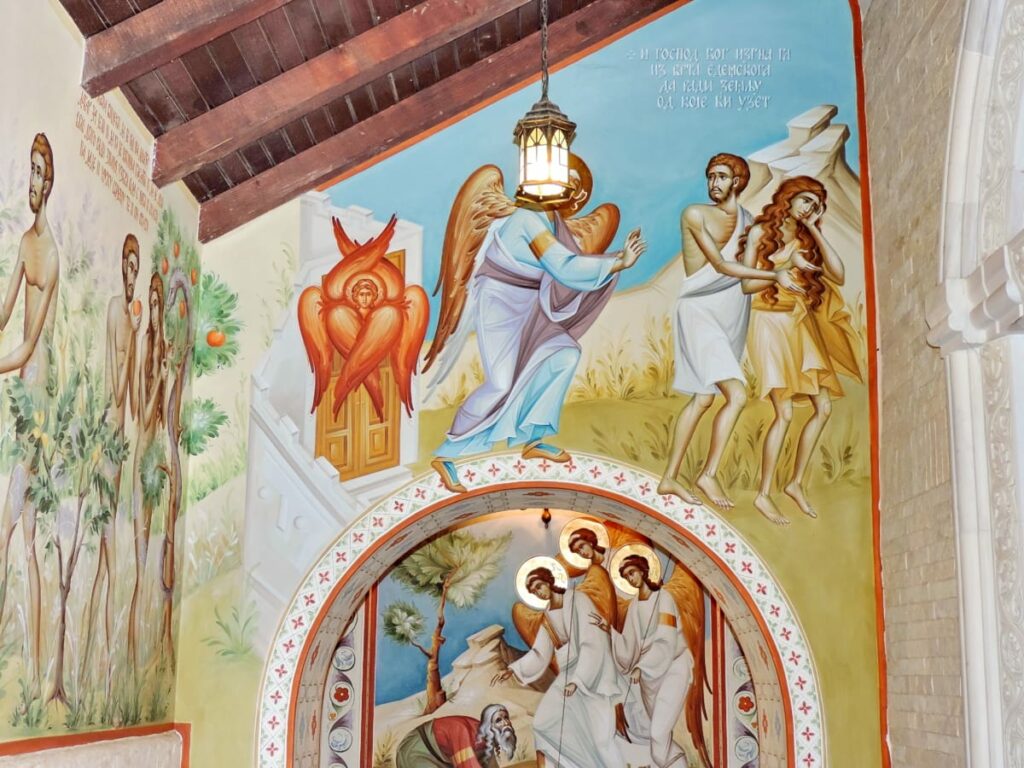
Saint John Chrysostom observes that Cain’s movement eastward, away from Eden, mirrors and intensifies the exile of Adam and Eve. While our first parents were expelled from Paradise, Cain moves even further from the divine presence, demonstrating how sin compounds itself across generations when left unrepented. Saint Ephrem the Syrian notes that the “face of God” from which Cain departed symbolizes the loss of divine communion, the most grievous consequence of murder and impenitence.
Saint Ambrose of Milan interprets this passage typologically, seeing in Cain’s wandering the restlessness of the soul that has severed itself from God through mortal sin. The land of Nod becomes symbolic of the human condition apart from grace—perpetual instability and the absence of true rest.
Christological and New Testament Connections
This verse gains profound significance when read alongside Christ’s words about having “nowhere to lay His head” (Matthew 8:20). While Cain wanders as a consequence of fratricide, Christ voluntarily enters into the wandering condition of fallen humanity to redeem it. The Second Adam takes upon Himself the exile that the children of Cain deserve.
Furthermore, the Epistle to the Hebrews speaks of believers as “strangers and pilgrims” seeking a heavenly homeland (Hebrews 11:13-16). The Christian transforms Cain’s curse of wandering into a blessed pilgrimage toward the Kingdom.
Liturgical and Spiritual Significance
In Orthodox hymnography, particularly during Great Lent, themes of exile and return pervade the services. The Lenten Triodion repeatedly invokes the image of humanity wandering far from Paradise, calling the faithful to return through repentance. The Prodigal Son, commemorated before Lent begins, represents the reversal of Cain’s journey—movement toward the Father rather than away from Him.
The Jesus Prayer tradition addresses precisely this condition of spiritual restlessness. The hesychastic fathers teach that the heart without God is like Cain in Nod—perpetually unsettled. Only through unceasing prayer and divine indwelling can the soul find its true dwelling place and cease its wandering.
Orthodox monasticism also reflects on this passage, understanding the monk’s cell as the antidote to Nod—a place of stability (stabilitas loci) where one confronts God rather than fleeing His presence.