Genesis 5:5 – Commentary
The Death of Adam and Its Theological Significance
This verse records the death of Adam at nine hundred and thirty years, marking the first fulfillment of God’s warning that transgression would bring death. The phrase “and he died” echoes throughout this chapter like a funeral bell, a solemn refrain that underscores the universal consequence of the Fall. Saint John Chrysostom observes that Moses deliberately repeats this phrase to remind us that death entered the world through sin, and that no length of years could ultimately preserve humanity from its grip.
Typological Connection to Christ
The Apostle Paul draws upon Adam’s death to illuminate the work of Christ, declaring that “as in Adam all die, so also in Christ shall all be made alive” (1 Corinthians 15:22). Adam’s death at 930 years, though remarkably long by our standards, demonstrates that even the first man, created directly by God’s hands, could not escape mortality once sin had entered. The Church Fathers consistently present Adam as the type whose failure necessitated the coming of the New Adam. Saint Irenaeus of Lyon emphasizes that Christ recapitulated Adam’s life, succeeding where Adam failed and thereby opening the path to immortality.
Liturgical and Spiritual Reflections
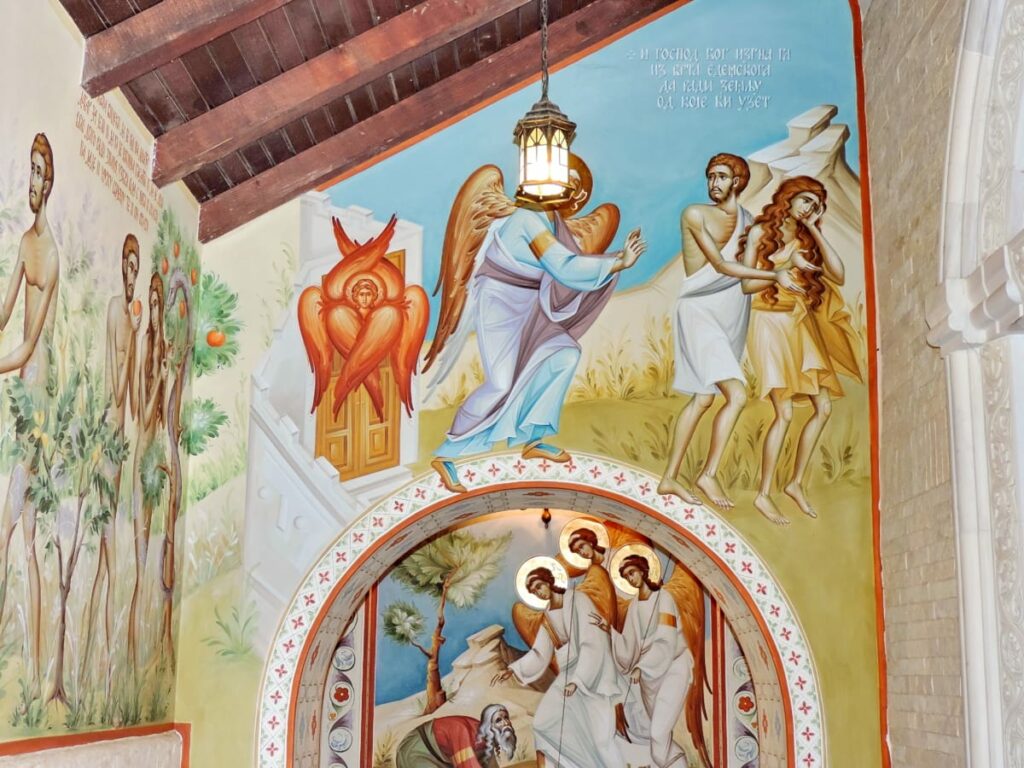
In the Orthodox funeral service, we acknowledge that death came through Adam’s transgression while proclaiming the resurrection through Christ. The kontakion “With the saints give rest” and the prayers for the departed reflect this understanding that Adam’s death inaugurated the reign of mortality, which Christ’s Resurrection has now overthrown. During Forgiveness Sunday and throughout Great Lent, the Church recalls Adam’s expulsion from Paradise and subsequent mortality, inviting the faithful to repentance and renewal.
The Longevity of the Patriarchs
The extended lifespans of the antediluvian patriarchs have prompted much patristic reflection. Some Fathers suggest that God granted such longevity to allow for the multiplication of humanity and the preservation of knowledge. Others see in these great ages a gradual diminishment of the original vitality given to creation, a slow fading that reflects the progressive effects of sin upon human nature. Saint Ephrem the Syrian notes that even these remarkable years were but a shadow compared to the eternal life that Adam forfeited and that Christ restores.
The Paschal Mystery Foreshadowed
Ultimately, this verse points forward to Pascha. Adam’s death, the first human death, finds its answer in Christ’s voluntary death and glorious Resurrection. The Orthodox Church celebrates this mystery annually, proclaiming that Christ has “trampled down death by death,” transforming the curse pronounced upon Adam into the doorway to eternal life.