Introduction to the book of Leviticus
The Book of Leviticus receives its English title from the Latin Vulgate, which is derived from the Greek Septuagint (LXX) title Leuitikon (Λευιτικόν), meaning “Levitical” or “pertaining to the Levites.”
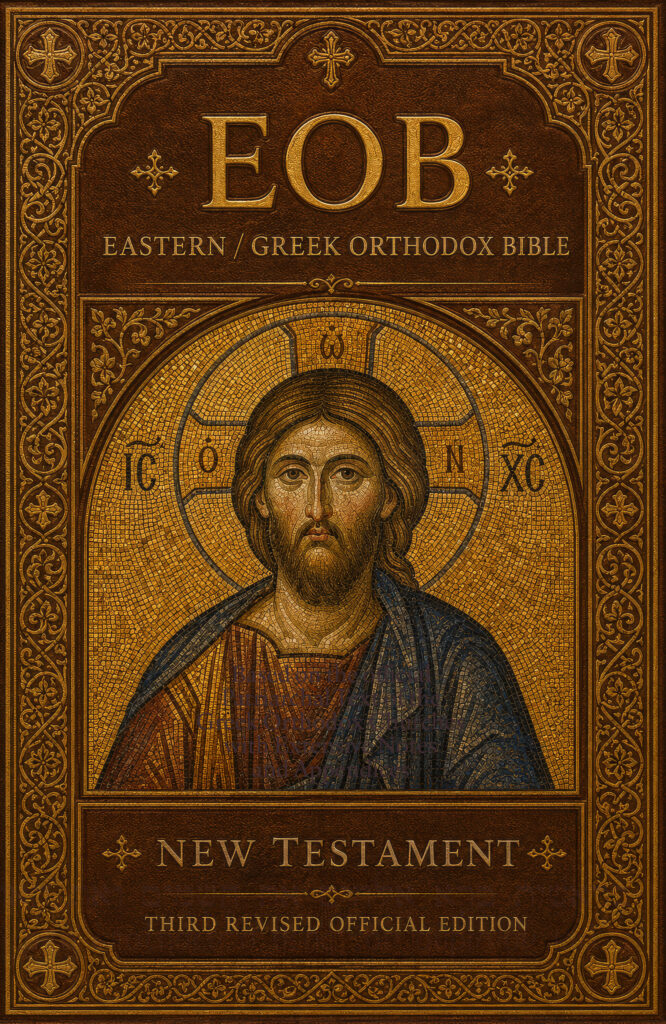
EOB: Official Site of the Eastern / Greek Orthodox Bible (Old and New Testament)
EOB (Eastern / Greek Orthodox Bible):
EOB Footnote:
KJV (King James Version):
WEB (World English Bible):
Benton LXX (Vaticanus):
Douai-Rheims (Vulgate):
Apostoliki Diakonia (LXX):
YLT (Young Literal Translation )(MT):
BBE (Bible in Basic English):
EOB Commentary:
Genesis 5:25 – Commentary
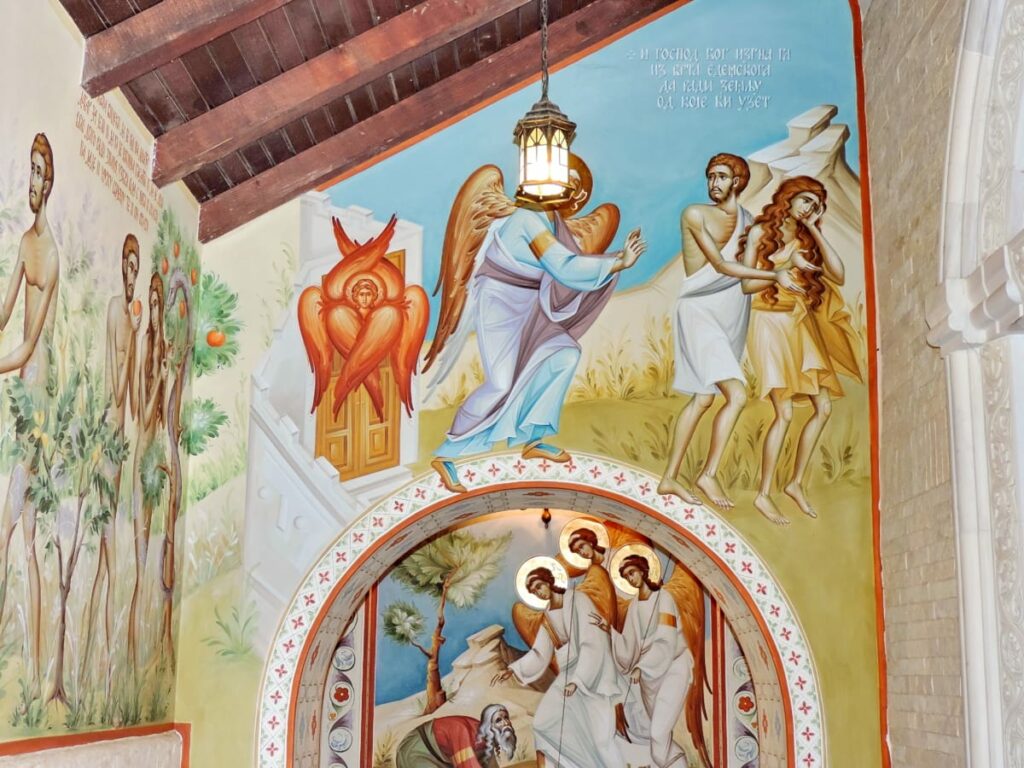
The Life of Methuselah
This verse records that Methuselah lived one hundred and eighty-seven years before begetting Lamech. While appearing as a simple genealogical notation, this verse introduces us to the most long-lived human being recorded in Scripture, whose total lifespan would reach nine hundred and sixty-nine years.
Typological Significance
The name Methuselah (Methousala in the Septuagint) has been interpreted by various ancient commentators to mean “when he dies, it shall be sent” or “his death shall bring.” This interpretation carries profound prophetic weight, for careful calculation of the biblical chronology reveals that Methuselah died in the very year of the Great Flood. Thus, his extraordinary longevity becomes a sign of divine patience and forbearance, God extending the time of repentance for a wicked generation.
Saint John Chrysostom, in his Homilies on Genesis, emphasizes that the extended lifespans of the antediluvian patriarchs served multiple purposes in divine providence. They allowed for the rapid multiplication of humanity, the preservation and transmission of sacred knowledge, and demonstrated the original vigor of human nature before sin had fully corrupted the created order.
Christological Reading
The Church Fathers saw in the genealogy from Adam to Noah a preparation for the genealogy of Christ. Just as Methuselah stands between Enoch (who walked with God and was translated) and Noah (through whom humanity was saved), so too the patriarchs form a chain of faithful witnesses leading ultimately to the Incarnation. The patience of God displayed in Methuselah’s long life prefigures the divine longsuffering that would culminate in the sending of the Son for the salvation of the world.
Liturgical Connection
In the Orthodox funeral service, we are reminded of the transitory nature of even the longest human life. Though Methuselah lived nearly a millennium, he too returned to dust. The kontakion “With the saints give rest” places all human mortality in perspective, whether one lives few years or many. The genealogies of Genesis thus prepare us to understand that true life is found not in length of days but in union with the Source of Life.
Spiritual Application
For Orthodox spiritual life, Methuselah’s years remind us that God grants time for repentance. As Saint Peter writes, “The Lord is not slow concerning His promise, as some count slowness, but is longsuffering toward us, not willing that any should perish but that all should come to repentance” (2 Peter 3:9). Each day of our lives, like each year of Methuselah’s, is a gift of divine mercy calling us toward transformation in Christ.
The Book of Leviticus receives its English title from the Latin Vulgate, which is derived from the Greek Septuagint (LXX) title Leuitikon (Λευιτικόν), meaning “Levitical” or “pertaining to the Levites.”

The Book of Exodus receives its English title from the Greek Septuagint (LXX), where it is called Exodos (Ἔξοδος), meaning “departure” or “exit.” This name was chosen because the central

I. Date and Authorship Holy Tradition of the Orthodox Church, affirmed by the Fathers and the liturgical usage of the Church from the earliest centuries, attributes the Book of Genesis

Does Hebrews 11 on the Maccabees Show Stronger Alignment with 4 Maccabees than 2 Maccabees? Hebrews 11 (the famous “Hall of Faith” chapter) does not explicitly mention the Maccabees by