Introduction to the book of Leviticus
The Book of Leviticus receives its English title from the Latin Vulgate, which is derived from the Greek Septuagint (LXX) title Leuitikon (Λευιτικόν), meaning “Levitical” or “pertaining to the Levites.”
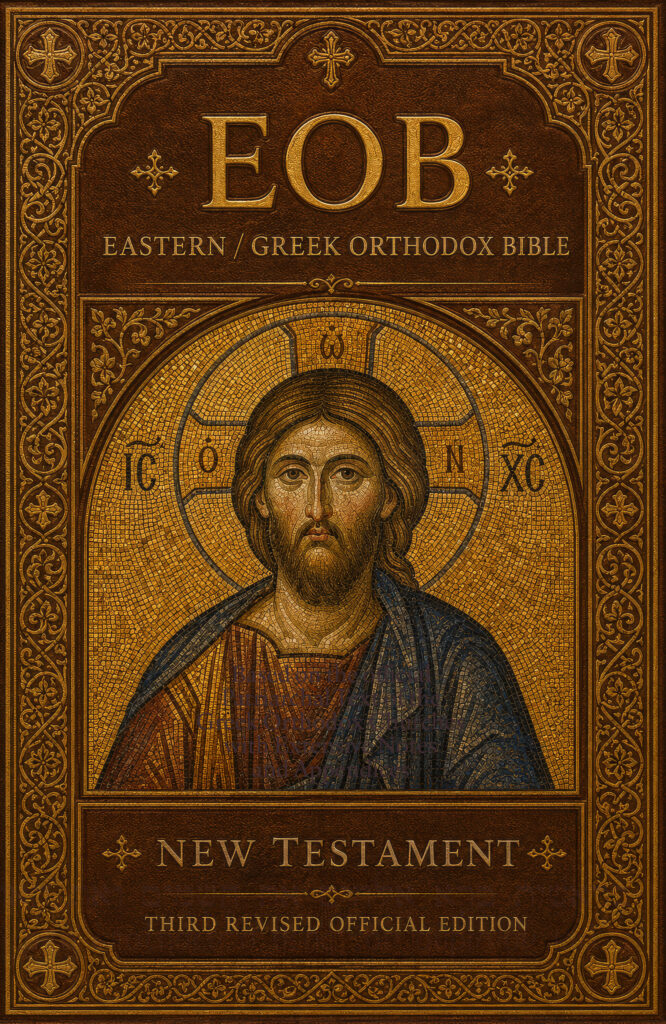
EOB: Official Site of the Eastern / Greek Orthodox Bible (Old and New Testament)
EOB (Eastern / Greek Orthodox Bible):
EOB Footnote:
KJV (King James Version):
WEB (World English Bible):
Benton LXX (Vaticanus):
Douai-Rheims (Vulgate):
Apostoliki Diakonia (LXX):
YLT (Young Literal Translation )(MT):
BBE (Bible in Basic English):
EOB Commentary:
Commentary on Genesis 5:29
Lamech’s prophetic naming of Noah stands as one of the most significant verses in the genealogy of Adam, breaking the formulaic pattern to offer a word of hope amid the curse. The name Noah (Noach) is connected to the Hebrew word for rest or comfort (nacham), and Lamech’s declaration that this son will bring comfort “from our work and from the toil of our hands, because of the ground which the Lord has cursed” directly recalls the consequences of Adam’s fall in Genesis 3:17-19.
Typological Significance for Christ
The Fathers consistently read this verse as a prophecy finding its ultimate fulfillment not merely in Noah but in Christ. Saint John Chrysostom notes that while Noah provided temporary relief through the preservation of humanity and the renewal of the earth after the flood, the true rest from the curse comes only through the New Adam. Christ is the one who definitively lifts the curse, transforming labor from mere toil into participation in divine creativity. The ground cursed in Adam is sanctified through the Incarnation, as God Himself takes on human flesh and walks upon the earth.
Saint Ephrem the Syrian draws attention to the prophetic nature of Lamech’s words, suggesting that the Holy Spirit spoke through this patriarch concerning realities beyond his immediate understanding. Noah becomes a type of Christ who saves humanity through wood—the ark prefiguring the Cross—and through water, anticipating baptism.
Liturgical Connections
The Orthodox Church reads this genealogy during the Vesperal Liturgy of Holy Saturday, when the faithful await the Resurrection. In this context, the promise of rest from the curse takes on profound paschal meaning. Christ’s descent into Hades and His rising bring the ultimate nacham, the true Sabbath rest that Noah only foreshadowed.
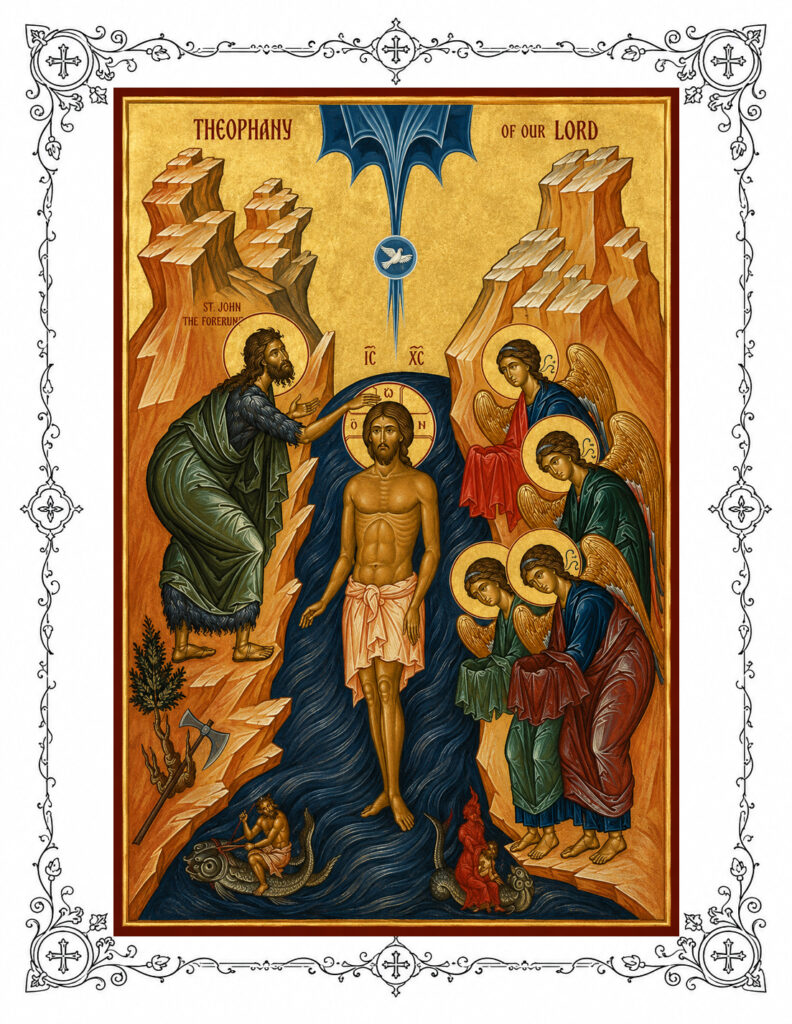
The hymnography of Great Lent and Pascha frequently employs the imagery of the flood and ark, understanding Noah’s deliverance as an icon of salvation. The blessing of waters at Theophany also recalls how God works through water to bring blessing where once there was curse.
Spiritual Application
For Orthodox spirituality, this verse speaks to the human longing for relief from the consequences of sin—not merely physical toil but the spiritual exhaustion of life east of Eden. The faithful find this rest sacramentally in the Eucharist, ascetically in the Sabbath rhythm of liturgical life, and eschatologically in the hope of the age to come. Lamech’s ancient hope becomes the Church’s continual prayer: “Come, Lord Jesus, and give rest to Your people.”
The Book of Leviticus receives its English title from the Latin Vulgate, which is derived from the Greek Septuagint (LXX) title Leuitikon (Λευιτικόν), meaning “Levitical” or “pertaining to the Levites.”

The Book of Exodus receives its English title from the Greek Septuagint (LXX), where it is called Exodos (Ἔξοδος), meaning “departure” or “exit.” This name was chosen because the central

I. Date and Authorship Holy Tradition of the Orthodox Church, affirmed by the Fathers and the liturgical usage of the Church from the earliest centuries, attributes the Book of Genesis

Does Hebrews 11 on the Maccabees Show Stronger Alignment with 4 Maccabees than 2 Maccabees? Hebrews 11 (the famous “Hall of Faith” chapter) does not explicitly mention the Maccabees by