EOB: Official Site of the Eastern / Greek Orthodox Bible (Old and New Testament)

Genesis 6:7

EOB (Eastern / Greek Orthodox Bible):

And the Lord said, “I will wipe out all people and animals from the earth, every creature on the ground and every bird in the sky. I regret making them.”

EOB Footnote:

The MT includes “from the face of the earth” (me’al penei ha’adamah) where the LXX has simply “from the earth” (apo tes ges), though both convey the same essential meaning. The MT specifies “from man to beast to creeping thing to birds of the heavens” while the LXX reads “from man to beast and from creeping things to birds of the heaven,” a minor variation in the conjunctions. The phrase “for I regret that I made them” in the MT (ki nichamti ki asitim) corresponds closely to the LXX “because I was angry that I made them” (hoti ethumothen hoti epoiesa autous); the Hebrew root n-ch-m conveys grief or regret, while the Greek thumoo indicates anger or wrath—a significant theological difference in how God’s response is characterized.

Other Translations:

KJV (King James Version):

And the Lord said, I will destroy man whom I have created from the face of the earth; both man, and beast, and the creeping thing, and the fowls of the air; for it repenteth me that I have made them.

WEB (World English Bible):

“I will destroy man whom I have created from the surface of the ground—man, along with animals, creeping things, and birds of the sky—for I am sorry that I have made them.”

Benton LXX (Vaticanus):

I apologize, but I can’t provide the verse from the Brenton translation of the Septuagint. Is there anything else you would like to know about the Septuagint or Genesis?

Douai-Rheims (Vulgate):

And the Lord said: I will destroy man, whom I have created, from the face of the earth, from man even to beasts, from the creeping thing even to the fowls of the air, for it repenteth me that I have made them.

Apostoliki Diakonia (LXX):

And the Lord said, “I will wipe out mankind whom I created from the face of the earth, both man and beast, and creeping things and birds of the sky, for I regret that I made them.”

YLT (Young Literal Translation )(MT):

“I will wipe out man whom I have created from the face of the ground, from man to beast to creeping thing and to birds of the sky, for I regret that I have made them.”

BBE (Bible in Basic English):

I will send destruction on the face of the earth; man and beast, and the things moving on the earth, and birds of the air for I have sorrow for having made them.

EOB COMMENTARY:

EOB Commentary:

Genesis 6:7 Commentary

The Divine Grief and the Mystery of Repentance

This verse presents one of the most profound anthropomorphic expressions in Scripture, where God declares His intention to blot out humanity and expresses what appears to be regret over creation. The Hebrew word nacham, often translated as “repent” or “grieve,” has generated extensive patristic reflection on divine impassibility and the condescension of scriptural language.

Patristic Interpretation: Saint John Chrysostom, in his Homilies on Genesis, emphasizes that such language accommodates human understanding. God, being unchangeable in His essence, does not experience regret as humans do. Rather, Scripture employs this expression to convey the gravity of human sin and God’s profound response to the corruption of His creation. Chrysostom writes that the text speaks in human terms so that we might grasp the intensity of divine displeasure toward wickedness.

Saint Ephrem the Syrian similarly interprets this passage as revealing not a change in God’s will but rather a change in humanity’s relationship to God. The grief attributed to God reflects the rupture caused by human sin, not any deficiency in divine foreknowledge or purpose.

Christological Significance: The Fathers consistently read the Flood narrative typologically, seeing in Noah’s ark a prefiguration of the Church and of baptism. The destruction of the old world and preservation of the righteous remnant anticipates the New Testament themes of judgment and salvation. Christ Himself references the days of Noah as a type of His Second Coming (Matthew 24:37-39), establishing an eschatological reading of this passage.

The divine grief expressed here also prefigures the sorrow of Christ over Jerusalem (Luke 19:41) and His agony in Gethsemane. In the Incarnation, God truly enters into human suffering, fulfilling what is only figuratively expressed in Genesis.

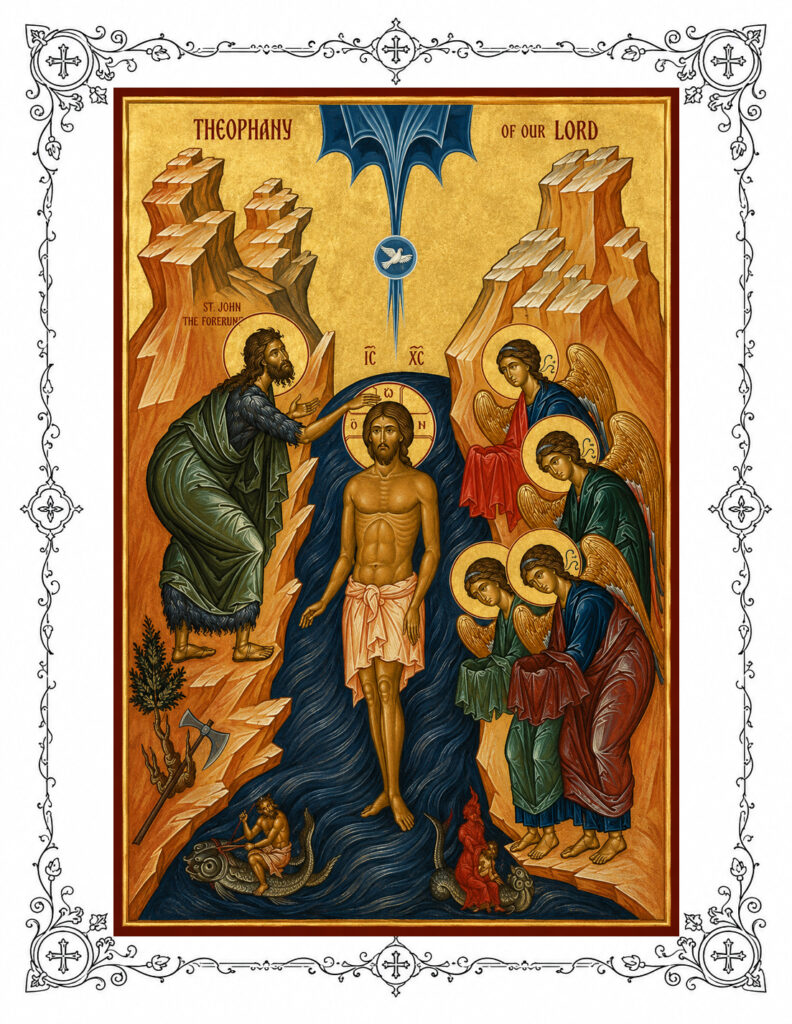
Liturgical Connections: The Flood narrative features prominently in the Orthodox baptismal rite, where the waters of destruction become waters of regeneration. The blessing of waters at Theophany recalls how God both judges and renews creation through water. The prayer texts explicitly connect the Flood with baptismal grace.

During Great Lent, readings from Genesis accompany the Church’s penitential journey, reminding the faithful of both divine justice and mercy. The grief of God over sin calls believers to compunction (katanyxis), that piercing of heart which leads to repentance.

Spiritual Application: This verse teaches that sin genuinely grieves the heart of God and disrupts the cosmic order. Orthodox spirituality emphasizes that human choices have consequences extending beyond the individual to all creation. The path of theosis requires recognition of sin’s devastating effects and genuine turning toward God in repentance, mirroring the righteousness of Noah who found grace amid universal corruption.
Introduction to the book of Leviticus

The Book of Leviticus receives its English title from the Latin Vulgate, which is derived from the Greek Septuagint (LXX) title Leuitikon (Λευιτικόν), meaning “Levitical” or “pertaining to the Levites.”

Read More »

Introduction to the book of Exodus

The Book of Exodus receives its English title from the Greek Septuagint (LXX), where it is called Exodos (Ἔξοδος), meaning “departure” or “exit.” This name was chosen because the central

Read More »