Introduction to the book of Leviticus
The Book of Leviticus receives its English title from the Latin Vulgate, which is derived from the Greek Septuagint (LXX) title Leuitikon (Λευιτικόν), meaning “Levitical” or “pertaining to the Levites.”
EOB: Official Site of the Eastern / Greek Orthodox Bible (Old and New Testament)
EOB (Eastern / Greek Orthodox Bible):
EOB Footnote:
KJV (King James Version):
WEB (World English Bible):
Benton LXX (Vaticanus):
Douai-Rheims (Vulgate):
Apostoliki Diakonia (LXX):
YLT (Young Literal Translation )(MT):
BBE (Bible in Basic English):
EOB Commentary:
Genesis 6:7 Commentary
The Divine Grief and the Mystery of Repentance
This verse presents one of the most profound anthropomorphic expressions in Scripture, speaking of God’s grief and apparent change of intention. The Hebrew term “nacham” (here rendered as “repented” or “was grieved”) requires careful theological interpretation, for the Orthodox tradition firmly maintains divine immutability. The Fathers understood such language as divine condescension—God speaking in human terms to communicate the gravity of human sin and its cosmic consequences.
Patristic Interpretation: Saint John Chrysostom, in his Homilies on Genesis, explains that God does not literally repent as humans do, for He knows all things from eternity. Rather, Scripture employs this language to demonstrate the intensity of divine response to human wickedness. The expression reveals not a change in God but a change in humanity’s relationship to God. Saint Ephrem the Syrian similarly notes that such anthropomorphic language serves pedagogical purposes, helping finite minds grasp infinite realities.
Christological Significance: This verse foreshadows the ultimate divine response to human corruption—not final destruction but redemptive transformation through the Incarnation. Where the Flood brought death to cleanse creation, Christ brings death to death itself. The grief of God expressed here finds its fullest revelation at Golgotha, where divine sorrow over sin meets divine love in the crucified Lord. The waters of the Flood typologically anticipate baptismal waters, which do not destroy but regenerate.
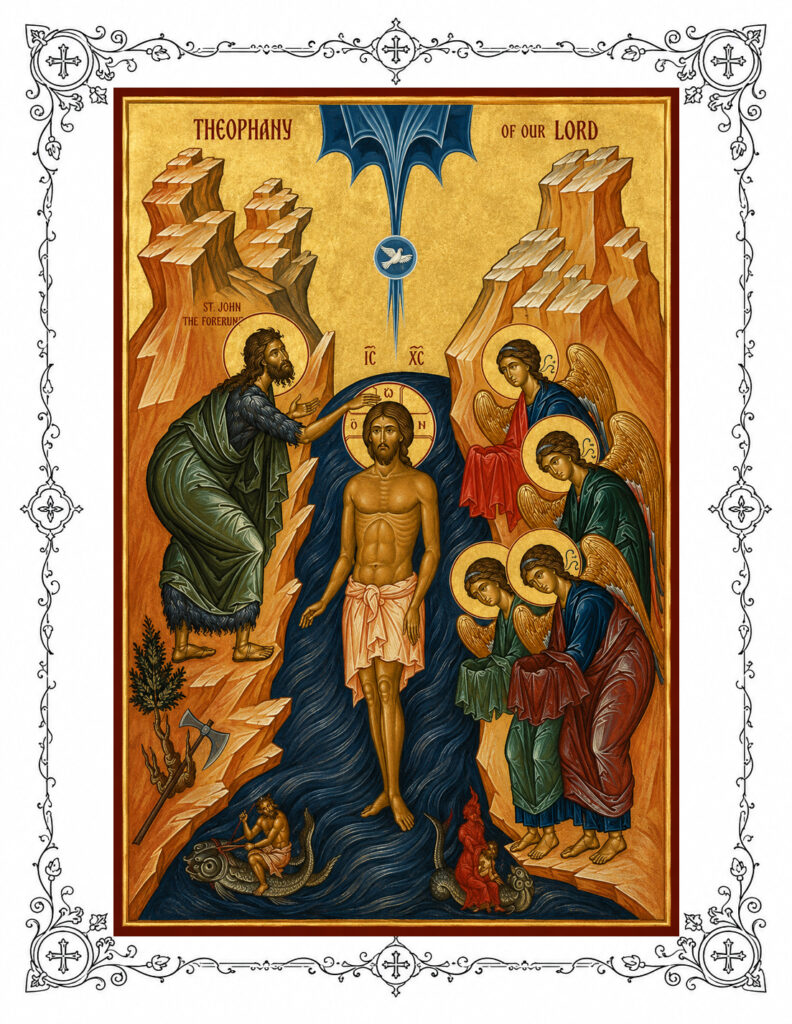
Liturgical Connections: The Orthodox Church reads from the Flood narrative during the Vesperal Liturgy of Theophany, drawing explicit connections between the Flood waters and baptism. The Flood represents both judgment and mercy—judgment upon sin, mercy through the ark. In the baptismal rite, the priest prays over the water, invoking its power both to destroy the old Adam and to birth the new creation in Christ.
Spiritual Application: For Orthodox spirituality, this verse speaks to the reality of divine-human relationship. God is not distant or indifferent; He responds to human choices with what can only be described as passionate concern. This understanding grounds the Orthodox emphasis on synergy—the cooperation between divine grace and human freedom. Our actions matter to God; our sins genuinely grieve Him, not because they affect His essence, but because they damage His beloved creation.
The mention of beasts, creeping things, and birds alongside humanity reminds us of the cosmic scope of sin’s consequences. Human corruption does not remain isolated but affects all creation, a theme Saint Paul develops in Romans 8. Orthodox theology thus emphasizes humanity’s priestly vocation—we are called to offer creation back to God, and when we fail, all creation suffers.
The Book of Leviticus receives its English title from the Latin Vulgate, which is derived from the Greek Septuagint (LXX) title Leuitikon (Λευιτικόν), meaning “Levitical” or “pertaining to the Levites.”

The Book of Exodus receives its English title from the Greek Septuagint (LXX), where it is called Exodos (Ἔξοδος), meaning “departure” or “exit.” This name was chosen because the central

I. Date and Authorship Holy Tradition of the Orthodox Church, affirmed by the Fathers and the liturgical usage of the Church from the earliest centuries, attributes the Book of Genesis

Does Hebrews 11 on the Maccabees Show Stronger Alignment with 4 Maccabees than 2 Maccabees? Hebrews 11 (the famous “Hall of Faith” chapter) does not explicitly mention the Maccabees by