Introduction to the book of Leviticus
The Book of Leviticus receives its English title from the Latin Vulgate, which is derived from the Greek Septuagint (LXX) title Leuitikon (Λευιτικόν), meaning “Levitical” or “pertaining to the Levites.”
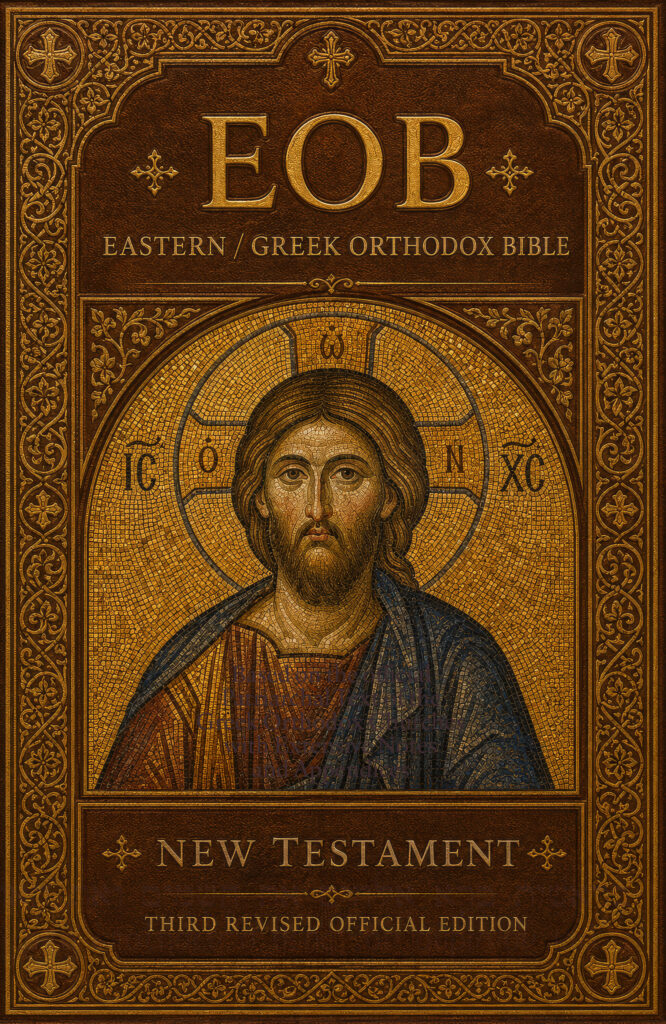
EOB: Official Site of the Eastern / Greek Orthodox Bible (Old and New Testament)
EOB (Eastern / Greek Orthodox Bible):
EOB Footnote:
KJV (King James Version):
WEB (World English Bible):
Benton LXX (Vaticanus):
Douai-Rheims (Vulgate):
Apostoliki Diakonia (LXX):
YLT (Young Literal Translation )(MT):
BBE (Bible in Basic English):
EOB Commentary:
Genesis 6:8 – Commentary
“But Noah found grace in the eyes of the Lord”
Theological Significance:
This brief verse stands as a luminous beacon amid the darkness of antediluvian corruption. It marks the first explicit mention of “grace” (chen in Hebrew) in Holy Scripture, establishing a foundational principle that would resonate throughout salvation history. Noah did not earn divine favor through his own merit alone; rather, grace preceded and enabled his righteousness. The Fathers understood this sequence as essential: grace finds man, and man then responds with faithful obedience.
Christological and Typological Dimensions:
The Orthodox tradition has consistently read Noah as a type of Christ. Just as Noah found grace and became the instrument of humanity’s physical preservation through the ark, so Christ—the eternal Son in whom the Father is well pleased—becomes the instrument of spiritual salvation through the Church. Saint John Chrysostom emphasizes that Noah’s favor with God prefigures the perfect favor that rests upon the Incarnate Word. The ark itself becomes an image of the Church, and the waters of the flood prefigure the waters of baptism, through which believers pass from death to life.
Patristic Witness:
Saint Ephrem the Syrian notes that Noah’s finding grace demonstrates that even in times of universal apostasy, God preserves a faithful remnant. Saint Ambrose of Milan draws attention to the divine initiative: God’s eyes seek out the righteous, and His grace enables their perseverance. The Fathers consistently teach that Noah’s righteousness was itself a fruit of the grace he received, not its cause.
Liturgical Connections:
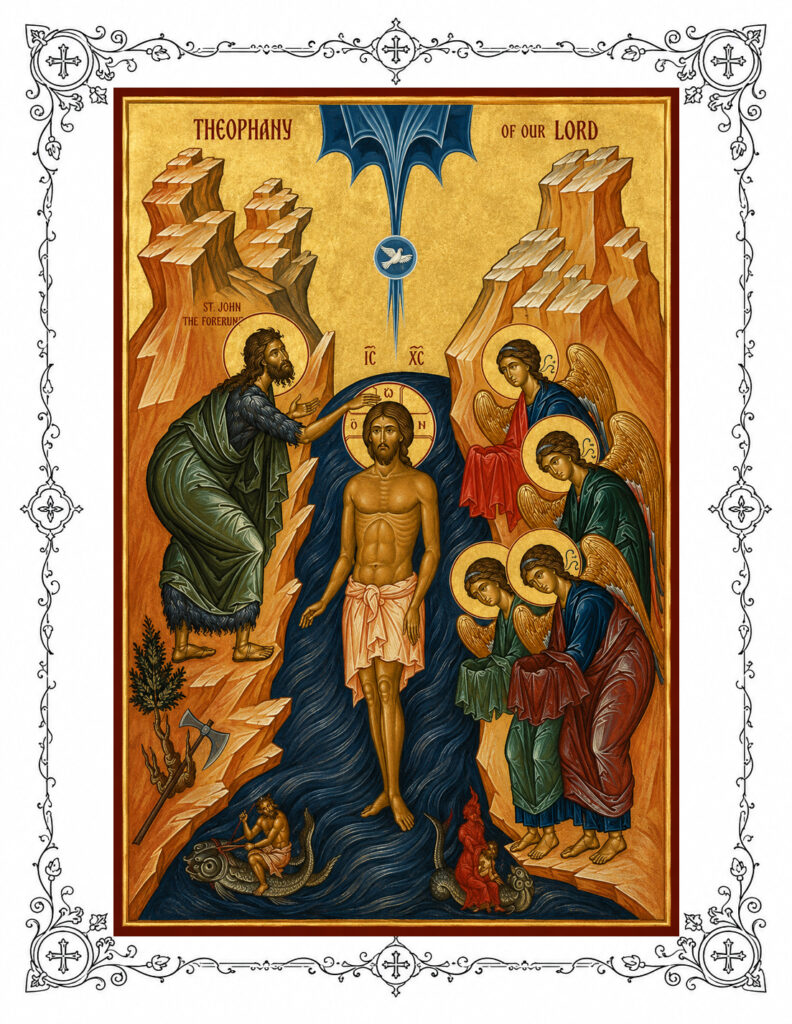
The figure of Noah appears prominently in the Orthodox baptismal rite, where the prayer over the water recalls how God saved Noah and his family through the flood. The Great Blessing of Waters at Theophany similarly invokes the typology of the flood as cleansing and renewal. During Great Lent, the readings from Genesis place Noah before the faithful as an example of one who stood firm against the current of a corrupt generation.
Spiritual Application:
For Orthodox spirituality, this verse offers profound encouragement. In every age marked by spiritual decline, God’s grace remains available to those who seek Him. The faithful Christian, like Noah, is called to find favor with God not through isolation from the world but through maintaining communion with the Lord while living amid corruption. The verse reminds us that salvation begins with divine initiative—grace finds us—and calls forth our cooperative response of faith and righteous living. Noah walked with God because God first looked upon him with favor, a pattern that remains unchanged in the economy of salvation through Christ and His Church.
The Book of Leviticus receives its English title from the Latin Vulgate, which is derived from the Greek Septuagint (LXX) title Leuitikon (Λευιτικόν), meaning “Levitical” or “pertaining to the Levites.”

The Book of Exodus receives its English title from the Greek Septuagint (LXX), where it is called Exodos (Ἔξοδος), meaning “departure” or “exit.” This name was chosen because the central

I. Date and Authorship Holy Tradition of the Orthodox Church, affirmed by the Fathers and the liturgical usage of the Church from the earliest centuries, attributes the Book of Genesis

Does Hebrews 11 on the Maccabees Show Stronger Alignment with 4 Maccabees than 2 Maccabees? Hebrews 11 (the famous “Hall of Faith” chapter) does not explicitly mention the Maccabees by