EOB: Official Site of the Eastern / Greek Orthodox Bible (Old and New Testament)

Genesis 6:11

EOB (Eastern / Greek Orthodox Bible):

The world was wicked in God’s eyes and filled with cruelty.

EOB Footnote:

The MT reads “the earth was corrupt before God” using the divine name Elohim, while the LXX reads “before the Lord God” (kyrios ho theos), combining the divine title with the name. The MT also includes “and the earth was filled with violence” (hamas), which the LXX renders with a term (adikia) meaning “unrighteousness” or “injustice” — a slightly broader concept than the Hebrew word specifically denoting violent wrongdoing.

Other Translations:

KJV (King James Version):

The earth also was corrupt before God, and the earth was filled with violence.

WEB (World English Bible):

The earth was corrupt before God, and the earth was filled with violence.

Benton LXX (Vaticanus):

The earth was corrupt before God, and the earth was filled with iniquity.

Douai-Rheims (Vulgate):

And the earth was corrupted before God, and was filled with iniquity.

Apostoliki Diakonia (LXX):

The earth was corrupt before God, and the earth was filled with violence.

YLT (Young Literal Translation )(MT):

The earth was corrupt before God, and the earth was filled with violence.

BBE (Bible in Basic English):

The earth was evil in God’s eyes and full of violent ways.

EOB COMMENTARY:

EOB Commentary:

Genesis 6:11 – Commentary

The Corruption of Creation and the Need for Renewal

This verse marks a pivotal moment in the biblical narrative, declaring that the earth had become corrupted (diephthare in the Septuagint) before God and filled with violence (adikias – unrighteousness or injustice). The theological significance extends far beyond its immediate historical context, pointing toward the fundamental Christian understanding of sin’s cosmic effects and the necessity of divine intervention for salvation.

Patristic Interpretation

Saint John Chrysostom emphasizes that the corruption described here was not merely moral but ontological – sin had so thoroughly permeated creation that the very fabric of existence was distorted. He notes that violence and corruption spread from human hearts outward, affecting all relationships and even the natural order itself. Saint Ephrem the Syrian similarly observes that humanity’s fall into violence represented a complete inversion of the peaceful dominion Adam was given in Paradise.

Typological Significance for Christ and Baptism

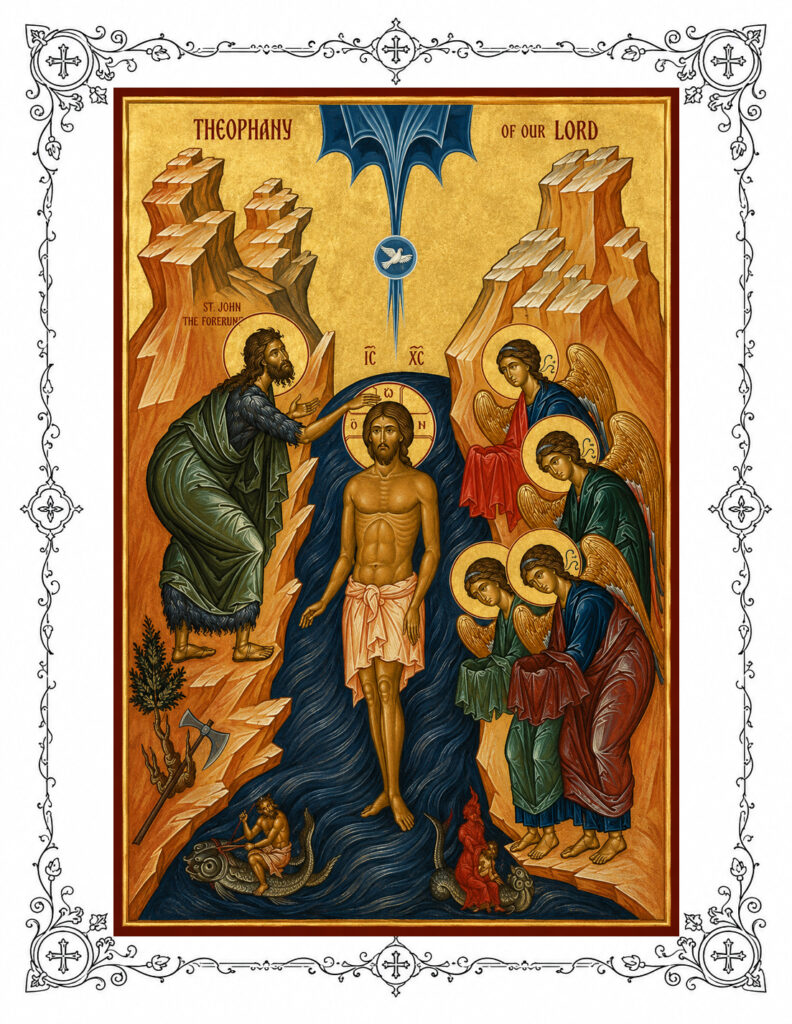
The Fathers consistently read this passage typologically, seeing in the flood narrative a prefigurement of baptism. The corruption that filled the earth necessitated cleansing waters – a theme Saint Peter explicitly develops (1 Peter 3:20-21). Just as the world was purified through water in Noah’s time, so the new creation is established through the baptismal waters sanctified by Christ’s own baptism in the Jordan.

The ark itself becomes a type of the Church, the vessel of salvation amid a world still marked by corruption and violence. Saint Cyprian of Carthage famously declared that outside the ark there was no salvation, establishing the ecclesiological reading that remains central to Orthodox understanding.

Liturgical Connections

The flood narrative features prominently in the Orthodox baptismal rite, where the prayers recall how God purified the world through water. The blessing of waters at Theophany similarly invokes this cosmic renewal, proclaiming that Christ’s entrance into the Jordan has sanctified all creation. The corruption of Genesis 6 finds its answer in the sanctification of matter through the Incarnation.

Spiritual Application

For Orthodox spirituality, this verse serves as a sobering reminder of sin’s communal and cosmic dimensions. Corruption is never merely private – it fills the earth and stands before God. The ascetic tradition recognizes that personal repentance participates in the healing of all creation, just as personal sin contributes to universal corruption. The Jesus Prayer and practices of inner watchfulness (nepsis) address precisely this reality, seeking to purify the heart so that righteousness rather than violence might flow outward into the world.

Introduction to the book of Leviticus

The Book of Leviticus receives its English title from the Latin Vulgate, which is derived from the Greek Septuagint (LXX) title Leuitikon (Λευιτικόν), meaning “Levitical” or “pertaining to the Levites.”

Read More »

Introduction to the book of Exodus

The Book of Exodus receives its English title from the Greek Septuagint (LXX), where it is called Exodos (Ἔξοδος), meaning “departure” or “exit.” This name was chosen because the central

Read More »