EOB: Official Site of the Eastern / Greek Orthodox Bible (Old and New Testament)

Genesis 7:3

EOB (Eastern / Greek Orthodox Bible):

Seven pairs of every kind of bird—male and female—were taken on the ark to ensure their survival on the earth.

EOB Footnote:

The MT specifies “seven pairs” (literally “seven seven”) for both the clean birds and their mates, whereas the LXX reads simply “seven” without explicitly indicating pairs. The MT also includes the phrase “to keep offspring alive on the face of all the earth” at the end of the verse, which is absent from the LXX.

Other Translations:

KJV (King James Version):

Of fowls also of the air by sevens, the male and the female; to keep seed alive upon the face of all the earth.

WEB (World English Bible):

and also of the birds of the sky, seven and seven, male and female, to keep seed alive on the surface of all the earth.

Benton LXX (Vaticanus):

“Also of clean flying creatures of the sky, seven and seven, male and female, to maintain seed upon all the earth.”

Douai-Rheims (Vulgate):

Of fowls also of the air by sevens, male and female: that seed may be saved upon the face of the whole earth.

Apostoliki Diakonia (LXX):

Also seven pairs of the birds of the sky, male and female, to keep their offspring alive on the face of all the earth.

YLT (Young Literal Translation )(MT):

Also of the birds of the heavens seven pairs, male and female, to keep seed alive on the face of all the earth.

BBE (Bible in Basic English):

And of the birds of the air, seven and seven, male and female, so that their seed may be living on the face of all the earth.

EOB COMMENTARY:

EOB Commentary:

Commentary on Genesis 7:3

The Divine Preservation of Creation

This verse reveals God’s providential care extending beyond humanity to encompass all living creatures. The command to preserve seven pairs of clean birds “to keep seed alive upon the face of all the earth” demonstrates that the ark serves not merely as a vessel of rescue but as a vessel of renewal—a floating sanctuary preserving the fullness of creation for its regeneration.

Typological Significance

The Fathers consistently understood Noah’s ark as a type of the Church. Saint John Chrysostom observes that just as the ark preserved every kind of creature through the waters of judgment, so the Church gathers people from every nation through the waters of baptism. The specification of birds—creatures of the heavens—being preserved alongside earthly animals prefigures how the Church unites the heavenly and earthly realms.

The number seven, appearing throughout this passage, carries profound significance. Saint Ambrose notes that seven represents completion and sanctification, pointing toward the eschatological rest. The seven pairs of clean animals anticipate the abundance of sacrifice and worship that would characterize the covenant community.

Christological Reading

Christ Himself becomes the true Ark in whom all creation finds its preservation and renewal. As the Logos through whom all things were made, He gathers all things unto Himself. The Apostle Paul echoes this cosmic dimension when he writes of all things being summed up in Christ (Ephesians 1:10). The birds preserved in the ark find their ultimate fulfillment in the Holy Spirit descending as a dove upon Christ at His baptism—the same waters that once brought judgment now become the waters of regeneration.

Liturgical Connections

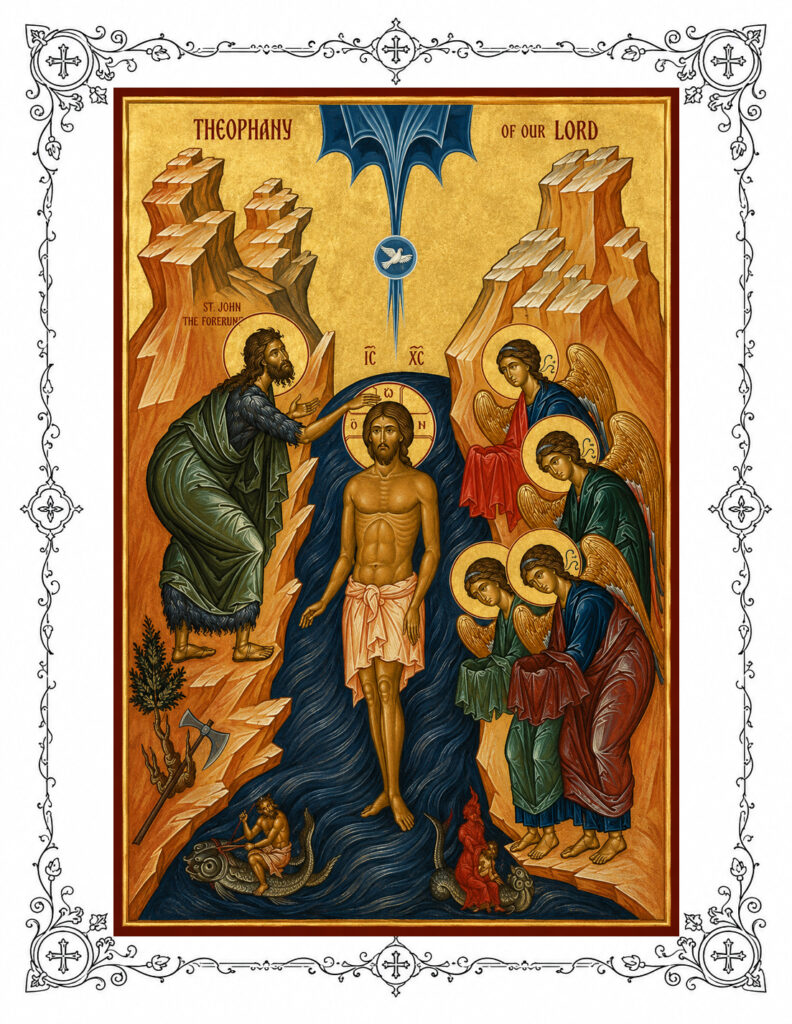
The Orthodox Church reads the account of Noah during the Vespers of Theophany, drawing explicit connection between the flood waters and baptismal waters. The preservation of living creatures in the ark parallels the sanctification of all creation through the blessing of waters. When the priest blesses the waters at Theophany, he prays for the sanctification of all creation—echoing God’s original intention to preserve and renew the whole created order.

The clean birds preserved for sacrifice anticipate the Eucharistic offering. Just as Noah would offer these creatures upon the altar after the flood, so the Church continually offers the unbloody sacrifice, preserving the “seed” of eternal life upon the earth until Christ’s return.

Spiritual Application

This verse reminds the faithful that salvation is never merely individual but cosmic in scope. Orthodox spirituality emphasizes humanity’s priestly role as mediator between God and creation. As Noah preserved the creatures, so Christians are called to be stewards of creation, recognizing that all living things participate in God’s plan of redemption and await the final restoration of all things in Christ.

Introduction to the book of Leviticus

The Book of Leviticus receives its English title from the Latin Vulgate, which is derived from the Greek Septuagint (LXX) title Leuitikon (Λευιτικόν), meaning “Levitical” or “pertaining to the Levites.”

Read More »

Introduction to the book of Exodus

The Book of Exodus receives its English title from the Greek Septuagint (LXX), where it is called Exodos (Ἔξοδος), meaning “departure” or “exit.” This name was chosen because the central

Read More »