Commentary on Genesis 7:4
The Divine Patience and the Fullness of Time
The period of seven days granted before the deluge represents the final extension of God’s mercy toward a sinful world. This interval demonstrates that even in judgment, the Lord provides opportunity for repentance. The Fathers understood this week as symbolic of the complete span of human history, during which God patiently awaits the conversion of sinners before the final judgment.
Saint John Chrysostom observes that this seven-day period was given so that those who witnessed Noah’s family and the animals entering the ark might still turn from their wickedness. The visible sign of impending judgment stood before them, yet they remained obstinate. This parallels our Lord’s teaching that as it was in the days of Noah, so shall it be at the coming of the Son of Man—people eating, drinking, and marrying, oblivious to approaching judgment.
Typological Significance
The forty days and forty nights of rain prefigure several crucial periods in salvation history. Moses spent forty days on Sinai receiving the Law. Elijah journeyed forty days to Horeb. Most significantly, our Lord fasted forty days in the wilderness before beginning His public ministry. The number forty consistently represents a period of trial, purification, and preparation for divine encounter.
The Church Fathers also connected these forty days to the forty-day Great Lent, during which the faithful undergo spiritual purification through fasting, prayer, and repentance. Just as the flood waters cleansed the earth of corruption, so the Lenten journey cleanses the soul in preparation for Paschal joy.
Liturgical Connections
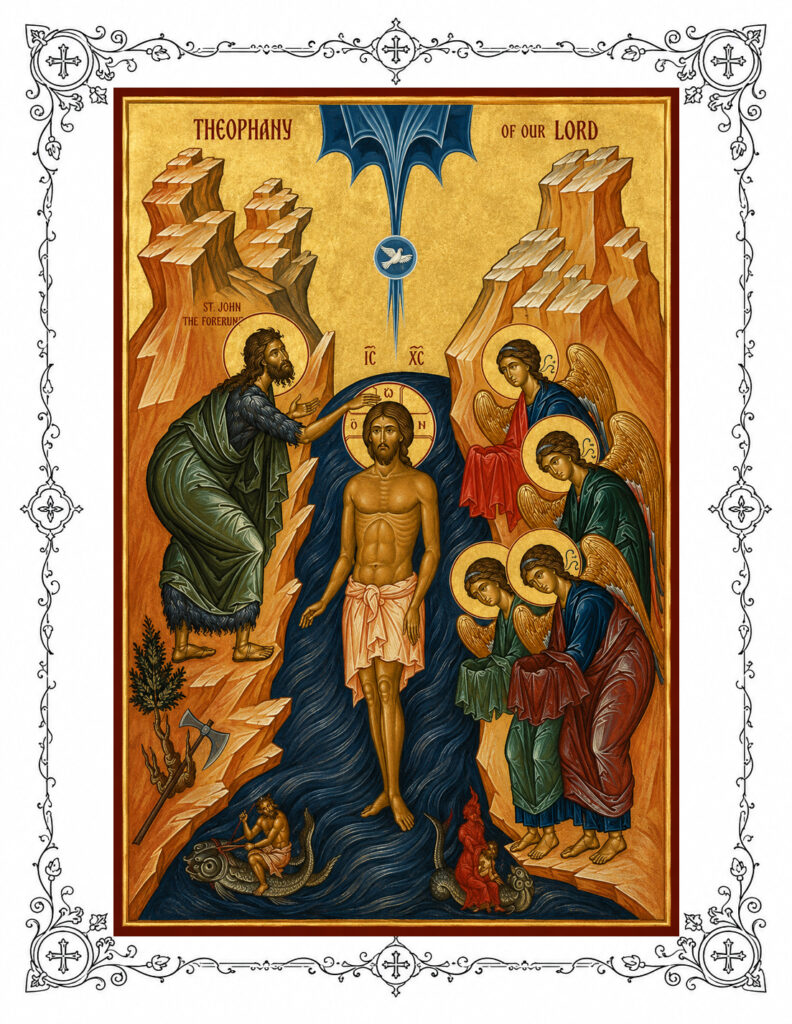
The flood narrative features prominently in the blessing of waters at Theophany. The prayers recall how God purified the world through water, establishing a type of baptismal regeneration. The destruction of all flesh upon the earth points to the death of the old man in baptism, while Noah’s preservation in the ark signifies salvation through the Church.
The phrase “every living substance” (kol hayequm) emphasizes the totality of divine judgment. Nothing corrupted by sin could remain. This complete destruction anticipates the final conflagration described by Saint Peter, who explicitly connects the flood with the coming judgment by fire. Yet within this severity lies hope—for as Noah was preserved through water, so believers are saved through baptism into Christ, the true Ark of salvation.
The faithful are called to live in constant readiness, recognizing that the patience of God, like those seven days, will reach its appointed end.