EOB: Official Site of the Eastern / Greek Orthodox Bible (Old and New Testament)

Genesis 7:4

EOB (Eastern / Greek Orthodox Bible):

In a week, rain will fall on the earth for forty days and nights. I will erase every living thing I created from the face of the ground.

EOB Footnote:

The MT includes “from upon the face of the ground” where the LXX has simply “from the earth,” though both convey the same essential meaning. The MT specifies “every living thing that I have made” whereas the LXX reads “all that I have made,” with the LXX being slightly more inclusive in scope. The phrase “seven more days” in the MT corresponds to “yet seven days” in the LXX, with no significant difference in meaning.

Other Translations:

KJV (King James Version):

For yet seven days, and I will cause it to rain upon the earth forty days and forty nights; and every living substance that I have made will I destroy from off the face of the earth.

WEB (World English Bible):

“For in seven days, I will cause it to rain on the earth for forty days and forty nights. Every living thing that I have made I will destroy from the surface of the ground.”

Benton LXX (Vaticanus):

For yet seven days [having passed], and I bring rain upon the earth forty days and forty nights; and I will blot out every living substance which I have made from the face of all the earth.

Douai-Rheims (Vulgate):

“For yet a while, and after seven days, I will rain upon the earth forty days and forty nights: and I will destroy every substance that I have made, from the face of the earth.”

Apostoliki Diakonia (LXX):

For forty days and forty nights I will send rain upon the earth, and I will wipe out every living thing I have made from the face of the earth.

YLT (Young Literal Translation )(MT):

For in seven more days, I will cause it to rain on the earth for forty days and forty nights, and I will wipe out from the face of the earth every living thing that I have made.

BBE (Bible in Basic English):

For after seven days I will send rain on the earth for forty days and forty nights, and every living thing which I have made will be blotted out from the face of the earth.

EOB COMMENTARY:

EOB Commentary:

Commentary on Genesis 7:4

The Divine Patience and the Fullness of Time

The seven days granted before the flood’s commencement reveal a profound truth about God’s nature: even in judgment, He extends mercy and opportunity for repentance. This period represents the final invitation to a world steeped in corruption, demonstrating that the Lord does not desire the death of sinners but rather their conversion.

Typological Significance for Christ and Baptism

The Fathers of the Church consistently read this passage through the lens of Christian baptism and the work of Christ. Saint John Chrysostom observes that just as Noah entered the ark and was saved through water, so too do believers enter the Church and are saved through the waters of baptism. The forty days and forty nights of rain prefigure Christ’s forty-day fast in the wilderness, where He overcame the tempter and inaugurated the restoration of creation that the flood could only symbolize.

The number forty carries immense weight throughout Scripture: Moses on Sinai, Elijah’s journey to Horeb, Israel’s wilderness wandering, and our Lord’s temptation all share this sacred duration. In Orthodox understanding, forty represents a period of trial, purification, and preparation for divine encounter.

Liturgical Connections

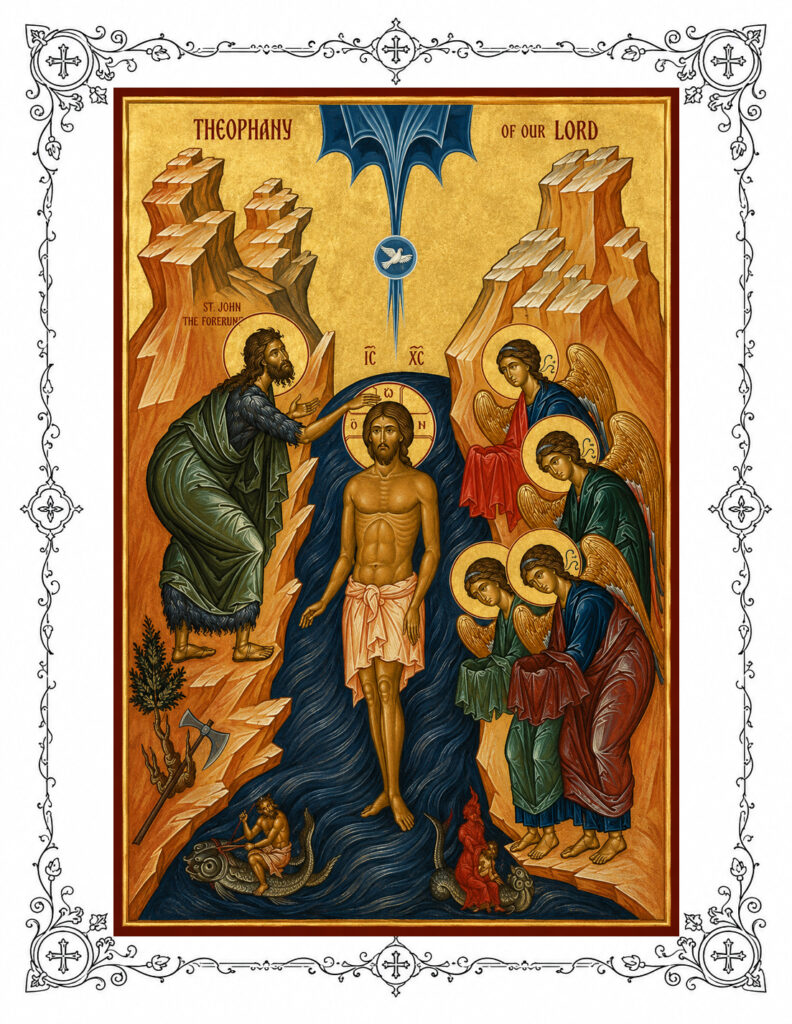
The Orthodox Church commemorates these events during the Great Blessing of Waters at Theophany, where the prayers recall how God purified the ancient world through the flood. The Lenten season, with its forty-day duration, deliberately echoes this pattern of purification, inviting the faithful to pass through the waters of repentance before celebrating the Paschal mystery.

Saint Ephrem the Syrian beautifully notes that the ark floating upon the waters while judgment fell beneath represents the Church carried safely through the tumultuous waters of this age. Those within the ark—the Church—are preserved, while those outside perish.

The Erasure of Sin and New Creation

The phrase “every living substance that I have made will I destroy” speaks to the radical nature of sin’s corruption. Creation itself had become so perverted by human wickedness that a kind of decreation was necessary. Yet this destruction serves recreation; the flood waters both judge and cleanse, preparing for a renewed covenant with Noah.

Orthodox theology sees here a foreshadowing of the final judgment and the new creation promised in Revelation. The flood did not ultimately solve humanity’s problem—sin persisted even in Noah’s family—pointing forward to the need for a more complete salvation accomplished in Christ’s death and resurrection, the true passage through death’s waters into eternal life.
Introduction to the book of Leviticus

The Book of Leviticus receives its English title from the Latin Vulgate, which is derived from the Greek Septuagint (LXX) title Leuitikon (Λευιτικόν), meaning “Levitical” or “pertaining to the Levites.”

Read More »

Introduction to the book of Exodus

The Book of Exodus receives its English title from the Greek Septuagint (LXX), where it is called Exodos (Ἔξοδος), meaning “departure” or “exit.” This name was chosen because the central

Read More »