GENESIS 7:6
The Age of Noah and the Fullness of Time
This verse records that Noah was six hundred years old when the flood waters came upon the earth. While appearing to be a simple chronological notation, the Fathers discerned deeper spiritual significance in this detail.
St. Augustine observes that the number six hundred, being composed of six multiplied by one hundred, points to the perfection of created time, since the world was made in six days. Noah’s age thus represents a fullness of time in which God’s patience with sinful humanity had reached its completion, and the judgment could no longer be delayed. This parallels the Apostle Paul’s teaching that Christ came “in the fullness of time” (Galatians 4:4), suggesting that both the flood and the Incarnation occurred at divinely appointed moments in salvation history.
The Typological Significance
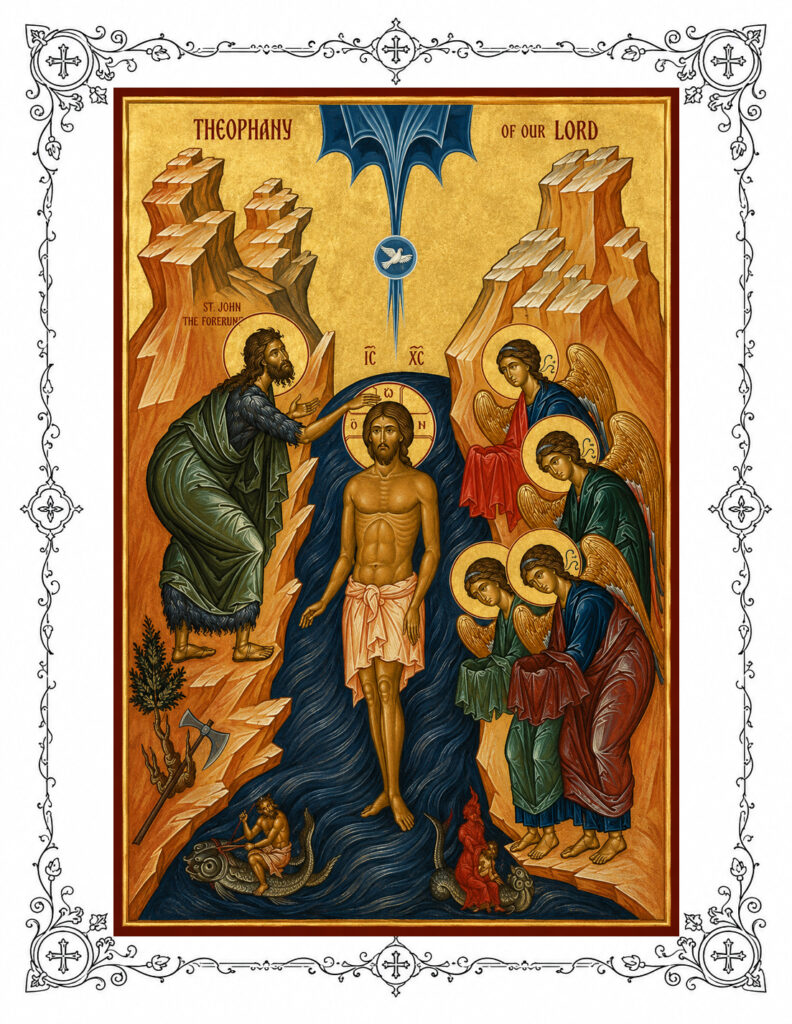
The Church Fathers consistently read the flood narrative as a type of baptism, following the Apostle Peter’s explicit connection in his first epistle (1 Peter 3:20-21). Noah, preserved through the waters of judgment, prefigures Christ who passes through death and leads humanity to new life. Just as Noah was of mature and complete age when he entered the ark, so Christ began His public ministry at approximately thirty years of age, the time of full maturity according to Jewish custom, and accomplished salvation at the appointed hour.
St. Ephrem the Syrian notes that Noah’s advanced age demonstrates his patience and righteousness, having lived for centuries among the wicked without being corrupted. This patience mirrors the long-suffering of Christ, who endured the contradiction of sinners against Himself.
Liturgical Connections
The flood narrative, including this chronological detail, is read during the Vesperal Liturgy of Holy Saturday, when the Church commemorates Christ’s descent into Hades and anticipates the Resurrection. The waters of the flood, which brought death to the old world and preservation to the righteous, are understood as prefiguring the baptismal waters through which believers die to sin and rise to new life in Christ.
The Orthodox funeral service also draws upon flood imagery, recognizing that as Noah passed through the waters to a renewed creation, so the faithful departed pass through death to the resurrection life.
Spiritual Application
Noah’s six hundred years of righteous living before the flood encourages believers to persevere in faithfulness regardless of the surrounding corruption. The spiritual life requires patient endurance through the long years of struggle, trusting that God’s timing is perfect and that deliverance will come at the appointed hour.