Introduction to the book of Leviticus
The Book of Leviticus receives its English title from the Latin Vulgate, which is derived from the Greek Septuagint (LXX) title Leuitikon (Λευιτικόν), meaning “Levitical” or “pertaining to the Levites.”
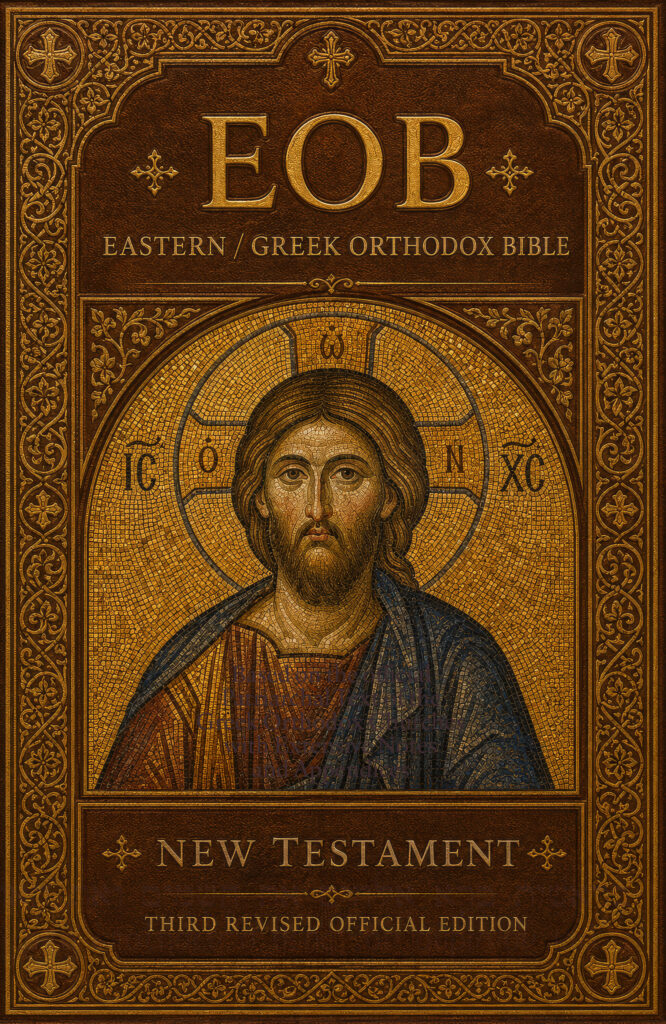
EOB: Official Site of the Eastern / Greek Orthodox Bible (Old and New Testament)
EOB (Eastern / Greek Orthodox Bible):
EOB Footnote:
KJV (King James Version):
WEB (World English Bible):
Benton LXX (Vaticanus):
Douai-Rheims (Vulgate):
Apostoliki Diakonia (LXX):
YLT (Young Literal Translation )(MT):
BBE (Bible in Basic English):
EOB Commentary:
Genesis 7:17 Commentary
The Flood as Forty Days of Judgment and Renewal
The specification of forty days during which the flood prevailed upon the earth carries profound typological significance that resonates throughout Scripture and Orthodox spiritual life. This number appears repeatedly in salvation history as a period of testing, purification, and divine encounter: Moses on Sinai, Elijah’s journey to Horeb, Israel’s wilderness wandering, and most significantly, our Lord’s temptation in the desert.
Christological and Baptismal Significance
The Church Fathers consistently interpreted the flood waters as a type of baptism. Saint Peter himself establishes this connection explicitly, stating that baptism corresponds to the waters through which Noah was saved (1 Peter 3:20-21). The forty days of the flood’s prevalence thus prefigure the catechumenate and the intensive period of preparation before illumination. Just as the waters simultaneously destroyed the old corrupt world and bore up the ark of salvation, so baptismal waters effect both the death of the old man and the birth of the new creation in Christ.
Saint Ambrose of Milan elaborates that the ark floating upon the waters represents the Church, which alone provides salvation amid the flood of worldly corruption. The wood of the ark prefigures the wood of the Cross, by which believers are carried safely through the waters of death into resurrection life.
Liturgical Connections
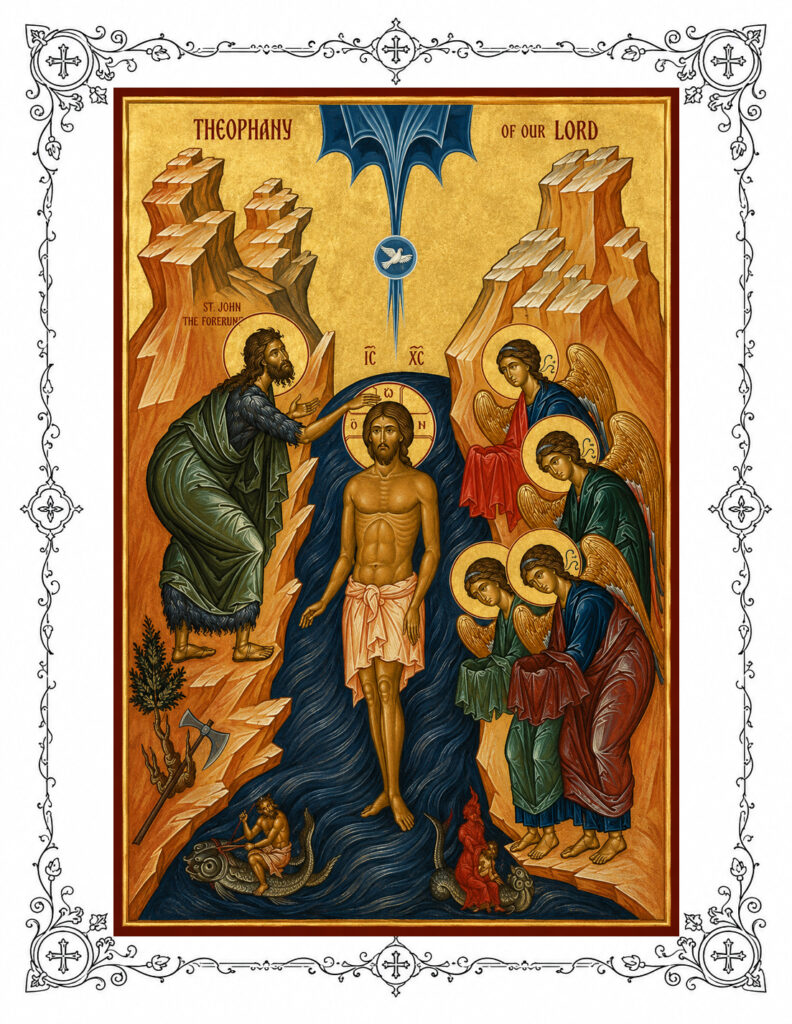
The Orthodox Church commemorates this typology in the blessing of waters at Theophany, where the prayers recall how God used water both for judgment and salvation. The forty-day period also finds liturgical expression in Great Lent, the forty-day fast preparing the faithful for Pascha. Just as the flood cleansed the earth for a renewed creation, the Lenten fast purifies the soul for participation in the Resurrection.
The hymnography of the Church frequently employs flood imagery when speaking of repentance. The Triodion contains numerous references to being overwhelmed by the flood of passions, with the ark representing the refuge found in Christ and His Church.
Spiritual Application
For Orthodox spirituality, this verse reminds us that divine judgment, though severe, serves a purifying purpose. The prevalence of waters for forty days suggests that transformation requires sustained divine action and patient endurance. The spiritual life is not instantaneous but unfolds through prolonged periods of testing during which God accomplishes His saving work. As the waters lifted the ark higher above the corrupted earth, so trials and tribulations, when received with faith, elevate the soul toward heaven.
The Book of Leviticus receives its English title from the Latin Vulgate, which is derived from the Greek Septuagint (LXX) title Leuitikon (Λευιτικόν), meaning “Levitical” or “pertaining to the Levites.”

The Book of Exodus receives its English title from the Greek Septuagint (LXX), where it is called Exodos (Ἔξοδος), meaning “departure” or “exit.” This name was chosen because the central

I. Date and Authorship Holy Tradition of the Orthodox Church, affirmed by the Fathers and the liturgical usage of the Church from the earliest centuries, attributes the Book of Genesis

Does Hebrews 11 on the Maccabees Show Stronger Alignment with 4 Maccabees than 2 Maccabees? Hebrews 11 (the famous “Hall of Faith” chapter) does not explicitly mention the Maccabees by