Genesis 7:20
The Waters of Judgment and Salvation
This verse specifies that the floodwaters rose fifteen cubits above the highest mountains, ensuring the complete submersion of all earthly heights. The Fathers saw profound theological significance in this precise measurement, connecting it to the mystery of baptism and the universal scope of divine judgment.
Patristic Interpretation: Saint Ambrose of Milan observed that the waters covering the mountains signify how baptism must cover all human pride and self-exaltation. Just as no mountain could escape the flood, so no human achievement or status exempts one from the need for baptismal regeneration. The fifteen cubits, being the sum of seven and eight, was understood by some Fathers as representing the fullness of time (seven, the number of creation) joined to the new creation (eight, the day of resurrection).
Saint John Chrysostom emphasized that God’s judgment was thorough and complete, leaving no refuge for the wicked upon any earthly height. This prefigures the final judgment when no hiding place will remain for those who reject divine mercy.
Christological Significance: The complete covering of the earth by water anticipates how Christ’s redemptive work encompasses all creation. As the waters rose above every mountain, so the grace flowing from Christ’s sacrifice reaches every corner of human existence. The ark floating safely above these waters of judgment becomes an image of the Church, elevated by Christ above the condemnation that covers the fallen world.
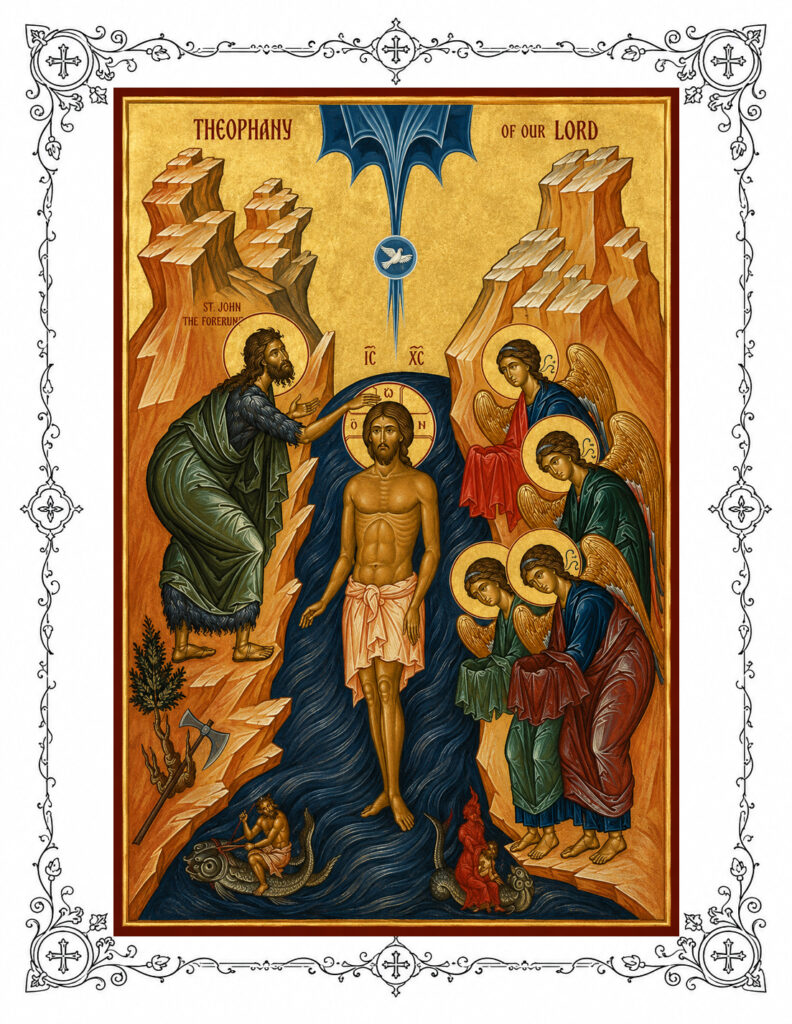
Liturgical Connections: The blessing of waters at Theophany recalls how the primordial waters, once instruments of judgment, become vehicles of sanctification through Christ’s baptism. The prayer texts speak of waters being sanctified to bring life rather than death, transforming the flood’s destructive power into baptismal regeneration.
In the Orthodox funeral service, we pray that the departed may find refuge from the flood of earthly tribulations. The imagery of rising waters threatening to overwhelm appears throughout the Psalter, particularly in Psalm 68 (69): “Save me, O God, for the waters have come up to my neck.” Christ’s descent into these waters of death and His emergence in resurrection becomes the pattern for every Christian’s passage through death to life.
Spiritual Application: The fifteen cubits covering the mountains remind the faithful that no human accomplishment provides security apart from God. The mountains of worldly wisdom, power, and achievement all disappear beneath divine judgment. Only those within the ark of the Church, united to Christ through the sacraments, find salvation above these waters. This verse thus calls believers to humility, recognizing that our only refuge is the mercy of God rather than any elevation we might construct for ourselves.