EOB: Official Site of the Eastern / Greek Orthodox Bible (Old and New Testament)

Genesis 8:3

EOB (Eastern / Greek Orthodox Bible):

The water kept going down on the earth, and after a hundred and fifty days, it had gone down.

EOB Footnote:

The MT includes the phrase “and returned” (using a Hebrew verbal construction that emphasizes continuous action: literally “going and returning”), which is rendered in the LXX simply as “going away” or “departing.” The MT’s construction suggests the waters were both receding and returning in a back-and-forth motion, while the LXX presents a simpler image of the waters steadily withdrawing.

Other Translations:

KJV (King James Version):

null

WEB (World English Bible):

null

Benton LXX (Vaticanus):

And the waters failed and were gradually abating off the earth, and after a hundred and fifty days the waters were diminished.

Douai-Rheims (Vulgate):

null

Apostoliki Diakonia (LXX):

The waters gradually receded from the earth, and after one hundred fifty days the waters had decreased.

YLT (Young Literal Translation )(MT):

“My Spirit will not contend with humans forever, for they are mortal; their days will be one hundred twenty years.”

BBE (Bible in Basic English):

null

EOB COMMENTARY:

EOB Commentary:

GENESIS 8:3 COMMENTARY

The Gradual Recession of the Waters

This verse marks a pivotal moment in the flood narrative, describing the gradual and steady withdrawal of the waters from the earth. The phrase “the waters returned from off the earth continually” (literally “going and returning” in Hebrew, halokh vashov) suggests a patient, ordered process rather than an instantaneous miracle. The one hundred and fifty days mentioned here correspond to the duration given in Genesis 7:24, creating a literary frame around the height of the flood.

Patristic Interpretation: Saint John Chrysostom, in his Homilies on Genesis, emphasizes that God’s measured approach in withdrawing the waters demonstrates His pedagogical care for Noah and all creation. The gradual recession allowed Noah to prepare spiritually and practically for the new world that awaited him. Chrysostom sees in this patience a reflection of God’s characteristic mercy, never overwhelming humanity but leading us step by step toward salvation.

Saint Ephrem the Syrian notes that the waters obeyed the divine command with the same precision with which they had risen. This obedience of creation to its Creator prefigures the cosmic restoration that will occur at the end of ages, when all things will be made subject to Christ.

Typological Significance: The Orthodox tradition reads the recession of the flood waters as a type of baptism’s transformative power. Just as the waters gradually departed to reveal renewed earth, so the waters of baptism wash away the old nature to reveal the new creation in Christ. The one hundred and fifty days of waiting can be understood as representing the patient endurance required in the spiritual life—the gradual process of theosis whereby the passions recede and the image of God becomes increasingly manifest in the believer.

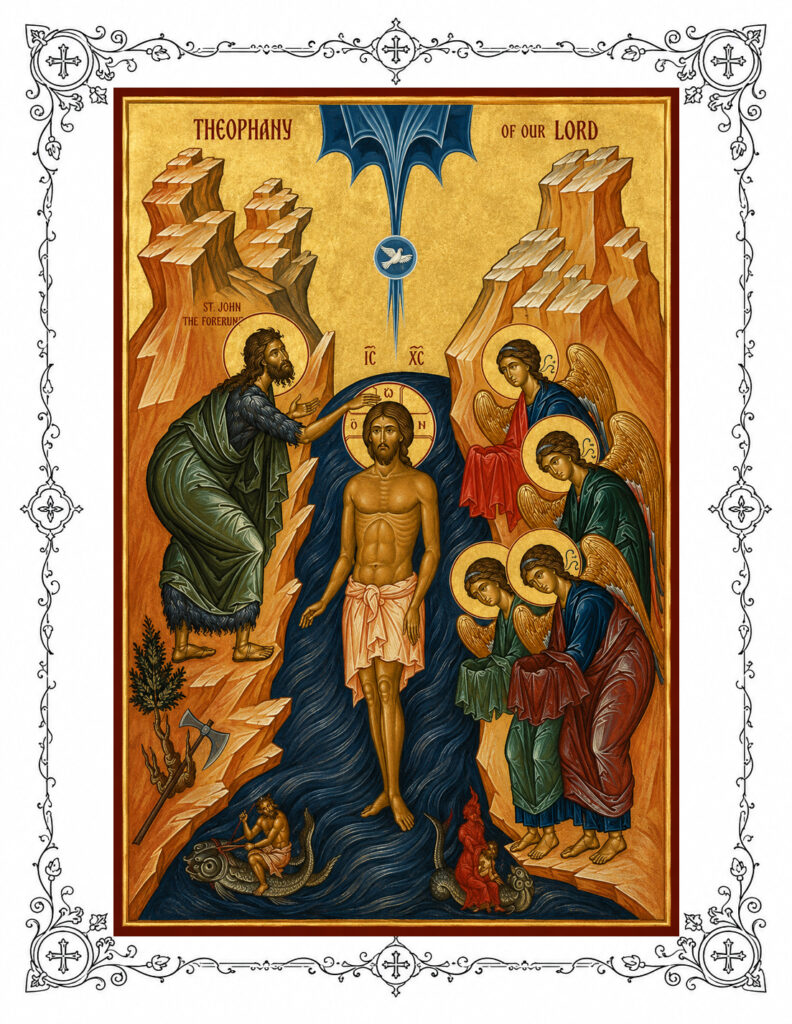
Liturgical Connections: The Great Blessing of Waters at Theophany recalls the flood narrative, celebrating water as both an instrument of judgment upon sin and a means of sanctification. The prayers of this service speak of waters being blessed to become sources of healing and renewal, echoing the transformation from destructive flood to life-giving element.

Spiritual Application: The steady, almost imperceptible nature of the waters’ recession offers instruction for the spiritual life. Deliverance from the passions and growth in virtue rarely occur instantaneously but require patient cooperation with divine grace over extended periods. The faithful soul, like Noah in the ark, must wait upon the Lord’s timing, trusting that He who began the good work will bring it to completion. This verse thus encourages perseverance and hope in the midst of spiritual struggle, assuring believers that God’s saving work, though gradual, is certain and complete.

Introduction to the book of Leviticus

The Book of Leviticus receives its English title from the Latin Vulgate, which is derived from the Greek Septuagint (LXX) title Leuitikon (Λευιτικόν), meaning “Levitical” or “pertaining to the Levites.”

Read More »

Introduction to the book of Exodus

The Book of Exodus receives its English title from the Greek Septuagint (LXX), where it is called Exodos (Ἔξοδος), meaning “departure” or “exit.” This name was chosen because the central

Read More »