Introduction to the book of Leviticus
The Book of Leviticus receives its English title from the Latin Vulgate, which is derived from the Greek Septuagint (LXX) title Leuitikon (Λευιτικόν), meaning “Levitical” or “pertaining to the Levites.”
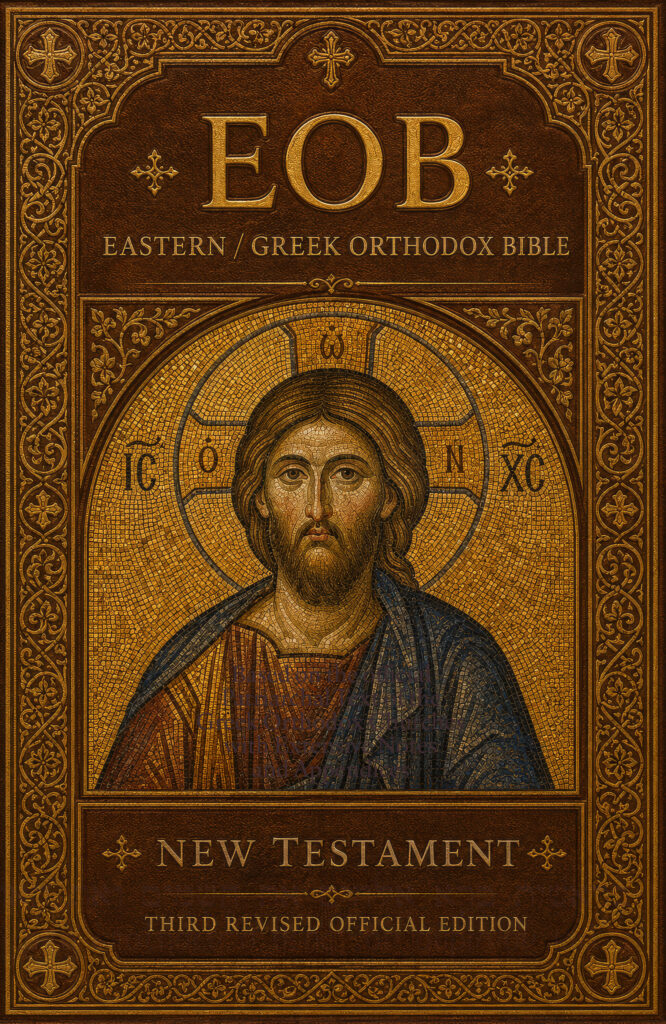
EOB: Official Site of the Eastern / Greek Orthodox Bible (Old and New Testament)
EOB (Eastern / Greek Orthodox Bible):
EOB Footnote:
KJV (King James Version):
WEB (World English Bible):
Benton LXX (Vaticanus):
Douai-Rheims (Vulgate):
Apostoliki Diakonia (LXX):
YLT (Young Literal Translation )(MT):
BBE (Bible in Basic English):
EOB Commentary:
Commentary on Genesis 8:8
The Sending of the Dove
In this verse, Noah sends forth a dove from the ark to determine whether the waters had receded from the earth. While seemingly a simple narrative detail, the Fathers of the Church perceived in this action a profound typological significance pointing toward the mysteries of salvation.
Christological and Pneumatological Significance:
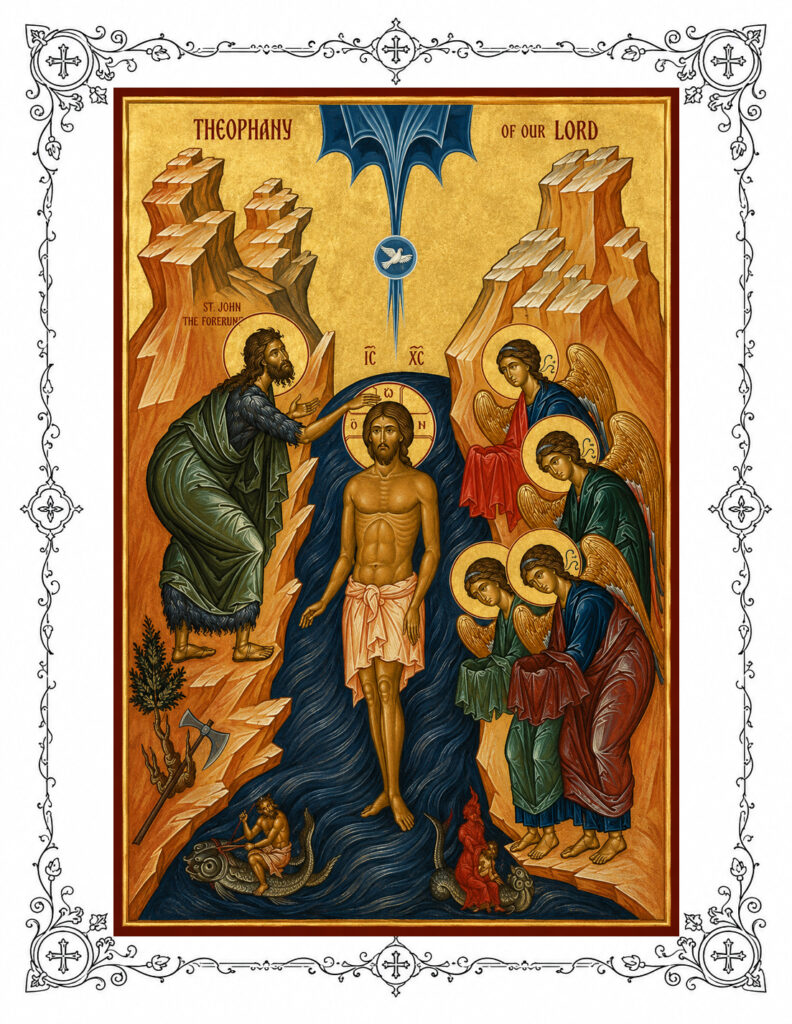
The dove holds a central place in Orthodox theology as the preeminent symbol of the Holy Spirit. When Noah releases the dove over the waters, the Fathers saw a prefiguration of the Spirit hovering over the waters at creation and, most significantly, the descent of the Holy Spirit upon Christ at His baptism in the Jordan. Saint Cyril of Jerusalem and other patristic commentators drew explicit connections between this passage and the theophany at Christ’s baptism, where the Spirit descended “like a dove” upon the Lord. The waters of the flood, which brought death to the old world, become a type of baptismal waters that bring death to sin and new life in Christ.
Liturgical Connections:
The Orthodox Church celebrates the Great Blessing of Waters at Theophany, and the hymnography of this feast echoes the Genesis narrative. The prayers speak of the Spirit sanctifying the waters, recalling both the primordial creation and the flood. The dove seeking rest upon renewed earth prefigures the Spirit finding rest upon Christ, the New Adam, and subsequently upon all the baptized who are incorporated into His Body.
Ecclesiological Reading:
Saint Ambrose of Milan and other Fathers interpreted the ark as a type of the Church, the vessel of salvation amid the flood of sin and death. The dove sent forth represents the proclamation of peace and reconciliation that the Church extends to the world. Just as the dove would return bearing the olive branch, signifying that God’s wrath had subsided and new life was possible, so the Church announces the reconciliation accomplished through Christ’s sacrifice.
Spiritual Application:
For the Orthodox spiritual life, this passage speaks to the soul’s journey through the waters of repentance. The dove represents the gentle movements of grace seeking a place of rest within the purified heart. Saint Gregory of Nyssa saw in Noah’s patient waiting a model for the contemplative soul, which must wait upon God’s timing and discern the movements of the Spirit with wisdom and humility.
The simplicity of the dove also instructs believers in the virtues necessary for receiving divine grace, recalling Christ’s exhortation to be “innocent as doves.” The soul that would perceive God’s peace must cultivate purity and simplicity of heart.
The Book of Leviticus receives its English title from the Latin Vulgate, which is derived from the Greek Septuagint (LXX) title Leuitikon (Λευιτικόν), meaning “Levitical” or “pertaining to the Levites.”

The Book of Exodus receives its English title from the Greek Septuagint (LXX), where it is called Exodos (Ἔξοδος), meaning “departure” or “exit.” This name was chosen because the central

I. Date and Authorship Holy Tradition of the Orthodox Church, affirmed by the Fathers and the liturgical usage of the Church from the earliest centuries, attributes the Book of Genesis

Does Hebrews 11 on the Maccabees Show Stronger Alignment with 4 Maccabees than 2 Maccabees? Hebrews 11 (the famous “Hall of Faith” chapter) does not explicitly mention the Maccabees by