Commentary on Genesis 8:17
The Divine Command to Multiply and the Restoration of Creation
This verse marks a pivotal moment in salvation history, as God commands Noah to bring forth the animals from the ark so that they may “breed abundantly” and “be fruitful and multiply upon the earth.” Here we witness a renewal of the original blessing given at creation (Genesis 1:22, 28), signifying that God’s purposes for His creation remain unchanged despite the catastrophe of the flood. The Fathers consistently understood this restoration as a type of the greater restoration to come through Christ.
Typological Significance for Christ and the Church
Saint John Chrysostom observes that just as Noah brought forth living creatures from the wooden ark into a renewed world, so Christ brings forth the faithful from the wooden Cross and the waters of baptism into new life. The ark, having preserved life through the waters of judgment, now releases that life to replenish the earth. This prefigures the Church, which through the baptismal waters preserves believers and sends them forth to multiply spiritually throughout the world. The Apostle Peter explicitly connects the ark and its eight souls to baptism (1 Peter 3:20-21), and this verse completes that typological picture by showing the fruitfulness that follows salvation through water.
Liturgical and Spiritual Dimensions
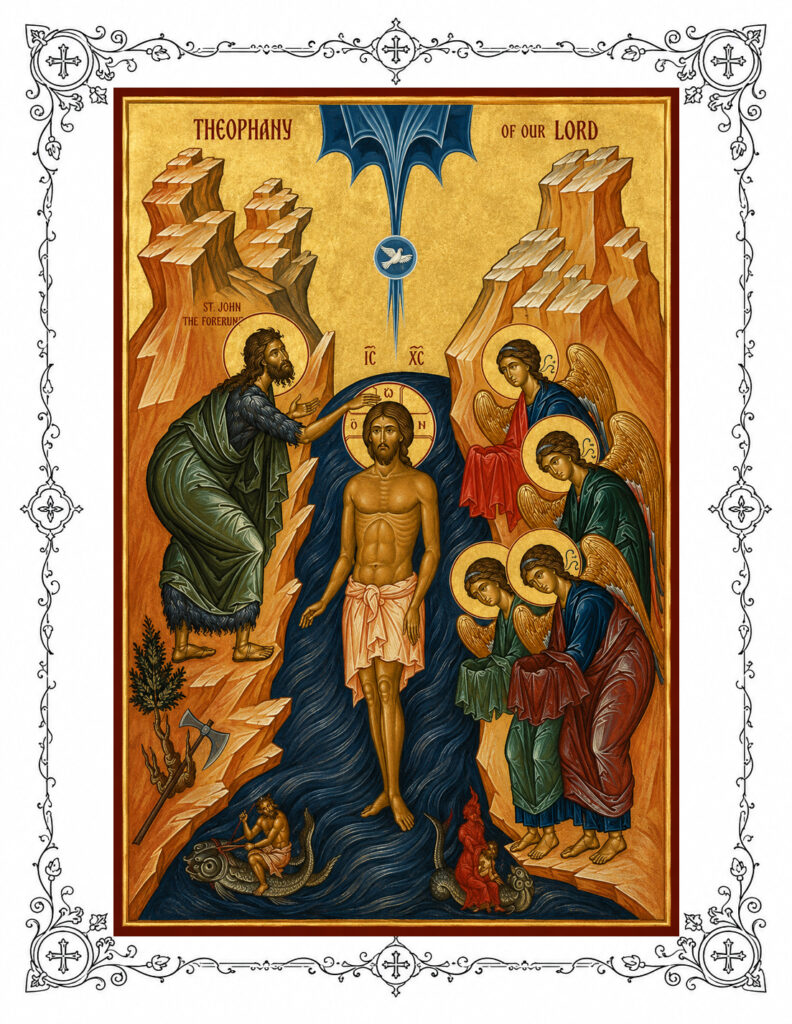
In Orthodox hymnography, particularly during the period of the Triodion and the commemoration of righteous Noah, the Church celebrates this moment of cosmic renewal. The prayer at the Great Blessing of Waters on Theophany echoes this theme, asking God to make the blessed waters a source of life and fruitfulness for all creation.
The command to “be fruitful and multiply” carries profound spiritual meaning for the ascetic tradition. Saint Maximus the Confessor interprets such multiplication spiritually as the increase of virtues and the spreading of divine knowledge. Just as the animals were to fill the physical earth, so believers are called to fill their souls with the fruits of the Spirit and to spread the Gospel throughout the world.
The Renewal of the Cosmic Covenant
This verse also anticipates the formal covenant God will establish with Noah in the following chapter. The command to multiply presupposes God’s commitment to sustain creation and never again destroy it by flood. Orthodox theology sees in this a revelation of God’s faithfulness and His desire for life rather than death—a theme that reaches its fulfillment in Christ’s words: “I came that they may have life, and have it abundantly” (John 10:10).
The emergence from the ark thus stands as an icon of Pascha itself, the passage from death to life, from confinement to freedom, from judgment to mercy.