EOB: Official Site of the Eastern / Greek Orthodox Bible (Old and New Testament)

Genesis 8:19

EOB (Eastern / Greek Orthodox Bible):

Every living creature came out of the ark—animals, livestock, birds, and all creatures that move along the ground—each according to its kind.

EOB Footnote:

The MT includes “according to their families” (lemishpechoteyhem) modifying how the animals went out from the ark, specifying they departed organized by their family groups. This phrase is absent from the LXX witnesses.

Other Translations:

KJV (King James Version):

null

WEB (World English Bible):

“He built an altar to Yahweh, and took of every clean animal, and of every clean bird, and offered burnt offerings on the altar.”

Benton LXX (Vaticanus):

And all the wild beasts, and all the cattle, and every bird, and every reptile creeping upon the earth, after their kind, went forth out of the ark.

Douai-Rheims (Vulgate):

And he built an altar unto the Lord, and offered holocausts upon it, and the Lord smelt a sweet savour, and said:

Apostoliki Diakonia (LXX):

Every animal, every creature that moves along the ground, and every bird—everything that moves on land—came out of the ark, one kind after another.

YLT (Young Literal Translation )(MT):

He sent out of every living thing, every flesh.

BBE (Bible in Basic English):

“Every beast, every bird, and every living thing which goes on the earth, went out of the ark.”

EOB COMMENTARY:

EOB Commentary:

Commentary on Genesis 8:19

The Ordering of Creation Restored

This verse describes the orderly departure of all living creatures from the ark, each going forth “according to their families” (kata gene in the Septuagint). The phrase emphasizes that the same divine order established in creation is now preserved and renewed after the flood. Just as God created living things “according to their kind” in Genesis 1, so now they emerge from the ark maintaining this created order, demonstrating that the flood was not a destruction of creation but its purification and renewal.

Typological Significance

The Fathers consistently read the ark as a type of the Church, and the emergence of creatures from the ark prefigures the new life that flows from the Church into the world. Saint John Chrysostom notes that just as the animals were preserved within the ark and then sent forth to replenish the earth, so too believers are preserved within the Church and sent forth to bear witness to new life in Christ. The ark becomes a womb of salvation from which renewed creation emerges.

The careful ordering of the departure—with Noah, his family, and then the creatures each in their proper sequence—reflects the liturgical principle of taxis, the sacred order that governs Orthodox worship. Nothing in the divine economy is chaotic or random; all proceeds according to the wisdom of God.

Ecclesiological Dimensions

The phrase “according to their families” suggests that the Church preserves diversity within unity. The various creatures maintain their distinct natures while sharing in the common salvation offered through the ark. This mirrors the Orthodox understanding of the Church as embracing many nations, languages, and cultures while remaining one Body of Christ.

Liturgical Connections

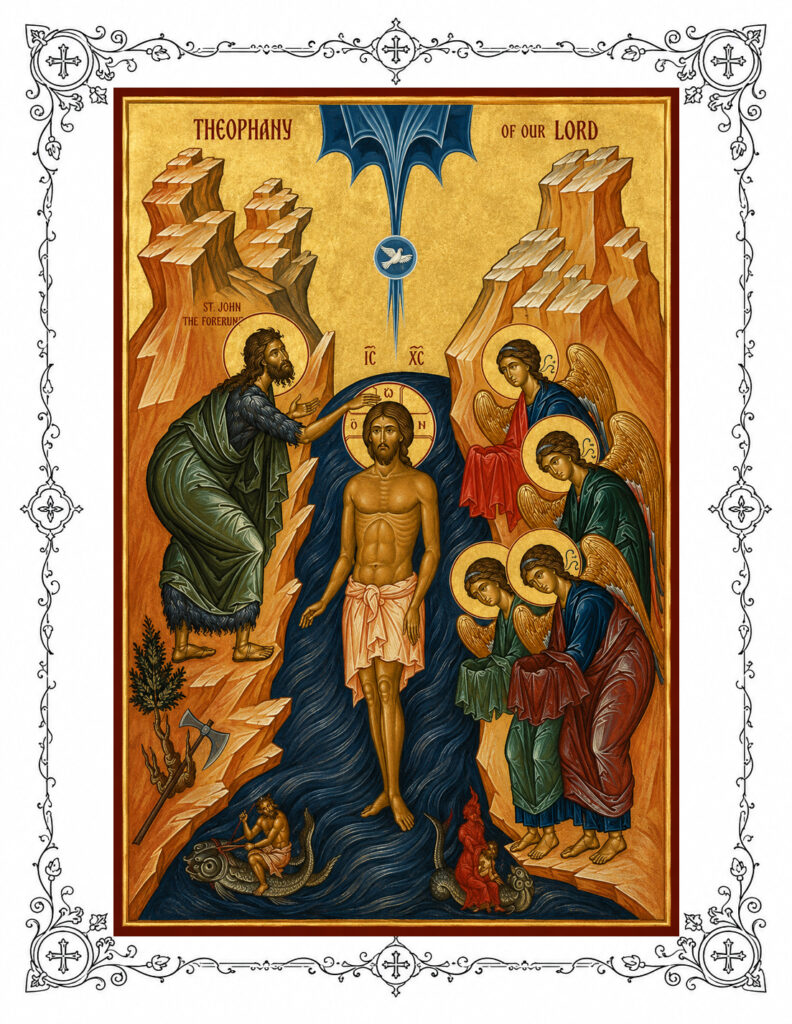
In the Orthodox baptismal rite, the newly baptized emerges from the waters as a new creation, just as the creatures emerged from the ark into a cleansed world. The flood waters that destroyed the old world become, typologically, the baptismal waters that destroy the old man and bring forth new life. The Paschal liturgy similarly celebrates emergence from darkness into light, from death into life.

Spiritual Application

For the Orthodox believer, this verse speaks to the patient ordering of the spiritual life. The creatures did not rush forth in disorder but departed according to God’s arrangement. Similarly, the Christian life proceeds according to divine providence, with each person fulfilling their unique calling within the larger economy of salvation. The verse invites trust in God’s timing and His preservation of all that He has made.

Introduction to the book of Leviticus

The Book of Leviticus receives its English title from the Latin Vulgate, which is derived from the Greek Septuagint (LXX) title Leuitikon (Λευιτικόν), meaning “Levitical” or “pertaining to the Levites.”

Read More »

Introduction to the book of Exodus

The Book of Exodus receives its English title from the Greek Septuagint (LXX), where it is called Exodos (Ἔξοδος), meaning “departure” or “exit.” This name was chosen because the central

Read More »