Introduction to the book of Leviticus
The Book of Leviticus receives its English title from the Latin Vulgate, which is derived from the Greek Septuagint (LXX) title Leuitikon (Λευιτικόν), meaning “Levitical” or “pertaining to the Levites.”
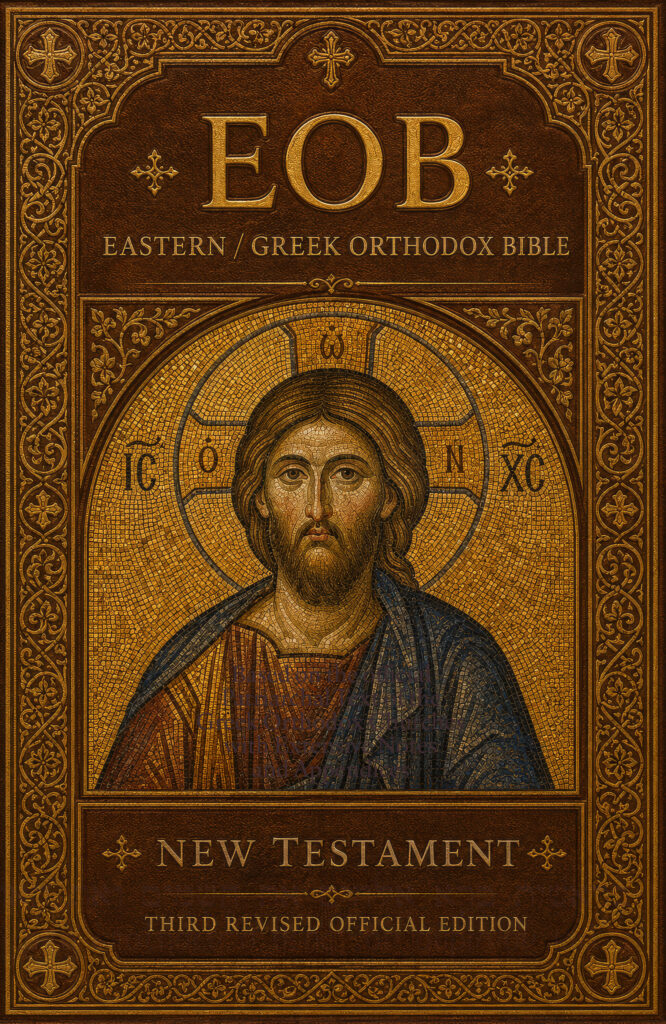
EOB: Official Site of the Eastern / Greek Orthodox Bible (Old and New Testament)
EOB (Eastern / Greek Orthodox Bible):
EOB Footnote:
KJV (King James Version):
WEB (World English Bible):
Benton LXX (Vaticanus):
Douai-Rheims (Vulgate):
Apostoliki Diakonia (LXX):
YLT (Young Literal Translation )(MT):
BBE (Bible in Basic English):
EOB Commentary:
Commentary on Genesis 9:12
The Sign of the Covenant
In this verse, God establishes the rainbow as the sign (semeion in Greek) of His covenant with Noah and all living creatures. The concept of the divine sign carries profound theological weight throughout Scripture and finds its ultimate fulfillment in the person of Christ.
Typological Significance
The Fathers consistently understood this covenant sign as a type pointing toward greater realities. Saint John Chrysostom emphasizes that God condescends to human weakness by providing visible signs of invisible grace. Just as Noah received a sign in the heavens after the waters of judgment, so too the Church receives sacramental signs after passing through the waters of baptism. The connection between the flood narrative and baptism, established by Saint Peter himself (1 Peter 3:20-21), invites us to see the rainbow as prefiguring the visible signs of the New Covenant.
Saint Ephrem the Syrian beautifully notes that the bow, an instrument of war, is now hung in the sky as a symbol of peace between God and creation. This disarmament in the heavens anticipates the ultimate peace established through the Cross, where Christ reconciled heaven and earth.
Christological Reading
The phrase “between Me and the earth” suggests a mediatorial function. The rainbow stands between God and creation as a perpetual reminder of divine mercy. Orthodox theology recognizes in this an image of Christ the Mediator, who stands eternally between the Father and humanity, His glorified flesh serving as the everlasting sign of reconciliation.
Liturgical Connections
The theme of covenant signs permeates Orthodox worship. The Eucharist itself is called the “New Covenant in My blood,” and the Church understands all sacramental mysteries as visible signs of invisible grace. The reading of the flood narrative during the Vesperal Liturgy of Holy Saturday explicitly connects the salvation of Noah through water to baptismal regeneration, and the rainbow covenant forms part of this salvific typology.
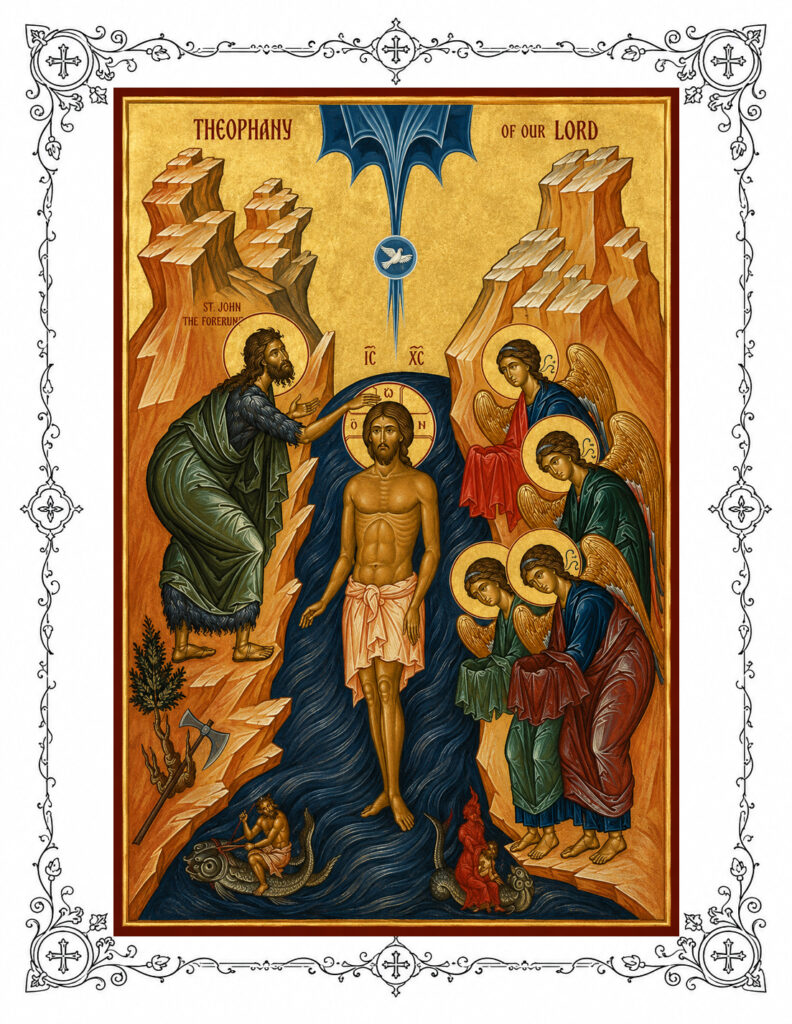
In iconographic tradition, Christ is often depicted surrounded by a mandorla of rainbow-like colors, suggesting His role as the fulfillment of all covenant promises and the true sign of God’s eternal faithfulness to creation.
Spiritual Application
For the Orthodox Christian, this verse reminds us that God initiates covenant relationship and provides means by which we may remember His promises. The spiritual life is sustained not by our memory alone but by God’s gracious provision of signs that continually recall us to His mercy. Every time the faithful receive the Holy Mysteries, they encounter the ultimate sign of God’s covenant faithfulness—Christ Himself, present in bread and wine, the eternal guarantee that God will never again abandon His creation to destruction but has destined it for transfiguration and glory.
The Book of Leviticus receives its English title from the Latin Vulgate, which is derived from the Greek Septuagint (LXX) title Leuitikon (Λευιτικόν), meaning “Levitical” or “pertaining to the Levites.”

The Book of Exodus receives its English title from the Greek Septuagint (LXX), where it is called Exodos (Ἔξοδος), meaning “departure” or “exit.” This name was chosen because the central

I. Date and Authorship Holy Tradition of the Orthodox Church, affirmed by the Fathers and the liturgical usage of the Church from the earliest centuries, attributes the Book of Genesis

Does Hebrews 11 on the Maccabees Show Stronger Alignment with 4 Maccabees than 2 Maccabees? Hebrews 11 (the famous “Hall of Faith” chapter) does not explicitly mention the Maccabees by