Introduction to the book of Leviticus
The Book of Leviticus receives its English title from the Latin Vulgate, which is derived from the Greek Septuagint (LXX) title Leuitikon (Λευιτικόν), meaning “Levitical” or “pertaining to the Levites.”
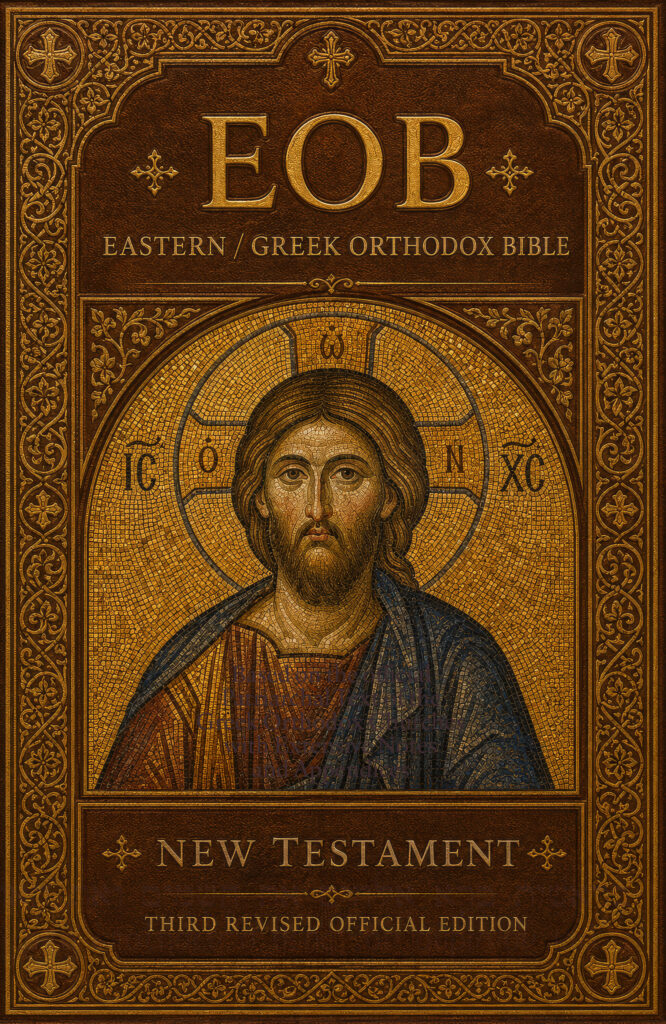
EOB: Official Site of the Eastern / Greek Orthodox Bible (Old and New Testament)
EOB (Eastern / Greek Orthodox Bible):
EOB Footnote:
KJV (King James Version):
WEB (World English Bible):
Benton LXX (Vaticanus):
Douai-Rheims (Vulgate):
Apostoliki Diakonia (LXX):
YLT (Young Literal Translation )(MT):
BBE (Bible in Basic English):
EOB Commentary:
Genesis 9:16 Commentary
The Eternal Covenant and Divine Remembrance
This verse presents the rainbow as a perpetual sign that prompts divine remembrance of the everlasting covenant between God and all living creatures. The phrase “everlasting covenant” (diatheke aionios in the Septuagint) carries profound theological weight, establishing a pattern of divine faithfulness that finds its ultimate fulfillment in Christ.
Christological Significance
The Fathers understood this covenant as a type pointing toward the New Covenant established in Christ’s blood. Saint John Chrysostom emphasizes that God’s promise never to destroy the earth by water again foreshadows the greater promise of salvation through baptismal waters. Where the flood brought death to the old world, the waters of baptism bring life to the new creation in Christ. The bow in the clouds, stretching between heaven and earth, prefigures Christ Himself who bridges the divine and human natures, reconciling God and creation.
Saint Ephrem the Syrian notes that the rainbow’s appearance after the storm symbolizes Christ’s coming after the tempest of sin and death. The multicolored arc reflects the manifold grace of God displayed in the Incarnation.
Liturgical Connections
The Orthodox Church draws upon flood imagery extensively in the baptismal rite. The blessing of waters explicitly references Noah and the ark as types of salvation through water. The prayer recalls how God saved Noah’s family through wood and water, anticipating how believers are saved through the wood of the Cross and the waters of baptism. The “everlasting covenant” mentioned in this verse resonates with the Eucharistic prayers where the Church celebrates the New and Eternal Covenant in Christ’s Body and Blood.
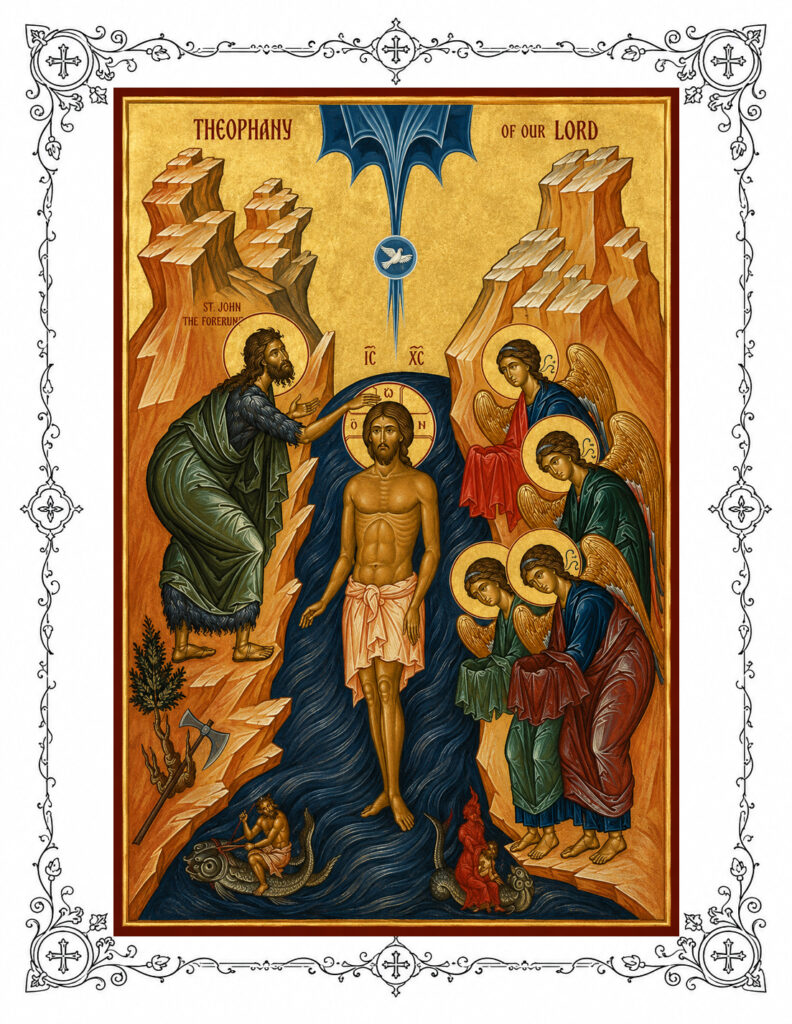
During the Great Blessing of Waters at Theophany, the Church commemorates how all creation is sanctified and renewed through Christ’s baptism, fulfilling the cosmic scope of the Noahic covenant that embraced all flesh.
Spiritual Interpretation
The image of God looking upon the bow and remembering His covenant offers profound comfort. Divine remembrance in Scripture is never mere recollection but active, salvific engagement. When God remembers, He acts. This pattern appears throughout salvation history and culminates in the Eucharistic anamnesis where Christ commands remembrance that makes His sacrifice present.
For Orthodox spirituality, this verse teaches that creation itself bears witness to God’s faithfulness. The natural world becomes a book of divine promises, inviting believers to perceive God’s providence in ordinary phenomena. Every rainbow becomes an icon of covenant love, calling the faithful to trust in the God who remembers His promises eternally and who has established an unbreakable covenant with humanity through His Son.
The Book of Leviticus receives its English title from the Latin Vulgate, which is derived from the Greek Septuagint (LXX) title Leuitikon (Λευιτικόν), meaning “Levitical” or “pertaining to the Levites.”

The Book of Exodus receives its English title from the Greek Septuagint (LXX), where it is called Exodos (Ἔξοδος), meaning “departure” or “exit.” This name was chosen because the central

I. Date and Authorship Holy Tradition of the Orthodox Church, affirmed by the Fathers and the liturgical usage of the Church from the earliest centuries, attributes the Book of Genesis

Does Hebrews 11 on the Maccabees Show Stronger Alignment with 4 Maccabees than 2 Maccabees? Hebrews 11 (the famous “Hall of Faith” chapter) does not explicitly mention the Maccabees by