Introduction to the book of Leviticus
The Book of Leviticus receives its English title from the Latin Vulgate, which is derived from the Greek Septuagint (LXX) title Leuitikon (Λευιτικόν), meaning “Levitical” or “pertaining to the Levites.”
EOB: Official Site of the Eastern / Greek Orthodox Bible (Old and New Testament)
EOB (Eastern / Greek Orthodox Bible):
EOB Footnote:
KJV (King James Version):
WEB (World English Bible):
Benton LXX (Vaticanus):
Douai-Rheims (Vulgate):
Apostoliki Diakonia (LXX):
YLT (Young Literal Translation )(MT):
BBE (Bible in Basic English):
EOB Commentary:
Genesis 11:14 Commentary
And Shelah lived thirty years and begot Eber.
This verse continues the genealogy from Shem to Abraham, marking an important link in the chain of sacred history. While appearing as a simple genealogical notation, the mention of Eber carries significant theological weight in the Orthodox tradition.
The Name and Its Significance: Eber (Hebrew: Ever) is traditionally understood as the ancestor from whom the designation “Hebrew” derives. The Septuagint renders this name as Eber, and the connection to the identity of the chosen people is preserved throughout patristic commentary. Saint Jerome and other Fathers noted that the very name of God’s people traces back to this patriarch, establishing a continuous line of identity from the post-flood world to Abraham and ultimately to Christ.
Christological Reading: The Orthodox Church reads all genealogies in Genesis as pointing toward the Incarnation. Each generation preserved the messianic line through which the Word would take flesh. The genealogy in Luke 3 explicitly includes Eber in the ancestry of Christ, demonstrating that this seemingly minor verse participates in the great mystery of salvation history. Every name in this chain represents divine providence working through human generations to prepare for the fullness of time.
Patristic Interpretation: Saint Augustine observed that these genealogies demonstrate God’s faithfulness across generations, never abandoning His promise despite human sinfulness. The precision of years mentioned shows that sacred history operates within real time, preparing for the historical reality of the Incarnation. Theophilus of Antioch used these genealogies to establish biblical chronology against pagan claims of greater antiquity.
Liturgical Connection: During the Great Fast, the Church reads through Genesis, including these genealogies, reminding the faithful that salvation is not abstract but worked out through concrete human lives across generations. The genealogies chanted during the Royal Hours before Nativity and Theophany echo this same pattern, connecting the Old Testament ancestors to Christ.
Spiritual Application: For Orthodox spirituality, these verses remind us that faithfulness often appears mundane. Shelah lived, begot children, and died, yet his life was essential to God’s plan. Similarly, our ordinary lives of faith, when lived in communion with God, participate in His eternal purposes. The monastics and ascetics have always taught that hidden faithfulness matters profoundly in the economy of salvation.
The Book of Leviticus receives its English title from the Latin Vulgate, which is derived from the Greek Septuagint (LXX) title Leuitikon (Λευιτικόν), meaning “Levitical” or “pertaining to the Levites.”

The Book of Exodus receives its English title from the Greek Septuagint (LXX), where it is called Exodos (Ἔξοδος), meaning “departure” or “exit.” This name was chosen because the central
I. Date and Authorship Holy Tradition of the Orthodox Church, affirmed by the Fathers and the liturgical usage of the Church from the earliest centuries, attributes the Book of Genesis
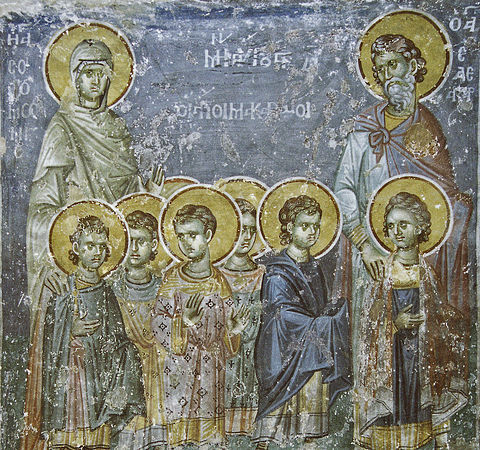
Does Hebrews 11 on the Maccabees Show Stronger Alignment with 4 Maccabees than 2 Maccabees? Hebrews 11 (the famous “Hall of Faith” chapter) does not explicitly mention the Maccabees by