Introduction to the book of Leviticus
The Book of Leviticus receives its English title from the Latin Vulgate, which is derived from the Greek Septuagint (LXX) title Leuitikon (Λευιτικόν), meaning “Levitical” or “pertaining to the Levites.”
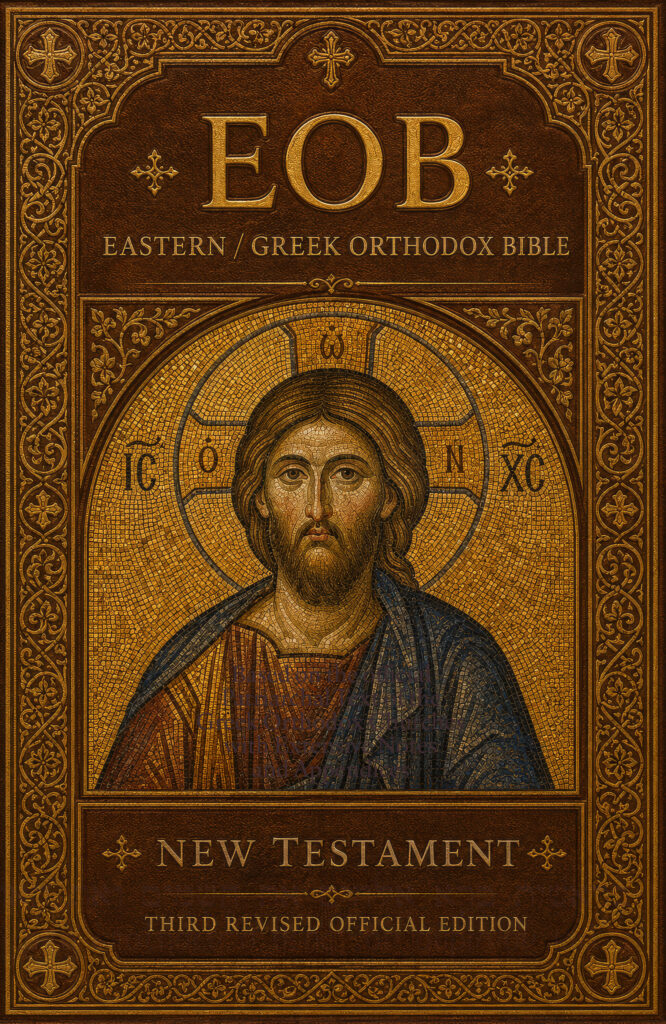
EOB: Official Site of the Eastern / Greek Orthodox Bible (Old and New Testament)
EOB (Eastern / Greek Orthodox Bible):
EOB Footnote:
KJV (King James Version):
WEB (World English Bible):
Benton LXX (Vaticanus):
Douai-Rheims (Vulgate):
Apostoliki Diakonia (LXX):
YLT (Young Literal Translation )(MT):
BBE (Bible in Basic English):
EOB Commentary:
Genesis 11:15
This verse records that Salah lived four hundred and three years after begetting Eber, and begot sons and daughters. As part of the genealogical record connecting Noah to Abraham, this passage belongs to the lineage through which the promise of salvation would be transmitted to all humanity.
Christological Significance:
The genealogy in which this verse appears finds its ultimate fulfillment in the Gospel of Luke, where the evangelist traces the ancestry of Christ back through these very patriarchs to Adam and to God Himself (Luke 3:35-36). Salah appears in this sacred lineage, demonstrating that even these seemingly mundane genealogical notices serve the divine economy of salvation. Each generation preserved the line through which the Messiah would come, making every birth recorded here an act of providential significance.
Patristic Interpretation:
The Church Fathers generally viewed these genealogies as demonstrating God’s patient preparation for the Incarnation across many generations. Saint Augustine noted that the gradual shortening of human lifespans after the Flood reflected both the consequences of sin and God’s mercy in limiting human capacity for evil while still preserving sufficient time for repentance and the transmission of faith.
Liturgical Connection:
During the preparation for the Nativity of Christ, the Church reads the genealogies that connect the patriarchs to our Lord. The commemoration of the Holy Forefathers on the Sunday before Nativity honors all the ancestors of Christ according to the flesh, including those named in Genesis 11. This liturgical practice transforms what might appear as dry historical record into living testimony of God’s faithfulness across generations.
Spiritual Reflection:
The extended lifespans recorded in this chapter remind Orthodox Christians that time itself is in God’s hands. The patience of God in working through centuries of human history to accomplish salvation teaches us to trust in His timing. Just as Salah faithfully lived his years and transmitted life to the next generation, so too are we called to faithful perseverance in our own generation, contributing to the ongoing work of God in history through our prayers, our witness, and our participation in the life of the Church.
The Book of Leviticus receives its English title from the Latin Vulgate, which is derived from the Greek Septuagint (LXX) title Leuitikon (Λευιτικόν), meaning “Levitical” or “pertaining to the Levites.”

The Book of Exodus receives its English title from the Greek Septuagint (LXX), where it is called Exodos (Ἔξοδος), meaning “departure” or “exit.” This name was chosen because the central

I. Date and Authorship Holy Tradition of the Orthodox Church, affirmed by the Fathers and the liturgical usage of the Church from the earliest centuries, attributes the Book of Genesis

Does Hebrews 11 on the Maccabees Show Stronger Alignment with 4 Maccabees than 2 Maccabees? Hebrews 11 (the famous “Hall of Faith” chapter) does not explicitly mention the Maccabees by