Introduction to the book of Leviticus
The Book of Leviticus receives its English title from the Latin Vulgate, which is derived from the Greek Septuagint (LXX) title Leuitikon (Λευιτικόν), meaning “Levitical” or “pertaining to the Levites.”
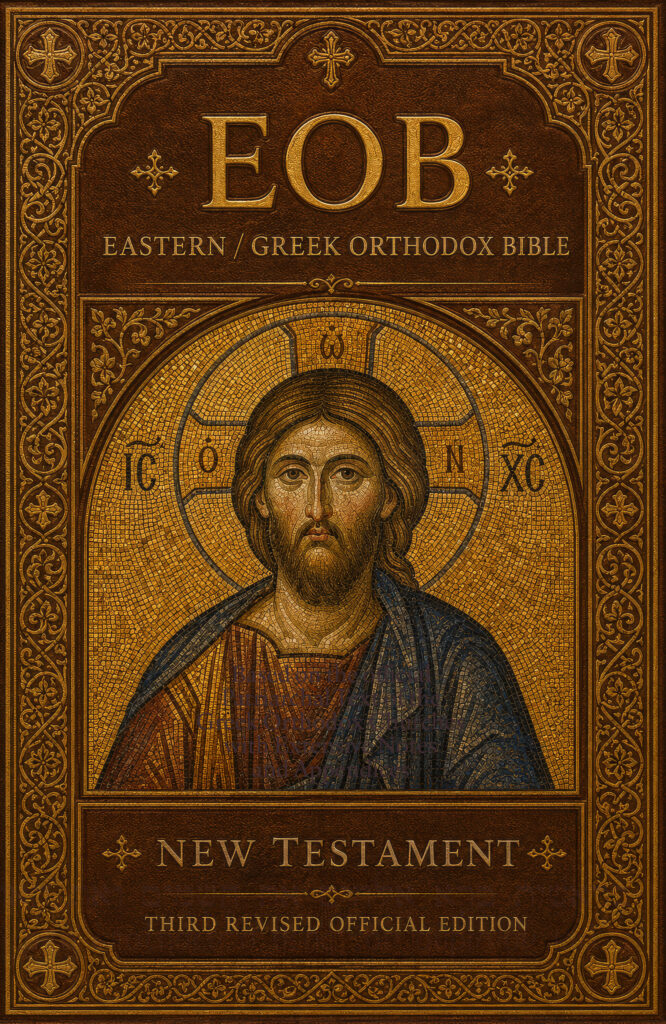
EOB: Official Site of the Eastern / Greek Orthodox Bible (Old and New Testament)
EOB (Eastern / Greek Orthodox Bible):
EOB Footnote:
KJV (King James Version):
WEB (World English Bible):
Benton LXX (Vaticanus):
Douai-Rheims (Vulgate):
Apostoliki Diakonia (LXX):
YLT (Young Literal Translation )(MT):
BBE (Bible in Basic English):
EOB Commentary:
Genesis 1:10 Commentary
The Divine Naming and the Goodness of Creation
In this verse, God names the dry land “Earth” and the gathered waters “Seas,” then pronounces them good. The act of naming in Scripture signifies authority and dominion, revealing God as the sovereign Lord who orders all things according to His wisdom. The Fathers understood this naming as more than mere labeling—it establishes the very identity and purpose of created things within the divine economy.
Saint Basil the Great, in his Hexaemeron, reflects extensively on the gathering of waters and the appearance of dry land. He marvels at how the waters, which by nature seek to spread and cover everything, are held in their appointed boundaries by divine command alone. This demonstrates that creation is sustained not merely by natural laws operating independently, but by the continuous will of God who upholds all things by the word of His power.
Christological Significance
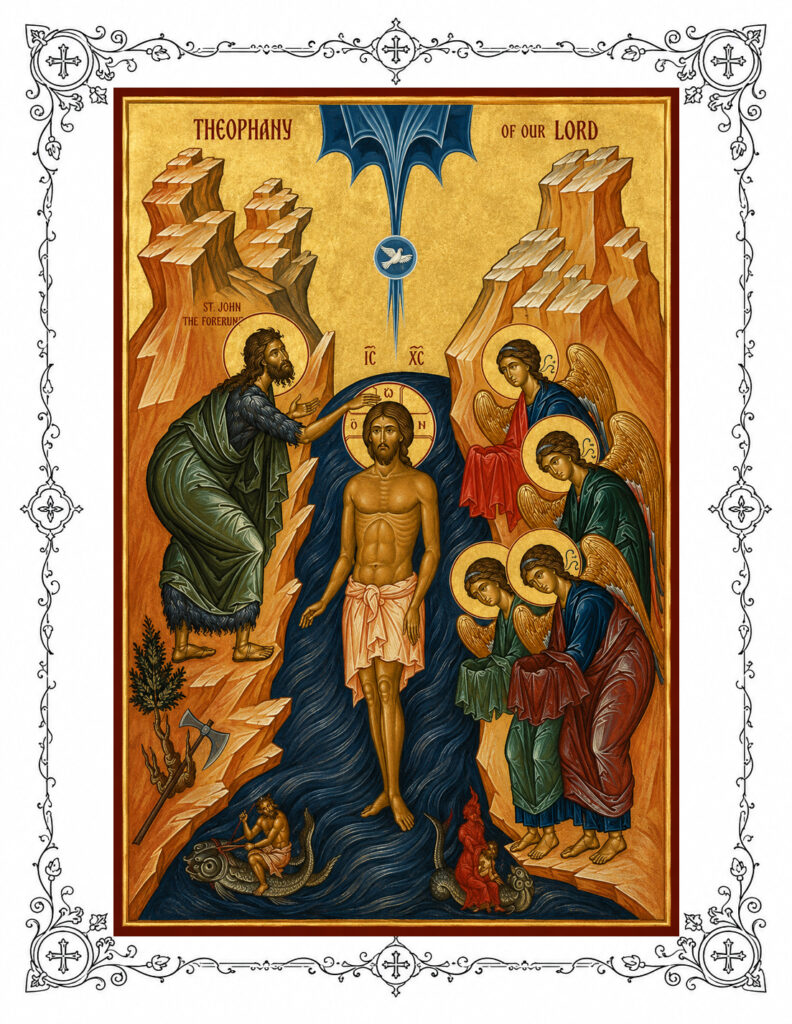
The Church Fathers perceived in these primordial waters and earth a foreshadowing of baptismal theology. Just as dry land emerged from the waters to become the dwelling place of life, so too the Christian emerges from the baptismal waters into newness of life. Christ Himself sanctified the waters at His baptism in the Jordan, and the Church sees in the separation of waters and land an anticipation of this mystery.
Furthermore, Christ as the Logos is the one through whom all things were made. When we read that God called the dry land Earth, we understand this as the eternal Word speaking creation into ordered existence. The land that would eventually bear the footsteps of the Incarnate Lord was being prepared from the very beginning.
Liturgical Connections
The blessing of waters at Theophany echoes this primordial ordering of creation. The prayers speak of God who established the earth upon the waters and bounded the sea with sand. The Church recognizes that the same God who commanded the waters to gather now sanctifies them for the salvation of humanity.
The Divine Affirmation
The declaration that creation is good (kalos in the Septuagint, meaning both good and beautiful) refutes any notion that the material world is inherently evil. Orthodox theology consistently affirms the goodness of matter, which finds its ultimate expression in the Incarnation, where the Word became flesh. The earth that God called good would become the very substance assumed by the Son of God for our salvation.
The Book of Leviticus receives its English title from the Latin Vulgate, which is derived from the Greek Septuagint (LXX) title Leuitikon (Λευιτικόν), meaning “Levitical” or “pertaining to the Levites.”

The Book of Exodus receives its English title from the Greek Septuagint (LXX), where it is called Exodos (Ἔξοδος), meaning “departure” or “exit.” This name was chosen because the central

I. Date and Authorship Holy Tradition of the Orthodox Church, affirmed by the Fathers and the liturgical usage of the Church from the earliest centuries, attributes the Book of Genesis

Does Hebrews 11 on the Maccabees Show Stronger Alignment with 4 Maccabees than 2 Maccabees? Hebrews 11 (the famous “Hall of Faith” chapter) does not explicitly mention the Maccabees by