EOB: Official Site of the Eastern / Greek Orthodox Bible (Old and New Testament)

Genesis 1:21

EOB (Eastern / Greek Orthodox Bible):

God created the great sea creatures and every living thing that moves, with which the waters swarmed according to their kinds, and every winged bird according to its kind. God saw that it was good.

EOB Footnote:

The MT includes the phrase “according to their kind” (Hebrew: le-minehu) applied to the great sea creatures, which is absent from the LXX witnesses. The MT also repeats “according to their kind” for the winged birds, which the LXX likewise omits. These omissions in the LXX slightly reduce the emphasis on categorical distinction among the created creatures.

Other Translations:

KJV (King James Version):

And God created great whales, and every living creature that moveth, which the waters brought forth abundantly, after their kind, and every winged fowl after his kind: and God saw that it was good.

WEB (World English Bible):

God created the large sea creatures and every living creature that moves, with which the waters swarmed, according to their kinds, and every winged bird according to its kind. God saw that it was good.

Benton LXX (Vaticanus):

And God made great whales, and every living creature that moveth, which the waters brought forth abundantly, after their kind, and every winged fowl after its kind: and God saw that they were good.

Douai-Rheims (Vulgate):

And God created great whales, and every living and moving creature, which the waters brought forth, according to their kinds, and every winged fowl according to its kind. And God saw that it was good.

Apostoliki Diakonia (LXX):

And God created the great sea creatures and every living creature that moves, with which the waters swarmed, according to their kinds, and every winged bird according to its kind. And God saw that it was good.

YLT (Young Literal Translation )(MT):

And God created the great sea creatures, and every living creature that moves, with which the waters teemed, according to their kinds, and every winged bird according to its kind. And God saw that it was good.

BBE (Bible in Basic English):

And God made great sea-beasts, and every sort of living and moving thing with which the waters were full, and every sort of winged bird; and God saw that it was good.

EOB COMMENTARY:

EOB Commentary:

Genesis 1:21 Commentary

The Creation of Living Souls

This verse marks a significant moment in the creation narrative, as it contains the first use of the Hebrew word bara (to create from nothing) since verse 1. While God “made” (asah) other things from pre-existing material, here He creates (bara) the great sea creatures and every living soul. The Septuagint renders the living creatures as ta kete ta megala (the great sea creatures), which the Fathers understood to include all manner of aquatic life, from the smallest fish to the legendary leviathan.

Patristic Interpretation

Saint Basil the Great, in his Hexaemeron, marvels at the diversity of sea life, seeing in it a reflection of divine wisdom and providence. He notes that God blessed these creatures with fruitfulness, demonstrating His care even for the lowest orders of creation. Saint Ambrose similarly observes that the waters, though cursed in the flood, were first blessed through their teeming life, showing that creation itself is fundamentally good.

Saint John Chrysostom emphasizes that the phrase “according to their kinds” reveals divine order and purpose. Each creature has its proper place and function within the cosmic hierarchy, pointing to the Logos through whom all things were made and in whom all things hold together.

Christological and Typological Significance

The great sea creatures (kete) find echo in the sign of Jonah, where Christ Himself draws the connection between the prophet’s three days in the belly of the great fish and His own three days in the tomb. The Church thus sees in these primordial creatures a foreshadowing of the paschal mystery. The blessing of fruitfulness given to sea creatures anticipates the greater blessing of spiritual fruitfulness given to the Church, born from the waters of baptism.

Liturgical Connections

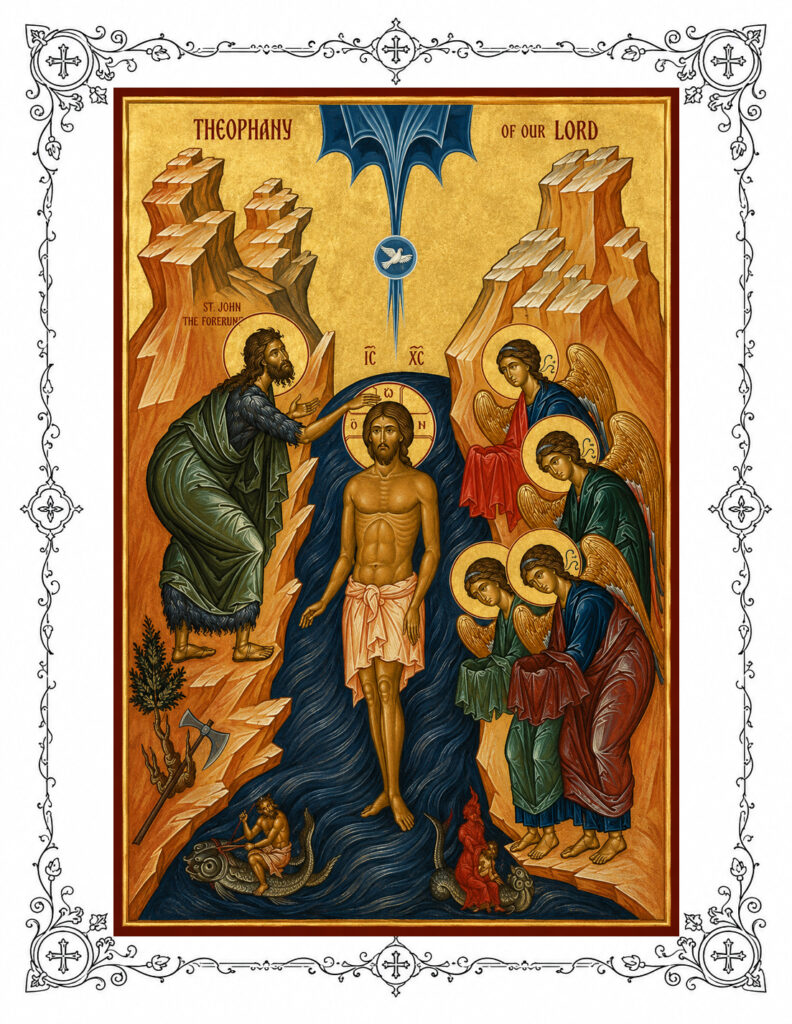
In the Orthodox baptismal rite, the priest breathes upon the waters and blesses them, recalling how the Spirit moved over the primordial deep. The waters that once teemed with life at God’s command now become the womb of spiritual rebirth. The Great Blessing of Waters at Theophany similarly invokes the sanctification of all creation, including the creatures of the sea.

Spiritual Application

The Fathers saw in the teeming waters an image of the soul’s potential for virtue. Just as the waters brought forth life abundantly at God’s word, so the human heart, when receptive to divine grace, produces abundant spiritual fruit. The variety of sea creatures also teaches us that God delights in diversity within unity, a principle reflected in the many gifts of the one Spirit distributed throughout the Body of Christ.

Introduction to the book of Leviticus

The Book of Leviticus receives its English title from the Latin Vulgate, which is derived from the Greek Septuagint (LXX) title Leuitikon (Λευιτικόν), meaning “Levitical” or “pertaining to the Levites.”

Read More »

Introduction to the book of Exodus

The Book of Exodus receives its English title from the Greek Septuagint (LXX), where it is called Exodos (Ἔξοδος), meaning “departure” or “exit.” This name was chosen because the central

Read More »