EOB: Official Site of the Eastern / Greek Orthodox Bible (Old and New Testament)

Genesis 1:23

EOB (Eastern / Greek Orthodox Bible):

And there was evening, and there was morning—the fifth day.

EOB Footnote:

The MT includes “and there was evening and there was morning” whereas the LXX reads “and evening came to be and morning came to be,” a minor stylistic difference in verbal construction but no material change in meaning.

Other Translations:

KJV (King James Version):

And the evening and the morning were the fifth day.

WEB (World English Bible):

There was evening and there was morning, a fifth day.

Benton LXX (Vaticanus):

And there was evening and there was morning, the fifth day.

Douai-Rheims (Vulgate):

And the evening and morning were the fifth day.

Apostoliki Diakonia (LXX):

And there was evening and there was morning, the fifth day.

YLT (Young Literal Translation )(MT):

And there is evening, and there is morning — day five.

BBE (Bible in Basic English):

And there was evening and there was morning, the fifth day.

EOB COMMENTARY:

EOB Commentary:

Genesis 1:23
Commentary

“And there was evening and there was morning, the fifth day.”

This verse marks the conclusion of the fifth day of creation, following the bringing forth of sea creatures and birds. While appearing formulaic, this refrain carries profound theological significance within the Orthodox understanding of creation and time.

The Liturgical Rhythm of Creation

The repeated pattern of “evening and morning” establishes a rhythm that the Church has preserved in her liturgical life. Orthodox worship follows this ancient pattern, with Vespers beginning the liturgical day at sunset, followed by Matins in the morning. This is not merely practical arrangement but theological statement—the Church lives within the rhythm God established at creation itself. Each liturgical day recapitulates the creative act, moving from darkness toward light, from anticipation toward fulfillment.

Patristic Reflection

Saint Basil the Great, in his Hexaemeron, reflects extensively on the ordering of days in Genesis. He notes that the Hebrew reckoning of evening before morning points to the priority of God’s creative word over the natural order. The day does not simply happen; it is spoken into being and then concluded by divine declaration. Each numbered day represents God’s continued involvement in bringing order from chaos, life from void.

Christological Dimensions

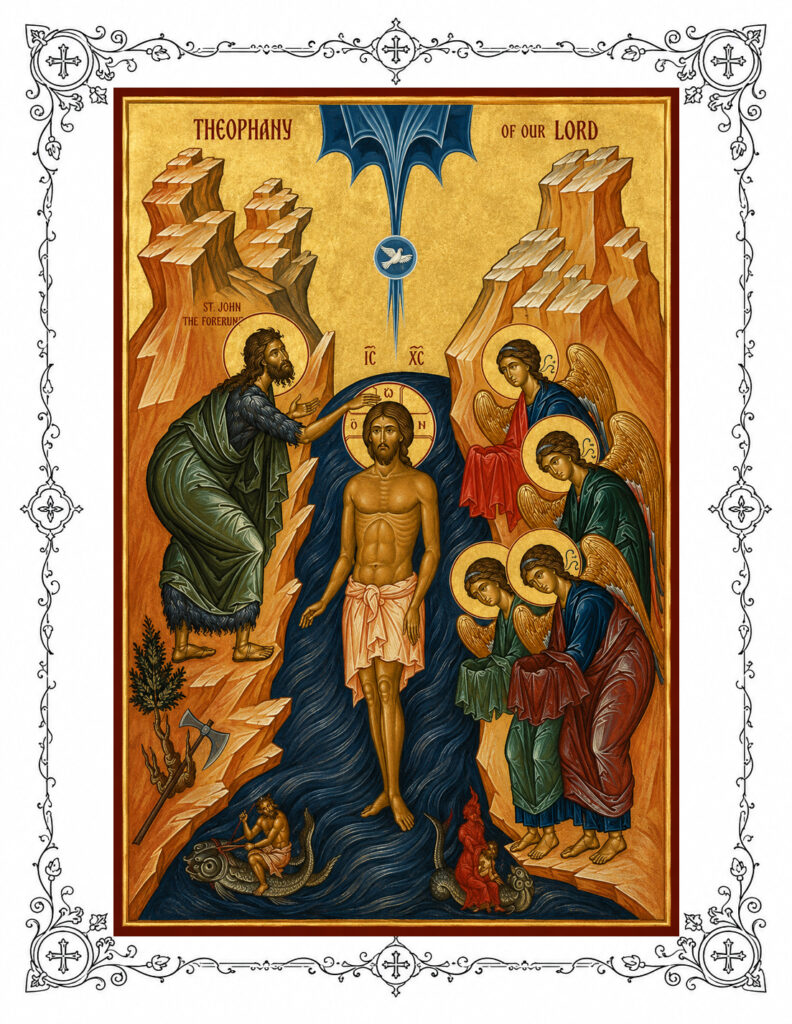
The fifth day’s conclusion gains particular resonance when we consider that it follows the creation of living souls (nephesh chayyah) in the waters and skies. The Church Fathers saw in the waters of creation a prefigurement of baptismal waters. Saint Cyril of Jerusalem and others connected the life-giving waters of Genesis to the waters of the Jordan, where Christ was baptized, and to the baptismal font where new Christians receive life. The creatures emerging from the waters on day five anticipate the Christian emerging from baptism as a new creation.

The Counting Toward Completion

Orthodox theology emphasizes that creation moves toward a goal. The numbering of days—here “the fifth day”—indicates progression toward the Sabbath rest and, beyond it, toward the eighth day of resurrection and new creation. Each day’s completion is not an end but a step toward eschatological fulfillment. The fifth day stands two days before the Sabbath, just as in Holy Week, Wednesday stands in anticipation of the Paschal mystery. The entire creation narrative thus becomes a type of the Church’s journey through time toward the Kingdom.

The simple declaration that another day has passed reminds the faithful that time itself is God’s creation, ordered and purposeful, leading all things toward their Creator.

Introduction to the book of Leviticus

The Book of Leviticus receives its English title from the Latin Vulgate, which is derived from the Greek Septuagint (LXX) title Leuitikon (Λευιτικόν), meaning “Levitical” or “pertaining to the Levites.”

Read More »

Introduction to the book of Exodus

The Book of Exodus receives its English title from the Greek Septuagint (LXX), where it is called Exodos (Ἔξοδος), meaning “departure” or “exit.” This name was chosen because the central

Read More »