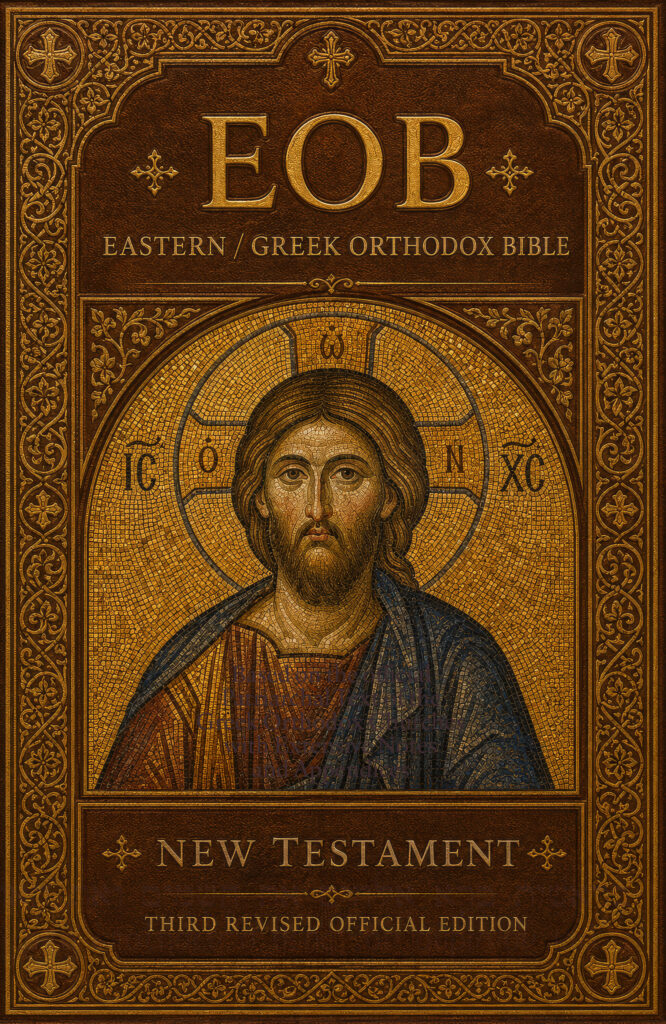
EOB: Official Site of the Eastern / Greek Orthodox Bible (Old and New Testament)

Genesis 1:29

EOB (Eastern / Greek Orthodox Bible):

“Behold, I have given you every seed-bearing plant on the face of all the earth, and every tree that has fruit with seed in it. They shall be food for you.”

EOB Footnote:

The MT includes “which is on the face of all the earth” (modifying “every herb bearing seed”) and “which is upon the face of all the earth” (modifying “every tree”), providing additional geographic emphasis not present in the LXX. The MT also specifies “in which is the fruit of a tree yielding seed” rather than the LXX’s simpler “which has in it the fruit of seed.” These expansions in the MT emphasize the universal scope of God’s provision but do not alter the fundamental meaning of the verse.

Other Translations:

KJV (King James Version):

And God said, Behold, I have given you every herb bearing seed, which is upon the face of all the earth, and every tree, in the which is the fruit of a tree yielding seed; to you it shall be for meat.

WEB (World English Bible):

“I have given you every herb yielding seed, which is on the surface of all the earth, and every tree which bears fruit yielding seed. It will be your food.”

Benton LXX (Vaticanus):

“And God said, Behold, I have given you every herb bearing seed, which is upon the face of all the earth, and every tree, which has in itself the fruit of seed that is sown, to you it shall be for food.”

Douai-Rheims (Vulgate):

And God said: Behold I have given you every herb bearing seed upon the earth, and all trees that have in themselves seed of their own kind, to be your meat.

Apostoliki Diakonia (LXX):

God said, “Behold, I have given you every seed-bearing plant on the face of all the earth and every tree that has fruit with seed in it. They will be yours for food.”

YLT (Young Literal Translation )(MT):

And God said, ‘See, I have given you every herb yielding seed which is on the face of all the earth, and every tree which has fruit yielding seed; to you it is for food.

BBE (Bible in Basic English):

And God said, See, I have given you every herb producing seed, which is on the face of all the earth, and every tree which has fruit producing seed: they will be for your food.

EOB COMMENTARY:

EOB Commentary:

Genesis 1:29 – Commentary

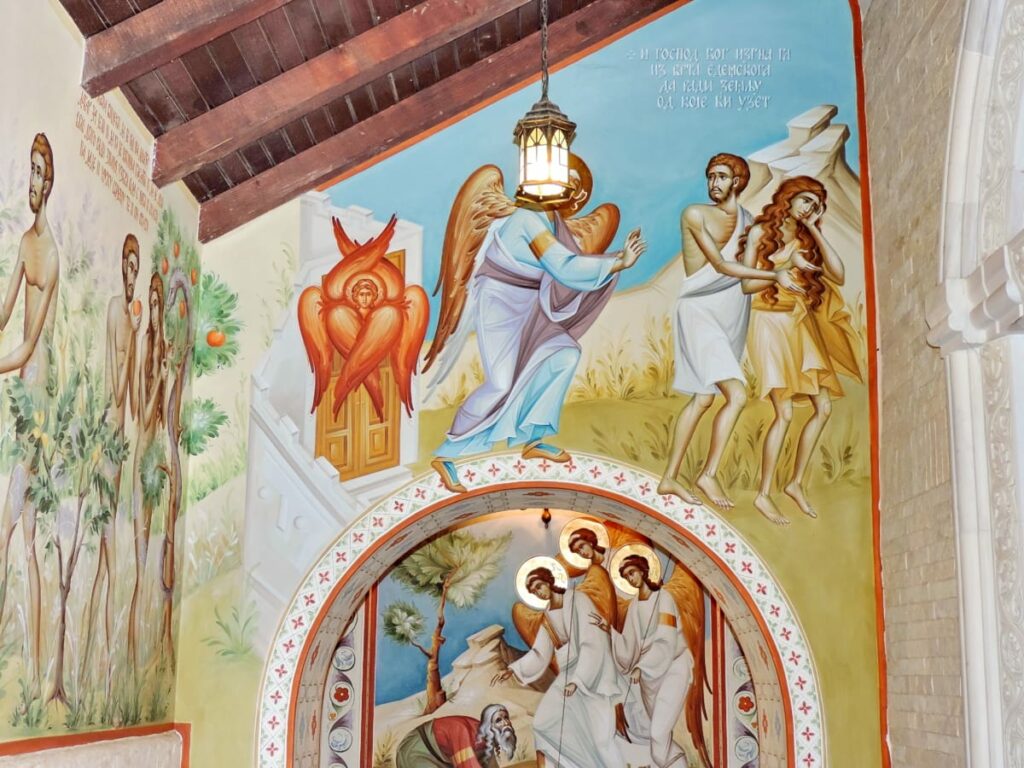
The Divine Gift of Food and the Original Paradise

This verse establishes the primordial diet given by God to humanity in the state of original righteousness. The Creator provides vegetation—seed-bearing plants and fruit trees—as nourishment for Adam and Eve, revealing both divine providence and the peaceful harmony of Paradise before the Fall. This passage carries profound significance for Orthodox theology and spirituality.

Patristic Interpretation: St. Basil the Great, in his Hexaemeron, emphasizes that this original provision demonstrates God’s fatherly care for humanity. The vegetarian diet of Paradise reflects the absence of death and violence in creation before sin entered the world. St. John Chrysostom similarly notes that the need to kill animals for food came only after the Fall, and permission to eat meat was granted explicitly only after the Flood to Noah. The Fathers understood this verse as depicting the peaceful coexistence of all creatures under human stewardship.

Typological Significance: The fruits and plants of Paradise prefigure the Eucharistic gifts. Just as God provided bread from the earth for bodily sustenance, so Christ—the Bread of Life—offers Himself for our spiritual nourishment. The Tree of Life in Eden finds its fulfillment in the Cross, from which flows the fruit of immortality. St. Ephrem the Syrian draws connections between the garden’s abundance and the eschatological banquet of the Kingdom.

Liturgical and Ascetical Connections: The Orthodox practice of fasting, particularly the strict fasts when the faithful abstain from meat and return to a plant-based diet, represents a voluntary return to the Edenic state. During Great Lent and other fasting periods, believers symbolically recover something of Paradise’s original simplicity. The Lenten Triodion speaks of fasting as the first commandment given in Paradise—Adam and Eve were to abstain from one tree—and our fasting continues this discipline of the appetite.

Eschatological Hope: Orthodox theology anticipates the restoration of all things in Christ. The Prophet Isaiah’s vision of the wolf dwelling with the lamb and the lion eating straw like the ox echoes the peace of the original creation. This verse thus points both backward to Paradise lost and forward to Paradise restored in the age to come, when creation will be liberated from corruption and death.

The verse reminds the faithful that food itself is a divine gift requiring thanksgiving—the very word Eucharist means thanksgiving. Every meal, approached with gratitude and blessing, becomes a participation in God’s providential care first manifested in Eden.

Introduction to the book of Leviticus

The Book of Leviticus receives its English title from the Latin Vulgate, which is derived from the Greek Septuagint (LXX) title Leuitikon (Λευιτικόν), meaning “Levitical” or “pertaining to the Levites.”

Read More »

Introduction to the book of Exodus

The Book of Exodus receives its English title from the Greek Septuagint (LXX), where it is called Exodos (Ἔξοδος), meaning “departure” or “exit.” This name was chosen because the central

Read More »