Introduction to the book of Leviticus
The Book of Leviticus receives its English title from the Latin Vulgate, which is derived from the Greek Septuagint (LXX) title Leuitikon (Λευιτικόν), meaning “Levitical” or “pertaining to the Levites.”
EOB: Official Site of the Eastern / Greek Orthodox Bible (Old and New Testament)
EOB (Eastern / Greek Orthodox Bible):
EOB Footnote:
KJV (King James Version):
WEB (World English Bible):
Benton LXX (Vaticanus):
Douai-Rheims (Vulgate):
Apostoliki Diakonia (LXX):
YLT (Young Literal Translation )(MT):
BBE (Bible in Basic English):
EOB Commentary:
Commentary on Genesis 10:3
The Sons of Gomer: Ashkenaz, Riphath, and Togarmah
This verse continues the Table of Nations, listing the three sons of Gomer, who was himself the son of Japheth. While this genealogical notation may appear to be merely historical record-keeping, the Church Fathers understood such passages as revealing the providential unfolding of human history under God’s sovereign care.
Patristic Interpretation: The early Fathers, including St. Isidore of Seville and the Venerable Bede, associated these names with specific peoples and regions. Ashkenaz was traditionally linked to peoples dwelling near the Black Sea region and later associated with Germanic tribes. Riphath (sometimes rendered Diphath in certain manuscripts) was connected to the Paphlagonians or peoples of Asia Minor. Togarmah was consistently identified with Armenia, a connection that holds particular significance given Armenia’s early embrace of Christianity.
The Armenian Connection: The identification of Togarmah with Armenia carries profound spiritual significance for Orthodox Christianity. Armenia became the first nation to adopt Christianity as its state religion in the early fourth century. Thus, in this ancient genealogy, we see the seeds of a people who would later be among the first to receive the Gospel of Christ. The Fathers saw in such details the hand of Providence preparing the nations for their eventual incorporation into the Body of Christ.
Ecclesiological Significance: The Table of Nations as a whole prefigures the universal scope of salvation. At Pentecost, the curse of Babel was reversed as people from every nation heard the Gospel in their own tongues. The descendants of Japheth, Shem, and Ham were all represented among those who received the Holy Spirit. St. Paul’s declaration that in Christ there is neither Jew nor Greek finds its Old Testament foundation in passages such as this, which demonstrate that all peoples share a common origin and are therefore equally called to salvation.
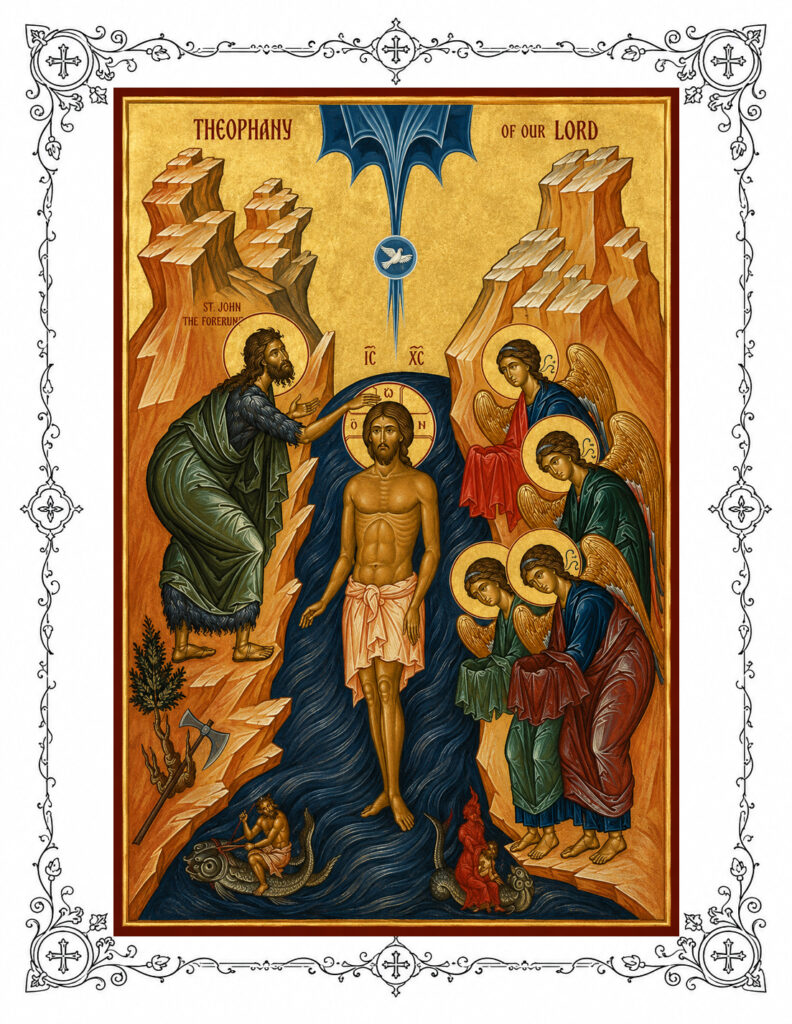
Liturgical Resonance: While this specific verse does not appear directly in Orthodox liturgical texts, the theme of the nations gathering to worship the true God permeates the services. The Aposticha hymns of Theophany celebrate how the Jordan received the Lord for the enlightenment of all peoples. The genealogies of Genesis remind us that Christ came to save not merely Israel but all the descendants of Noah—the entire human family.
The careful preservation of these names witnesses to the Orthodox understanding that history itself is sacred, that every people has a place in God’s economy of salvation, and that the Church’s catholicity was prepared from the very foundations of post-diluvian humanity.
The Book of Leviticus receives its English title from the Latin Vulgate, which is derived from the Greek Septuagint (LXX) title Leuitikon (Λευιτικόν), meaning “Levitical” or “pertaining to the Levites.”

The Book of Exodus receives its English title from the Greek Septuagint (LXX), where it is called Exodos (Ἔξοδος), meaning “departure” or “exit.” This name was chosen because the central

I. Date and Authorship Holy Tradition of the Orthodox Church, affirmed by the Fathers and the liturgical usage of the Church from the earliest centuries, attributes the Book of Genesis

Does Hebrews 11 on the Maccabees Show Stronger Alignment with 4 Maccabees than 2 Maccabees? Hebrews 11 (the famous “Hall of Faith” chapter) does not explicitly mention the Maccabees by