Introduction to the book of Leviticus
The Book of Leviticus receives its English title from the Latin Vulgate, which is derived from the Greek Septuagint (LXX) title Leuitikon (Λευιτικόν), meaning “Levitical” or “pertaining to the Levites.”
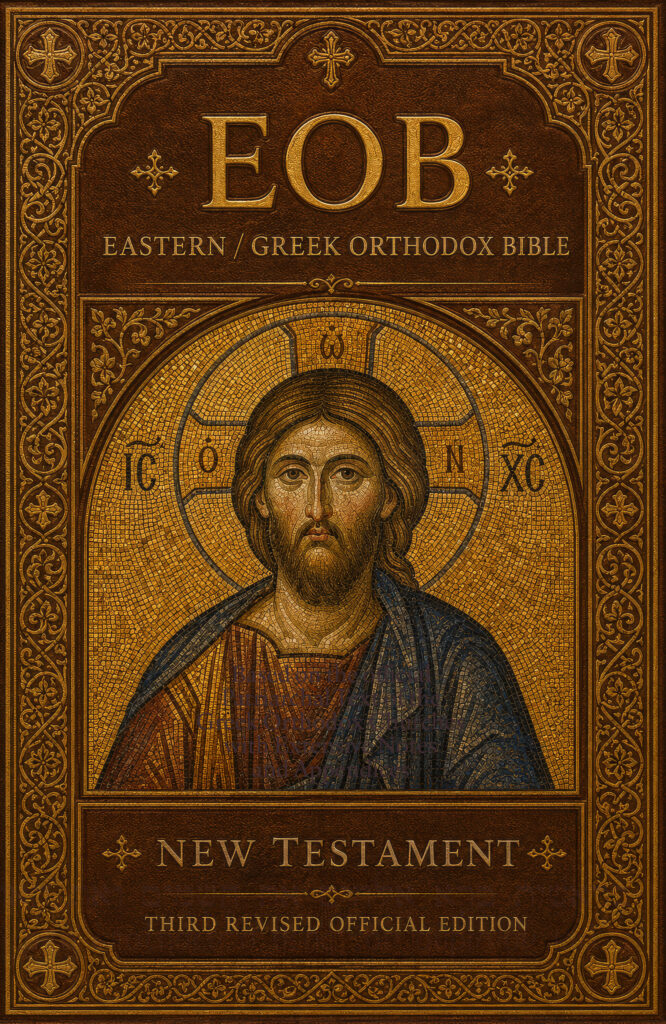
EOB: Official Site of the Eastern / Greek Orthodox Bible (Old and New Testament)
EOB (Eastern / Greek Orthodox Bible):
EOB Footnote:
KJV (King James Version):
WEB (World English Bible):
Benton LXX (Vaticanus):
Douai-Rheims (Vulgate):
Apostoliki Diakonia (LXX):
YLT (Young Literal Translation )(MT):
BBE (Bible in Basic English):
EOB Commentary:
Commentary on Genesis 10:30
This verse concludes the genealogical account of the sons of Joktan, describing the geographical extent of their settlements from Mesha toward Sephar, the eastern mountain. While appearing as a simple geographical notation within the Table of Nations, this passage carries significance within the broader theological framework of Genesis 10.
Theological Context Within the Table of Nations: The descendants of Joktan represent the spreading of humanity across the earth following the flood, fulfilling the divine mandate given to Noah and his sons. The mention of specific geographical boundaries demonstrates God’s providential ordering of human habitation. As the Apostle Paul declared in Athens, God “made from one man every nation of mankind to live on all the face of the earth, having determined allotted periods and the boundaries of their dwelling place” (Acts 17:26). This verse in Genesis provides the Old Testament foundation for Paul’s teaching about divine providence over the nations.
Patristic Interpretation: The Church Fathers generally understood the Table of Nations as demonstrating both the unity of humanity in its descent from Noah and the diversity that would characterize human civilization. Saint Ephrem the Syrian, in his Commentary on Genesis, notes that these genealogies establish the historical framework within which God’s salvation history unfolds. The spreading of Joktan’s descendants eastward represents part of the dispersion that would later be intensified at Babel.
Christological Significance: While this verse does not contain direct messianic prophecy, it participates in the broader narrative that establishes the need for Christ’s redemptive work. The nations scattered across the earth would eventually be gathered together in the Church. The boundaries mentioned here would be transcended by the Gospel, which calls all peoples—including those dwelling in the most remote eastern mountains—into the one Body of Christ.
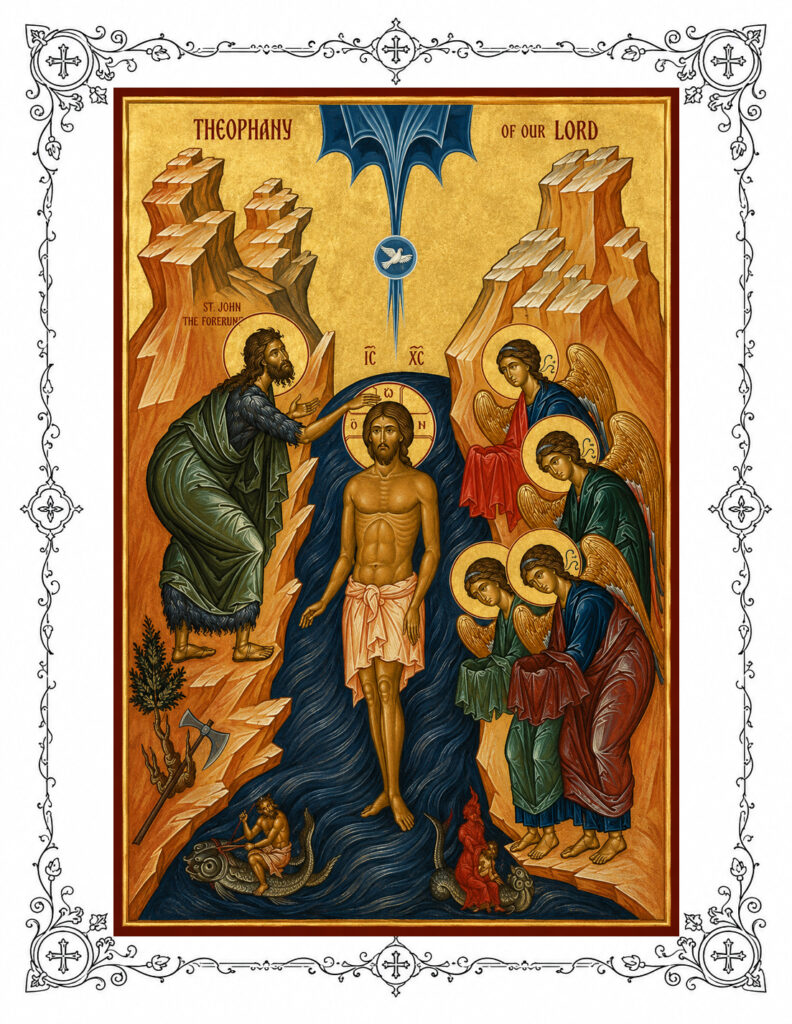
Liturgical Connection: During the Great Blessing of Waters at Theophany, the Church prays for the sanctification of waters throughout the entire world, recognizing that Christ’s baptism has cosmic significance reaching to every corner of the inhabited earth. The geographical specificity of verses like Genesis 10:30 reminds us that God’s salvation touches concrete places and peoples, not abstract humanity.
The verse ultimately points toward the eschatological gathering of all nations, when the boundaries that once separated peoples will give way to the unity of the Kingdom, where “a great multitude that no one could number, from every nation, from all tribes and peoples and languages” will stand before the throne of the Lamb (Revelation 7:9).
The Book of Leviticus receives its English title from the Latin Vulgate, which is derived from the Greek Septuagint (LXX) title Leuitikon (Λευιτικόν), meaning “Levitical” or “pertaining to the Levites.”

The Book of Exodus receives its English title from the Greek Septuagint (LXX), where it is called Exodos (Ἔξοδος), meaning “departure” or “exit.” This name was chosen because the central

I. Date and Authorship Holy Tradition of the Orthodox Church, affirmed by the Fathers and the liturgical usage of the Church from the earliest centuries, attributes the Book of Genesis

Does Hebrews 11 on the Maccabees Show Stronger Alignment with 4 Maccabees than 2 Maccabees? Hebrews 11 (the famous “Hall of Faith” chapter) does not explicitly mention the Maccabees by