Introduction to the book of Leviticus
The Book of Leviticus receives its English title from the Latin Vulgate, which is derived from the Greek Septuagint (LXX) title Leuitikon (Λευιτικόν), meaning “Levitical” or “pertaining to the Levites.”
EOB: Official Site of the Eastern / Greek Orthodox Bible (Old and New Testament)
EOB (Eastern / Greek Orthodox Bible):
EOB Footnote:
KJV (King James Version):
WEB (World English Bible):
Benton LXX (Vaticanus):
Douai-Rheims (Vulgate):
Apostoliki Diakonia (LXX):
YLT (Young Literal Translation )(MT):
BBE (Bible in Basic English):
EOB Commentary:
The Sons of Ham
This genealogical verse identifies the four sons of Ham: Cush, Mizraim, Put, and Canaan. While appearing as a simple list of names, this passage carries significant theological weight in the Orthodox understanding of salvation history and the universal scope of God’s redemptive plan.
Patristic Interpretation: The Church Fathers understood these names as representing the peoples and nations that would descend from Ham, primarily inhabiting Africa and parts of the Near East. Cush is traditionally associated with Ethiopia and Nubia, Mizraim with Egypt, Put with Libya, and Canaan with the land that would later bear his name. Saint Augustine in The City of God notes that these genealogies demonstrate how all humanity descends from Noah, reinforcing the unity of the human race despite its subsequent division into nations.
Christological and Soteriological Significance: The mention of these nations becomes profoundly meaningful when read through the lens of Christ’s universal salvation. Ethiopia (Cush) appears prominently in Acts 8, where Philip baptizes the Ethiopian eunuch, fulfilling the prophecy of Psalm 68:31 that Ethiopia shall stretch out her hands to God. Egypt (Mizraim) sheltered the infant Christ during the flight from Herod, and the Coptic Church traces its apostolic origins to Saint Mark. The inclusion of Canaan points forward to the eventual incorporation of Gentile peoples into the covenant through Christ.
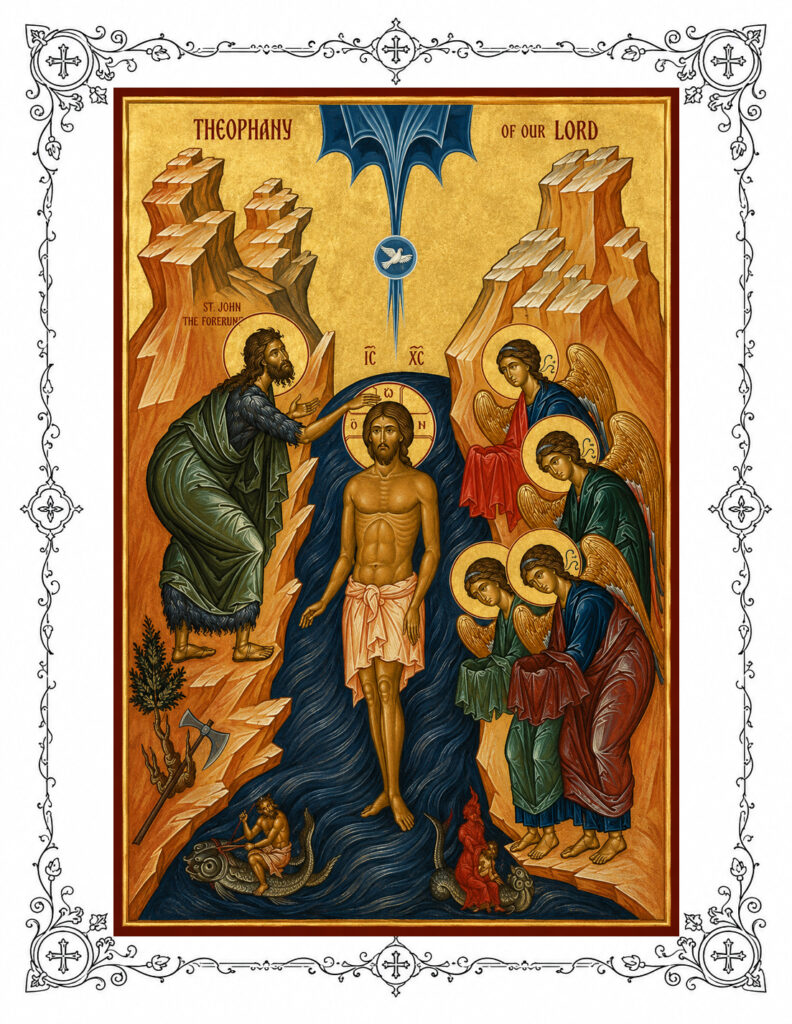
Liturgical Connections: The Orthodox Church celebrates saints from all these Hamitic nations, demonstrating the fulfillment of the Table of Nations in the catholicity of the Church. The Ethiopian eunuch is commemorated as a saint, and numerous Egyptian desert fathers and martyrs fill the Menologion. The Theophany blessing of waters recalls how all creation and all peoples are sanctified through Christ’s baptism.
Spiritual Reflection: This verse reminds Orthodox Christians that God’s providence extends to all nations from the very beginning. The genealogies of Genesis are not mere historical records but prophetic maps showing how every people group was destined to hear the Gospel. Saint John Chrysostom emphasizes that these lists demonstrate God’s care for the entire human family, not merely one chosen nation. The apparent curse upon Canaan, mentioned shortly after in Genesis, does not exclude his descendants from salvation, as demonstrated by Rahab the Canaanite appearing in Christ’s own genealogy in Matthew’s Gospel.
The Book of Leviticus receives its English title from the Latin Vulgate, which is derived from the Greek Septuagint (LXX) title Leuitikon (Λευιτικόν), meaning “Levitical” or “pertaining to the Levites.”

The Book of Exodus receives its English title from the Greek Septuagint (LXX), where it is called Exodos (Ἔξοδος), meaning “departure” or “exit.” This name was chosen because the central

I. Date and Authorship Holy Tradition of the Orthodox Church, affirmed by the Fathers and the liturgical usage of the Church from the earliest centuries, attributes the Book of Genesis

Does Hebrews 11 on the Maccabees Show Stronger Alignment with 4 Maccabees than 2 Maccabees? Hebrews 11 (the famous “Hall of Faith” chapter) does not explicitly mention the Maccabees by