Commentary on Genesis 11:24
Nahor lived twenty-nine years, and begot Terah.
This verse, while appearing to be a simple genealogical notation within the Table of Nations following Babel, carries significant weight in the history of salvation. It marks the penultimate generation before Abraham, positioning Terah as the father of the patriarch through whom all nations would be blessed.
Christological and New Testament Significance
The genealogy in which this verse is embedded finds its ultimate fulfillment in the Gospel of Luke, where the evangelist traces the lineage of Christ back through Terah, Nahor, and Serug to Adam and to God Himself (Luke 3:34-35). The Church Fathers understood these genealogies not as mere historical records but as the very bloodline through which the Incarnation would occur. Each generation preserved the promise, each name a link in the chain leading to the Theotokos and her Divine Son.
Saint John Chrysostom, commenting on the genealogies of Genesis, notes that God’s providence works through ordinary human generations, preparing across centuries for the extraordinary event of the Word becoming flesh. The seeming monotony of these begettings reveals divine patience and faithfulness.
Patristic Interpretation
The Fathers observed that the lifespans recorded in this chapter show a marked decrease from the antediluvian patriarchs. Nahor’s twenty-nine years before fathering Terah reflects humanity’s continued diminishment after the Flood and Babel. Yet within this diminishment, God’s salvific plan advances. Saint Ephrem the Syrian saw in these shortened generations a hastening toward Abraham, as if sacred history itself was accelerating toward its appointed moments of revelation.
Liturgical and Spiritual Themes
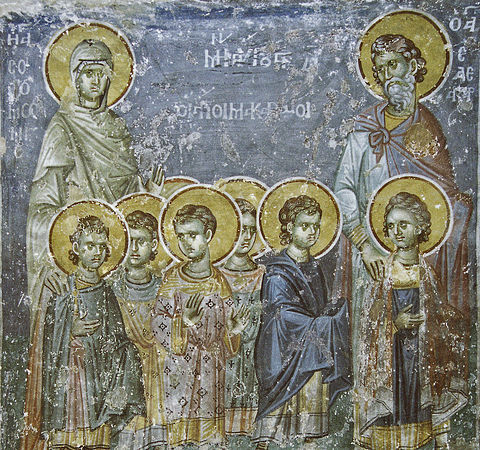
In the Orthodox understanding, genealogies remind us that we are not isolated individuals but members of a continuous community stretching back to creation and forward to the eschaton. The commemoration of ancestors in the faith, particularly celebrated on the Sunday of the Forefathers before the Nativity, includes these figures from Genesis 11. They are honored not for extraordinary deeds recorded in Scripture but for their faithful transmission of life and faith across generations.
This verse also speaks to the Orthodox emphasis on theosis as a multigenerational reality. Salvation is worked out not in isolation but within families, communities, and the communion of saints across time. Nahor’s begetting of Terah was an act of cooperation with divine providence, however unknowing, participating in the preparation for Christ’s coming.