Introduction to the book of Leviticus
The Book of Leviticus receives its English title from the Latin Vulgate, which is derived from the Greek Septuagint (LXX) title Leuitikon (Λευιτικόν), meaning “Levitical” or “pertaining to the Levites.”
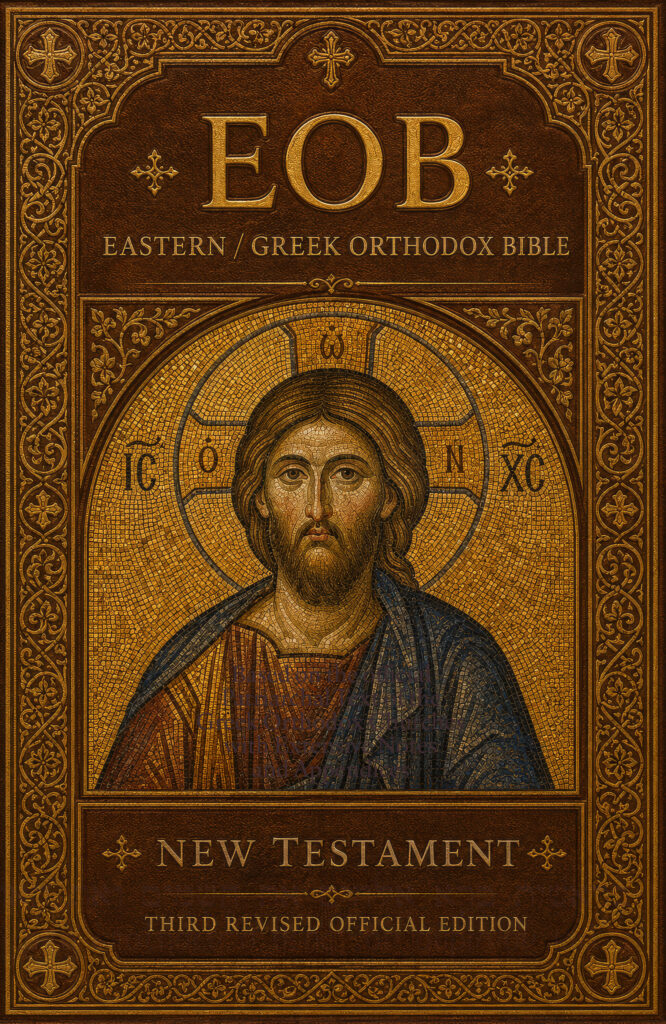
EOB: Official Site of the Eastern / Greek Orthodox Bible (Old and New Testament)
EOB (Eastern / Greek Orthodox Bible):
EOB Footnote:
KJV (King James Version):
WEB (World English Bible):
Benton LXX (Vaticanus):
Douai-Rheims (Vulgate):
Apostoliki Diakonia (LXX):
YLT (Young Literal Translation )(MT):
BBE (Bible in Basic English):
EOB Commentary:
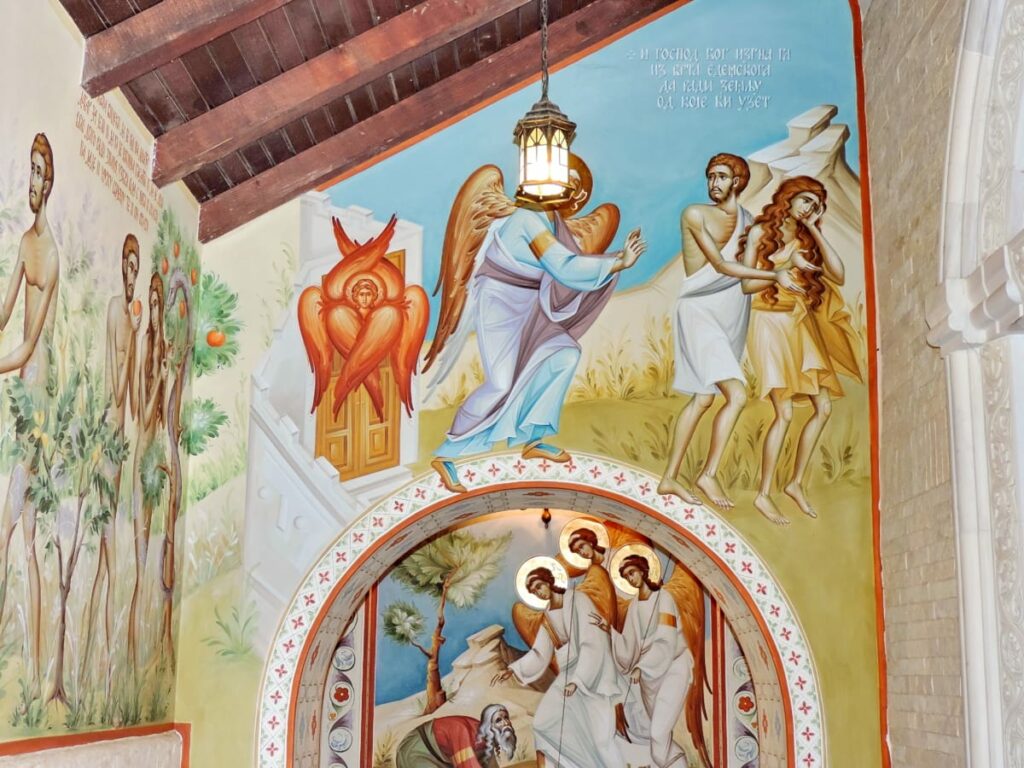
Genesis 3:1 – Commentary
The Serpent and the Introduction of Deception
This verse marks a pivotal moment in salvation history, introducing the adversary who would set in motion humanity’s fall from grace. The serpent is described as more cunning (arum in Hebrew) than any beast of the field, a term that carries connotations of shrewdness and craftiness. The Fathers of the Church universally understood this serpent not merely as an animal but as the instrument through which Satan worked his deception.
Patristic Interpretation: St. John Chrysostom emphasizes that the devil chose the serpent precisely because of its cunning nature, using it as a fitting mask for his own deceitful purposes. St. Basil the Great notes that the serpent’s approach to Eve rather than Adam was itself a calculated strategy, targeting what the enemy perceived as the more vulnerable point of entry. St. Irenaeus of Lyon explicitly identifies the serpent with Satan, the fallen angel who envied humanity’s blessed state in Paradise.
Christological Significance: The appearance of the serpent in Genesis 3 finds its ultimate resolution in Christ. The Lord Himself refers to Satan as a liar and the father of lies (John 8:44), connecting directly to the serpent’s deceptive questioning of God’s word. The Apostle Paul warns the Corinthians that Satan deceived Eve by his cunning (2 Corinthians 11:3), and the Book of Revelation explicitly identifies the ancient serpent as the devil and Satan (Revelation 12:9, 20:2). Christ’s victory over temptation in the wilderness stands as the reversal of this primordial encounter, where the New Adam resists what the first Adam and Eve could not.
Liturgical and Spiritual Themes: In the Orthodox liturgical tradition, particularly during Great Lent and Holy Week, the theme of spiritual warfare against the deceiver features prominently. The Lenten Triodion contains numerous references to the enemy’s cunning and our need for watchfulness. The serpent’s question “Did God really say?” represents the template for all temptation, which begins by casting doubt upon divine truth and goodness.
Orthodox Spirituality: The Fathers teach that the serpent’s method reveals the pattern of all demonic assault upon the soul. The logismoi, or tempting thoughts, often begin not with outright evil suggestions but with subtle questioning of what we know to be true. St. Hesychios and other neptic fathers counsel believers to guard the nous (mind) against such initial suggestions, recognizing that entertaining the serpent’s question is already the beginning of the fall. This verse thus serves as a perpetual warning to the faithful regarding spiritual vigilance and the discernment of spirits.
The Book of Leviticus receives its English title from the Latin Vulgate, which is derived from the Greek Septuagint (LXX) title Leuitikon (Λευιτικόν), meaning “Levitical” or “pertaining to the Levites.”

The Book of Exodus receives its English title from the Greek Septuagint (LXX), where it is called Exodos (Ἔξοδος), meaning “departure” or “exit.” This name was chosen because the central

I. Date and Authorship Holy Tradition of the Orthodox Church, affirmed by the Fathers and the liturgical usage of the Church from the earliest centuries, attributes the Book of Genesis

Does Hebrews 11 on the Maccabees Show Stronger Alignment with 4 Maccabees than 2 Maccabees? Hebrews 11 (the famous “Hall of Faith” chapter) does not explicitly mention the Maccabees by