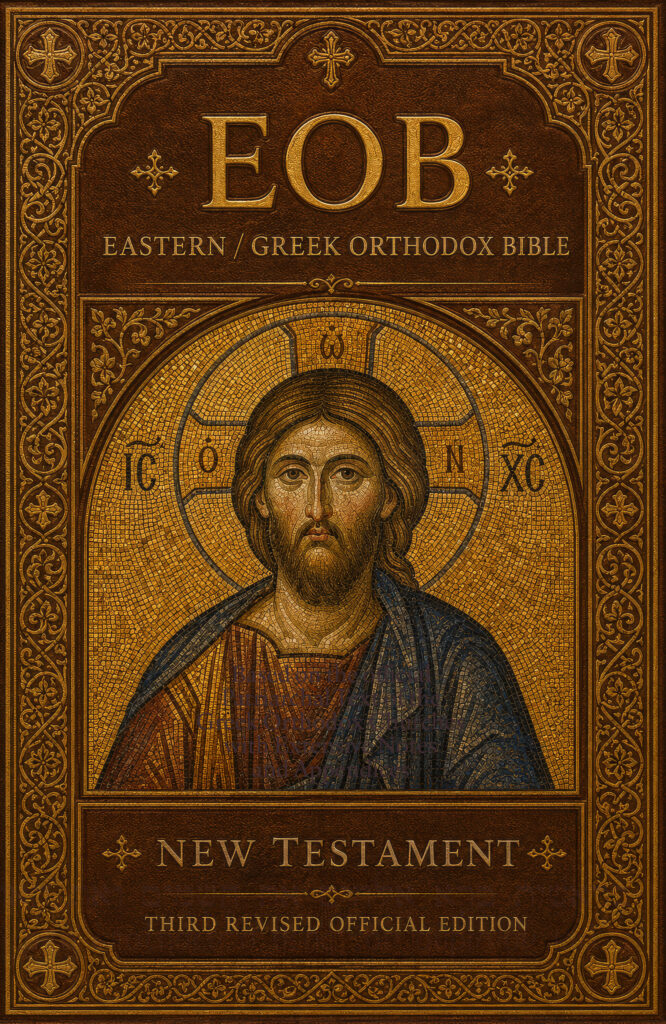
EOB: Official Site of the Eastern / Greek Orthodox Bible (Old and New Testament)

Genesis 3:20

EOB (Eastern / Greek Orthodox Bible):

The man named his wife Eve because she would become the mother of all the living.

EOB Footnote:

The MT includes the phrase “mother of all living” where the LXX reads simply “mother of all the living,” with no significant difference in meaning. The MT provides an explicit explanation for the name Eve, stating “because she was the mother of all living,” which the LXX also preserves. The name “Eve” in Hebrew (Chavvah) is connected etymologically to the word for “living” (chay), a wordplay that does not carry over into the Greek (Zoe/Eva). A meaning-based rendering was chosen for the naming formula: the Greek literally reads “Adam called the name of his wife,” rendered more naturally as “Adam named his wife.”

Other Translations:

KJV (King James Version):

And Adam called his wife’s name Eve; because she was the mother of all living.

WEB (World English Bible):

The man called his wife Eve because she would be the mother of all the living.

Benton LXX (Vaticanus):

And Adam called his wife’s name Life, because she was the mother of all living.

Douai-Rheims (Vulgate):

And Adam called the name of his wife Eve: because she was the mother of all the living.

Apostoliki Diakonia (LXX):

The man named his wife Eve, because she became the mother of all the living.

YLT (Young Literal Translation )(MT):

And the man called his wife’s name Eve, because she was the mother of all living.

BBE (Bible in Basic English):

And the man gave his wife the name of Eve because she was the mother of all who have life.

EOB COMMENTARY:

EOB Commentary:

GENESIS 3:20

The Naming of Eve as Mother of All Living

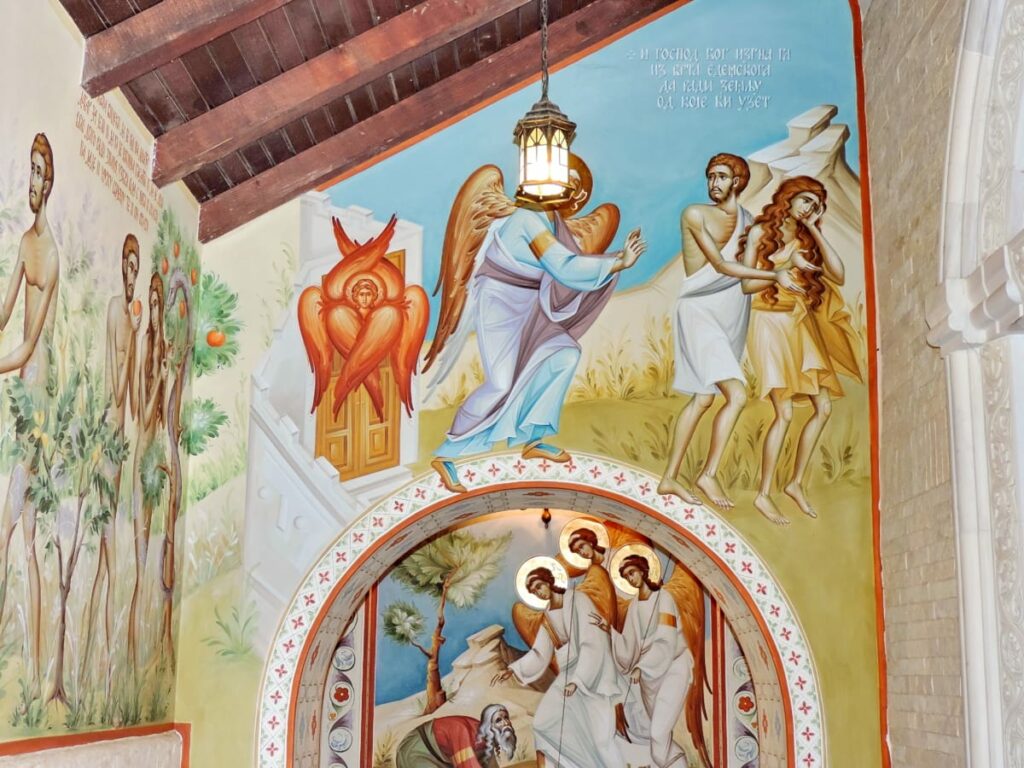
This verse presents a remarkable act of faith by Adam in the midst of judgment. Having just received the sentence of death and exile from Paradise, Adam responds not with despair but with hope, naming his wife Chavvah (Eve), meaning “life” or “living one,” because she would become the mother of all the living. The placement of this naming is theologically significant—it occurs after the Protoevangelion of Genesis 3:15, where God promised that the seed of the woman would crush the serpent’s head.

Patristic Interpretation: Saint John Chrysostom observes that Adam’s naming of Eve demonstrates his trust in God’s promise of future redemption through her offspring. Rather than calling her “mother of all the dying,” which would have been accurate given the curse just pronounced, Adam looks forward in faith to the continuation of life and, ultimately, to the Life-giver who would come from woman. Saint Ephrem the Syrian similarly notes that Adam prophetically understood that through woman would come not only natural life but the restoration of spiritual life lost in the Fall.

Christological and Mariological Significance: The Orthodox Church reads this verse typologically in relation to the Theotokos. As Eve became the mother of all living in the natural order, the Virgin Mary becomes the Mother of the truly Living One—Christ, who is Life itself (John 14:6). The Fathers frequently contrast Eve and Mary: the first Eve brought death through disobedience, while the New Eve brought forth Life through her obedient fiat. This typology appears throughout Orthodox hymnography, particularly in the services of the Annunciation and the Nativity of the Theotokos.

Liturgical Connections: In the Sunday of the Forefathers and the Sunday of the Holy Ancestors, the Church commemorates Adam and Eve among those who awaited the promised Redeemer. The naming of Eve as “mother of all living” is understood as a prophetic confession that death would not have the final word. The Paschal liturgy proclaims this fulfillment when it declares that Christ has trampled down death by death and granted life to those in the tombs.

Spiritual Application: This passage teaches the faithful to respond to trials and even divine correction with hope rather than despair. Adam’s act of faith in naming Eve points toward the resurrection—the ultimate vindication of life over death. Orthodox spirituality emphasizes that even in our fallen condition, we are called to be bearers of life and hope, participating in the divine promise that culminates in Christ’s victory over death.

Introduction to the book of Leviticus

The Book of Leviticus receives its English title from the Latin Vulgate, which is derived from the Greek Septuagint (LXX) title Leuitikon (Λευιτικόν), meaning “Levitical” or “pertaining to the Levites.”

Read More »

Introduction to the book of Exodus

The Book of Exodus receives its English title from the Greek Septuagint (LXX), where it is called Exodos (Ἔξοδος), meaning “departure” or “exit.” This name was chosen because the central

Read More »