THE SERPENT’S LIE AND THE FATHER OF LIES
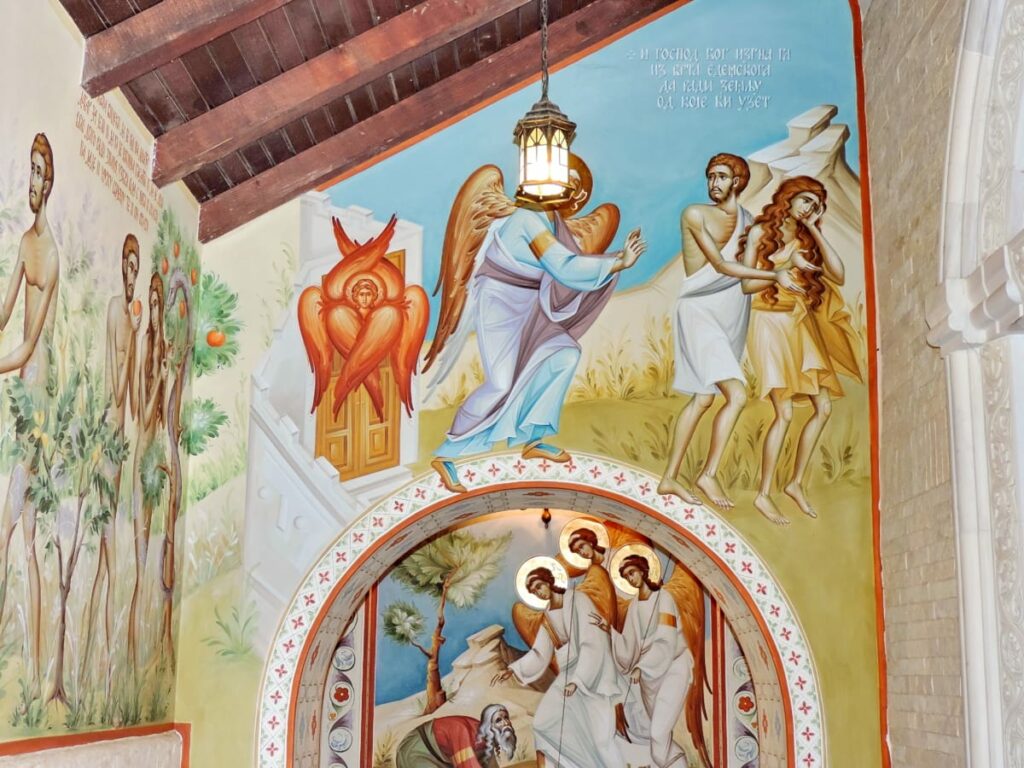
This verse stands as the first recorded lie in Scripture, establishing a pattern of deception that the Fathers understood as foundational to understanding the nature of evil and the devil’s methodology. The serpent’s bold contradiction of God’s word—”You shall not surely die”—represents not merely a falsehood but a direct assault on divine truth and the trustworthiness of the Creator.
Christological Significance:
Our Lord Jesus Christ directly identifies the devil as the source of this primordial deception when He declares to the Pharisees: “You are of your father the devil, and the desires of your father you want to do. He was a murderer from the beginning, and does not stand in the truth, because there is no truth in him. When he speaks a lie, he speaks from his own resources, for he is a liar and the father of it” (John 8:44). Christ’s words illuminate this Genesis passage, revealing that the serpent’s lie was simultaneously an act of spiritual murder, for through deception came death to the human race.
Patristic Teaching:
Saint John Chrysostom observes that the devil’s strategy involves mixing partial truth with falsehood, making the lie more palatable. The serpent does not immediately deny God’s existence but rather questions His goodness and truthfulness. Saint Irenaeus of Lyon emphasizes that the devil’s lie created a counterfeit reality, an illusory world where disobedience appears as liberation rather than bondage.
Saint Ephrem the Syrian notes that the serpent promised immortality while delivering death, promised divinity while producing degradation. This inversion of truth characterizes all demonic activity and temptation throughout salvation history.
Liturgical and Spiritual Relevance:
The Church’s hymnography, particularly during Great Lent, frequently references the ancestral deception. The Lenten Triodion speaks of Adam being “beguiled” and “deceived,” emphasizing human vulnerability to falsehood when separated from communion with God. The prayers of preparation for Holy Communion ask God to deliver us from “the evil one and his deceits,” recognizing that the same pattern of deception continues.
Orthodox spiritual teaching emphasizes nepsis (watchfulness) and discernment of thoughts (diakrisis) precisely because the enemy continues to employ the same tactics—presenting sin as beneficial, death as life, bondage as freedom. The Jesus Prayer and the entire hesychast tradition exist partly as protection against such spiritual deception.
The remedy for the serpent’s lie is found in Christ, who is Himself “the Way, the Truth, and the Life” (John 14:6). Where the serpent spoke falsehood bringing death, the incarnate Logos speaks truth bringing resurrection and eternal life.