Genesis 3:7 Commentary
The Opening of Eyes and the Closing of Paradise
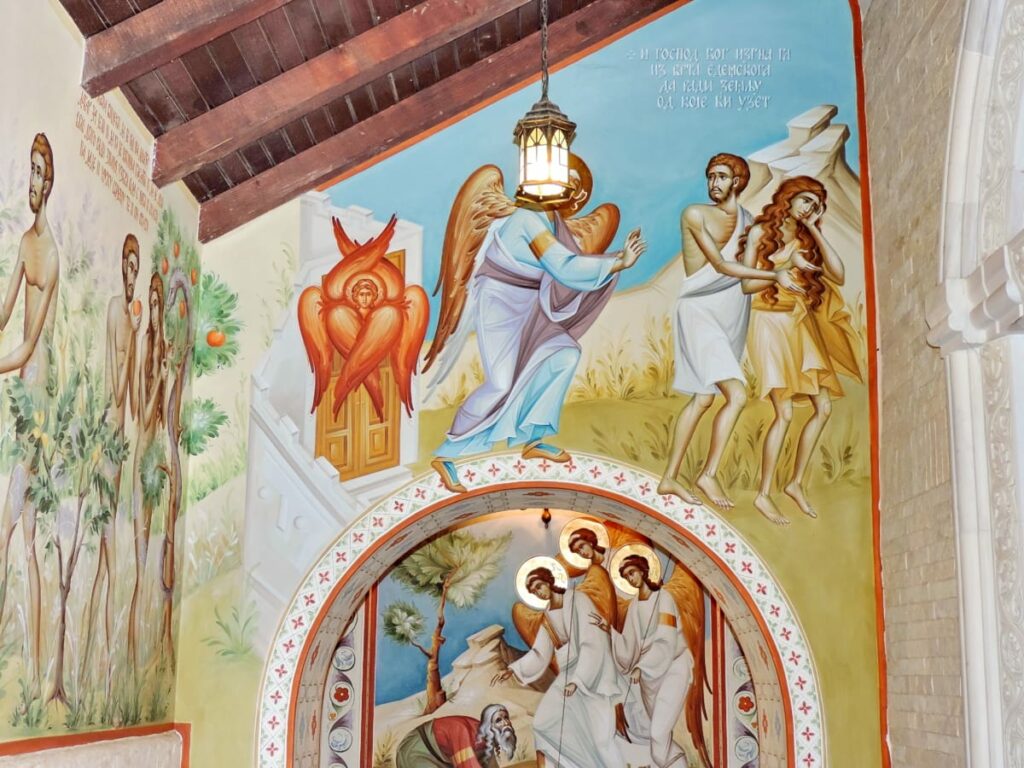
This verse marks the tragic fulfillment of the serpent’s false promise. The eyes of Adam and Eve were indeed opened, but not to divine knowledge as Satan had suggested. Instead, they perceived their nakedness—a nakedness that had always existed physically but was now experienced as shame, exposure, and vulnerability. The Church Fathers consistently teach that before the fall, our first parents were clothed in divine glory, a garment of light and grace that rendered their physical nakedness irrelevant.
Saint John Chrysostom observes that before sin, Adam and Eve were “clothed with glory from above,” and this glory served as their true covering. When they sinned, this luminous garment departed, and they immediately recognized their impoverished state. The fig leaves they fashioned represent humanity’s first attempt at self-salvation—a pitiful and inadequate covering that could never restore what was lost.
Christological Significance
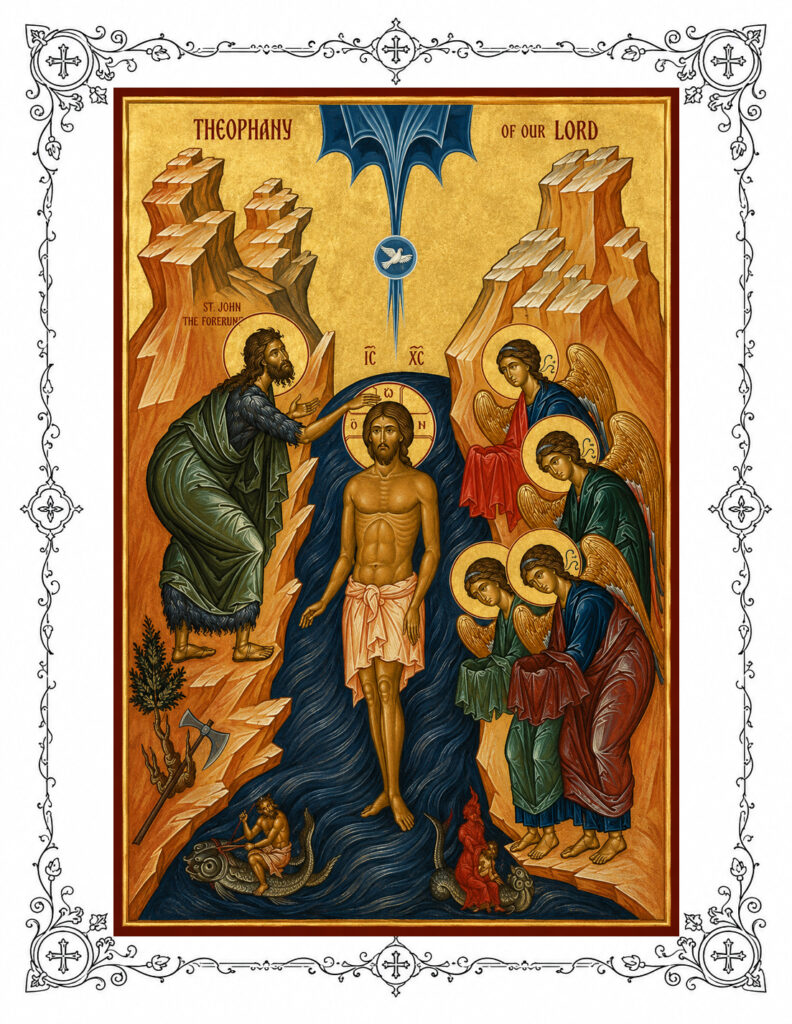
The fig leaves point forward typologically to Christ, who alone can provide adequate covering for human shame. Where Adam and Eve attempted to clothe themselves, God would later provide garments of skin (Genesis 3:21), foreshadowing the sacrifice necessary for true restoration. Ultimately, in baptism, the Church proclaims that the faithful have “put on Christ” (Galatians 3:27), receiving again the garment of incorruption that Adam lost.
The nakedness revealed in this verse finds its redemptive counterpart in Christ’s nakedness upon the Cross. Where Adam’s exposed shame led to hiding from God, Christ’s voluntary exposure of shame upon Golgotha opens the way back to Paradise.
Liturgical and Spiritual Connections
During the Sunday of Forgiveness, which precedes Great Lent, the Church chants of Adam sitting outside Paradise, weeping for his lost glory. The hymnography draws directly upon this imagery of nakedness and lost covering. The Lenten journey itself becomes a path of recovering the baptismal garment, of clothing ourselves again in Christ through repentance, fasting, and prayer.
Orthodox spiritual tradition speaks of the “garment of shame” that we continue to weave through our own sins, contrasted with the “robe of light” that awaits the faithful. Saint Gregory of Nyssa teaches that the restoration of this original glory is the goal of the spiritual life—theosis itself involves being re-clothed in divine radiance.
The verse also reveals how sin immediately distorts human relationships. The same flesh that was “bone of my bone” now becomes a source of shame between husband and wife. Sin fractures not only the divine-human relationship but also human communion itself, a wound that only the Church as the Body of Christ can heal.