Genesis 3:8
The Divine Presence and the Sound of God Walking
This verse presents one of the most profound images in all of Scripture: God walking in the garden in the cool of the day, seeking out His fallen creatures. The phrase “the sound of the Lord God walking” (phone tou Theou peripatountos) reveals the intimate communion that existed between Creator and creation before the fall. The Fathers understood this theophany as a manifestation of the pre-incarnate Logos, the Second Person of the Trinity, who would later walk among humanity in the flesh.
Christological Significance
Saint Irenaeus of Lyon saw in this passage a prefiguration of the Incarnation itself. The God who walked in Eden seeking Adam is the same Word who would become flesh and dwell among us, seeking the lost sheep of the house of Israel. The cool of the day, or the evening breeze, suggests the gentleness of God’s approach—not in wrath, but in mercy, calling out to those who had hidden themselves. This pattern of divine seeking culminates in Christ’s declaration that the Son of Man came to seek and save the lost.
Saint Ambrose noted that God did not immediately pronounce judgment but first called to Adam, giving him opportunity for repentance. This reveals the therapeutic rather than juridical character of God’s response to sin—a theme central to Orthodox soteriology.
Liturgical and Spiritual Dimensions
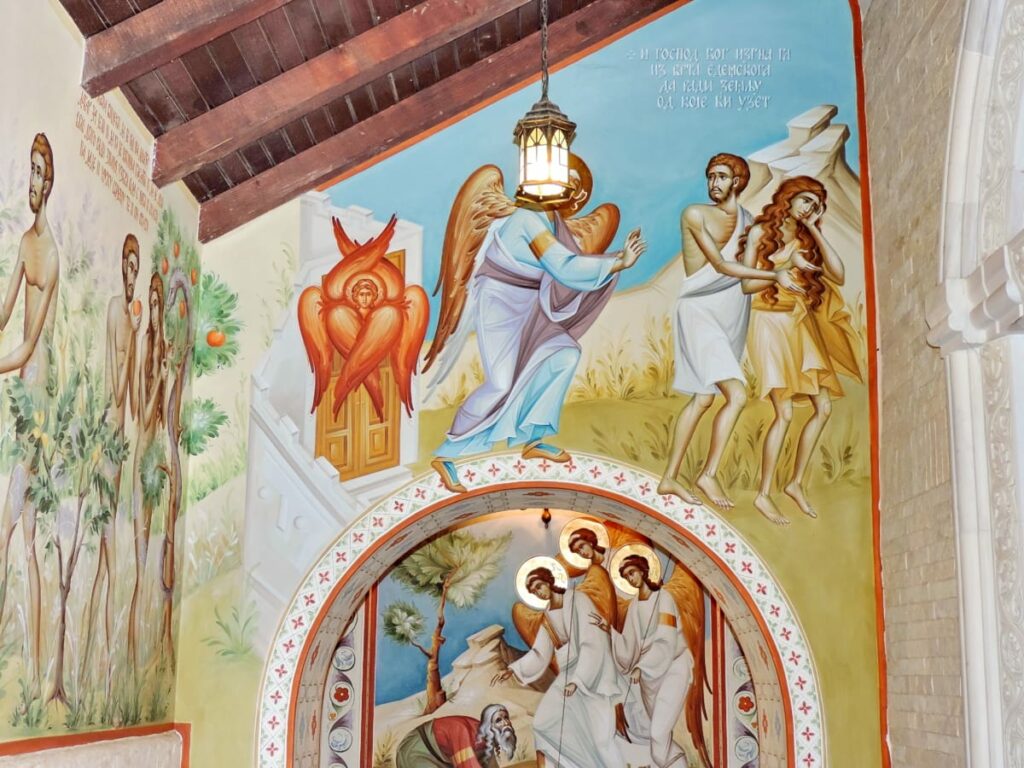
The Orthodox Church commemorates this passage during the services of Forgiveness Sunday and throughout Great Lent. The image of Adam hiding from God becomes a paradigm for all human attempts to flee from divine love through shame and fear. The hymns of the Lenten Triodion frequently invoke the image of Adam weeping outside Paradise, recognizing what communion with God he had lost.
In the Vespers of Forgiveness Sunday, we hear: “Adam sat before Paradise and, lamenting his nakedness, he wept.” This liturgical poetry draws directly from the Genesis narrative, inviting the faithful to identify with Adam’s exile and to long for restoration.
The Fathers also noted that Adam and Eve hid “among the trees of the garden”—the very creation meant to serve them now became their attempted refuge from the Creator. Saint Gregory the Theologian observed that sin always involves this inversion: using God’s gifts to hide from God Himself.
For Orthodox spirituality, this verse teaches that God perpetually seeks us, even when we flee. The spiritual life is fundamentally a response to the God who walks toward us, calling our name, inviting us out of hiding and back into communion. The sacrament of confession embodies this dynamic: we emerge from hiding to encounter the merciful Lord who has been seeking us all along.