Introduction to the book of Leviticus
The Book of Leviticus receives its English title from the Latin Vulgate, which is derived from the Greek Septuagint (LXX) title Leuitikon (Λευιτικόν), meaning “Levitical” or “pertaining to the Levites.”
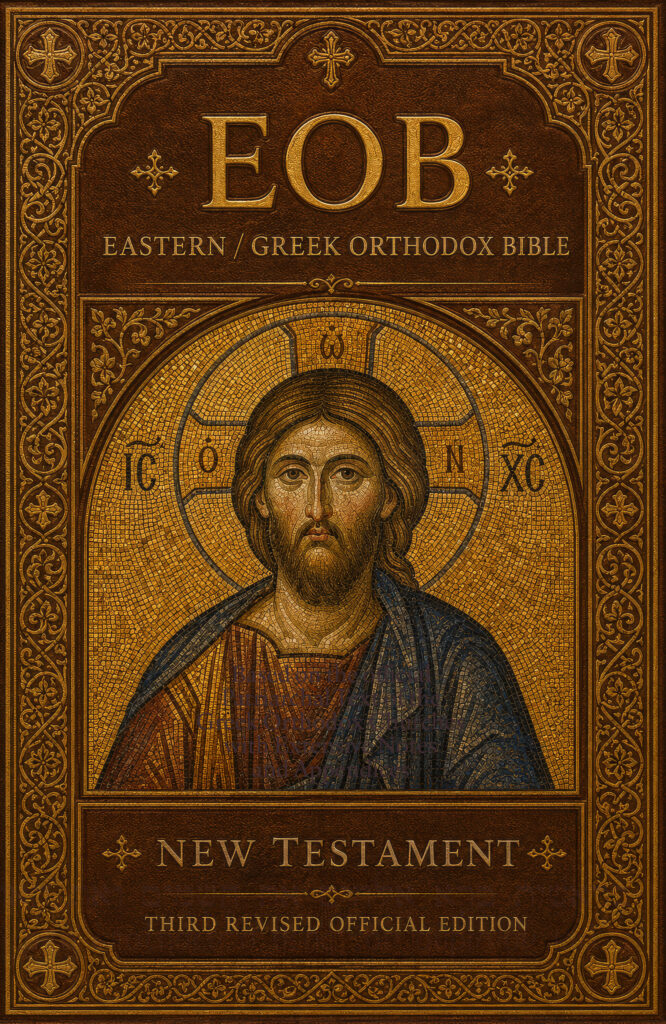
EOB: Official Site of the Eastern / Greek Orthodox Bible (Old and New Testament)
EOB (Eastern / Greek Orthodox Bible):
EOB Footnote:
KJV (King James Version):
WEB (World English Bible):
Benton LXX (Vaticanus):
Douai-Rheims (Vulgate):
Apostoliki Diakonia (LXX):
YLT (Young Literal Translation )(MT):
BBE (Bible in Basic English):
EOB Commentary:
THE DIVINE SEEKING
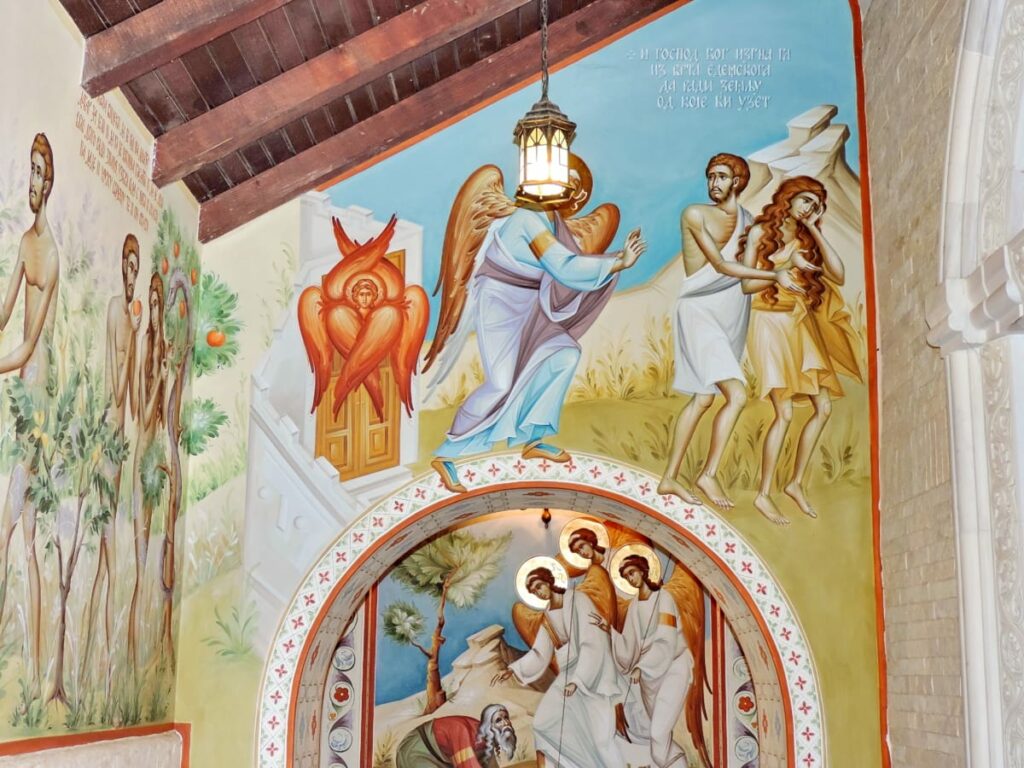
This verse presents one of the most profound theological moments in Scripture: God seeking fallen humanity. The question “Where are you?” (Hebrew: ayekka) is not an inquiry born of ignorance, for the Omniscient One knows all things. Rather, it is the first evangelical call—God initiating reconciliation with His estranged creature.
Patristic Interpretation: Saint John Chrysostom emphasizes that God’s question demonstrates His condescension and love. The Lord approaches Adam not with immediate judgment but with an invitation to confession and repentance. Chrysostom notes that God “walks” in the garden and “calls” to Adam, accommodating Himself to human weakness, prefiguring the Incarnation when the Word would truly walk among us. Saint Ambrose of Milan similarly teaches that this question reveals God’s mercy preceding His justice—He seeks the sinner before pronouncing sentence.
Christological Significance: The Church Fathers consistently see in this verse a type of Christ’s saving mission. As God sought Adam hiding among the trees, so the Son of Man came “to seek and to save that which was lost” (Luke 19:10). The Second Adam enters the garden of our fallen world to find those whom the first Adam led into hiding. Saint Irenaeus of Lyon develops this parallel extensively, showing how Christ’s entire ministry recapitulates and heals Adam’s failure.
Liturgical Connections: This theme resonates throughout Orthodox hymnography, particularly during Great Lent and Holy Week. The Lenten Triodion repeatedly invokes the image of God seeking fallen Adam. Most notably, the Holy Saturday Matins service celebrates Christ’s descent into Hades as the ultimate answer to “Where are you?”—God descending to the lowest depths to find Adam in the prison of death. The paschal icon of the Anastasis depicts Christ grasping Adam’s hand, completing what began with this question in Eden.
Spiritual Application: For Orthodox spirituality, this verse establishes the fundamental pattern of salvation: God always initiates. Human beings hide; God seeks. We cover ourselves with fig leaves of self-justification; He calls us to honest confession. The Jesus Prayer itself echoes this dynamic—we respond to God’s perpetual seeking by crying out “Lord Jesus Christ, Son of God, have mercy on me, a sinner.”
The question also reveals that sin creates distance and hiding. Adam’s response shows that shame and fear have replaced communion and confidence. Yet God’s seeking demonstrates that no darkness of sin can prevent His love from pursuing us. This becomes the foundation of all Christian hope: before we seek God, He has already sought us.
The Book of Leviticus receives its English title from the Latin Vulgate, which is derived from the Greek Septuagint (LXX) title Leuitikon (Λευιτικόν), meaning “Levitical” or “pertaining to the Levites.”

The Book of Exodus receives its English title from the Greek Septuagint (LXX), where it is called Exodos (Ἔξοδος), meaning “departure” or “exit.” This name was chosen because the central

I. Date and Authorship Holy Tradition of the Orthodox Church, affirmed by the Fathers and the liturgical usage of the Church from the earliest centuries, attributes the Book of Genesis

Does Hebrews 11 on the Maccabees Show Stronger Alignment with 4 Maccabees than 2 Maccabees? Hebrews 11 (the famous “Hall of Faith” chapter) does not explicitly mention the Maccabees by